

Quick Answers





Why is coolant used in machining operations?
- June 19, 2025
- Jason Chang
- 9:29 am
In the world of manufacturing, precision and efficiency are paramount. Machining operations, such as milling, drilling, and turning, are standard processes used to create precise components for various industries.
One crucial aspect of machining operations is the use of coolant. Coolant plays a vital role in enhancing the performance and longevity of cutting tools, as well as improving the overall quality of machined parts.
Importance of Coolant in Machining Operations
When it comes to machining operations, heat management is a critical factor that directly impacts the performance of cutting tools and the quality of the machined parts.
During the cutting process, friction between the cutting tool and the workpiece generates heat, leading to tool wear, poor surface finish, and even thermal damage to the workpiece.
Coolant is specifically designed to address these issues and provide a solution to heat management in machining operations.
Key Reasons for Using Coolant
There are several key reasons why coolant is used in machining operations:
1. Heat Dissipation
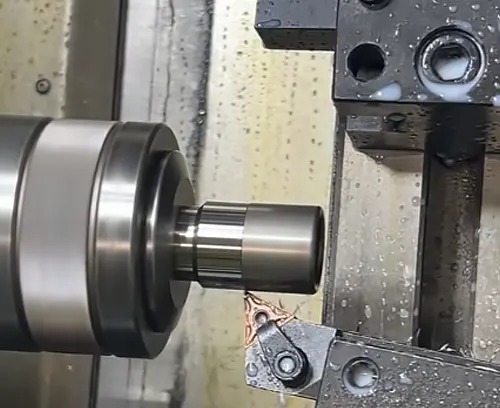
Coolant helps dissipate the heat generated during the cutting process, reducing the risk of thermal damage to the cutting tool and workpiece.
By maintaining the temperature within a reasonable range, coolant prolongs the tool life and ensures consistent performance throughout the machining operation.
2. Chip Evacuation
As the cutting tool removes material from the workpiece, chips are produced and can become trapped between the tool and the workpiece.
Coolant helps flush away these chips, preventing them from interfering with the cutting process and causing damage to the tool or workpiece. Proper chip evacuation also improves the surface finish of the machined part.
3. Lubrication
Coolant acts as a lubricant between the cutting tool and the workpiece, reducing friction and wear on the tool.
This results in smoother cutting action, improved surface finish, and longer tool life. Lubrication also helps maintain dimensional accuracy and reduce the risk of built-up edge formation on the cutting tool.
4. Cooling Effect
By reducing the temperature of the cutting zone, coolant helps prevent thermal distortion of the workpiece and improves dimensional accuracy.
Cooling also minimizes the risk of work hardening, which can make subsequent machining operations more challenging. Additionally, a cooler cutting zone contributes to better chip control and improved tool life.
5. Corrosion Protection
Coolant can also provide corrosion protection for both the cutting tool and the workpiece.
By creating a protective barrier between the metal surfaces and the environment, coolant helps prevent rust and degradation, extending the lifespan of the tools and machined parts.
Types of Coolants
There are several types of coolants commonly used in machining operations:
1. Water-based Coolants
Water-based coolants are the most common type of coolant used in machining operations.
They are cost-effective, environmentally friendly, and provide good cooling and lubricating properties. Water-based coolants can be mixed with oil or other additives to enhance their performance and tailor them to specific machining requirements.
2. Straight Oils
Straight oils, also known as neat cutting oils, are mineral oils or synthetics that provide excellent lubrication properties.
They are used in operations where cooling is not the primary concern, such as tapping, threading, and honing.
Straight oils are suitable for low-speed, low-feed operations and are often preferred for machining non-ferrous metals.
3. Synthetic Coolants
Synthetic coolants are formulated from synthetic chemicals and offer superior cooling and lubricating properties compared to water-based coolants.
They are ideal for high-speed, high-temperature machining operations and provide excellent chip flushing and corrosion protection. Synthetic coolants are also compatible with a wide range of materials and are long-lasting.
Conclusion
Coolant plays a crucial role in machining operations by effectively managing heat, improving tool life, enhancing surface finish, and protecting against corrosion.
Manufacturers can optimize their processes, increase productivity, and achieve higher quality results by understanding the importance of coolant and selecting the right type for the specific machining operation.
Investing in proper coolant management is essential for successful machining operations and maintaining a competitive edge in the manufacturing industry.