How to efficiently machine shaped parts on CNC mill-turn machines?


Machining is a core pillar of modern manufacturing. Defined as a subtractive manufacturing process, machining involves the controlled removal of material from a workpiece to achieve precise shapes, dimensions, and surface finishes.
This process underpins critical manufacturing sectors such as automotive, aerospace, construction, electronics, consumer goods, and medical devices—industries where dimensional accuracy and surface integrity are paramount.
In contrast to additive manufacturing, which builds components layer by layer, machining subtracts material, often achieving superior tolerances and finishes.
While additive processes are gaining prominence for rapid prototyping and complex geometries, machining remains indispensable for final finishing, structural integrity, and precision.
This article aims to delineate the various machining categories, their unique advantages, and their appropriate application contexts—enabling engineers to make informed decisions based on material properties, design constraints, and production goals.
Machining processes are broadly divided into conventional and non-conventional methods, each serving distinct manufacturing needs.
Conventional machining relies on mechanical energy and direct tool-workpiece contact to remove material.
These processes typically involve hardened steel tools and are carried out on lathes, milling machines, grinders, and drill presses.
Control systems range from manual to sophisticated CNC setups that offer repeatability and high precision.
Typical Processes Include:
Turning
Milling
Drilling
Grinding
Broaching
Sawing
Boring
Tapping
Non-conventional machining utilizes non-mechanical energy sources—thermal, electrical, chemical, or ultrasonic—to remove material.
These processes are especially suited for materials that are hard, brittle, or delicate, and for intricate geometries that conventional tools cannot reach.
Examples:
Electrical Discharge Machining (EDM)
Electrochemical Machining (ECM)
Laser Beam Machining (LBM)
Water Jet Machining (WJM)
Ultrasonic Machining (USM)
Chemical Machining
Plasma Arc Machining (PAM)
Electron Beam Machining (EBM)
Ion Beam Machining (IBM)
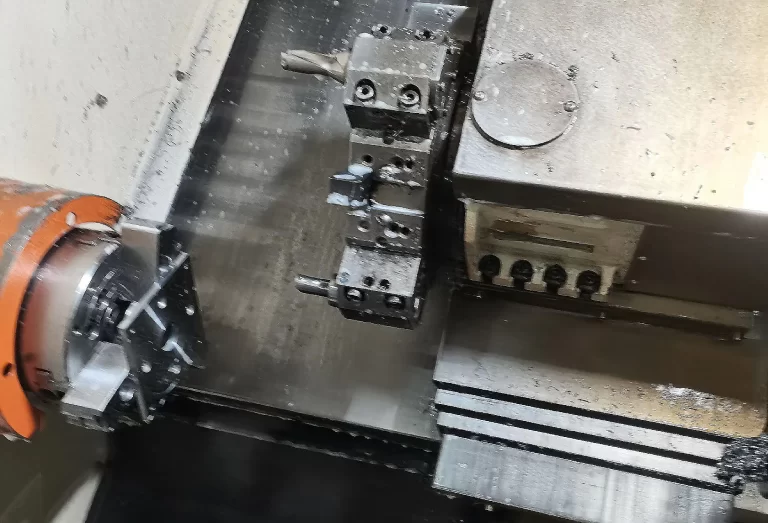
In turning, a single-point cutting tool removes material from a rotating workpiece, typically on a lathe. It’s ideal for producing cylindrical shapes, threads, and tapered forms.
Applications: Shafts, bushings, pistons.
Equipment: Engine lathes, turret lathes, CNC lathes.
Benefits: Excellent for high-precision round parts and batch production.
Milling employs a multi-point cutting tool to remove material from a stationary workpiece, using rotary cutters to create flat, angled, or contoured surfaces.
Machine Types: Vertical/horizontal mills, 3-axis and 5-axis CNC machines.
Applications: Gear cutting, slotting, and mold cavity creation.
Advantages: High flexibility and surface complexity capabilities.
Drilling is the most common method for producing round holes, often a precursor to tapping or reaming.
Tools: Twist drills, spot drills, reamers.
Applications: Holes for fasteners, wire passages, or ventilation.
Industries: Aerospace, electronics, medical devices.
Grinding uses abrasive wheels to remove small amounts of material, achieving fine surface finishes and tight tolerances.
Types: Surface, cylindrical, centerless grinding.
Applications: Precision parts in aerospace, tooling, and surgical instruments.
Advantages: Exceptional finish quality and dimensional control.
Broaching utilizes a toothed tool (broach) to remove material in a linear motion.
Applications: Internal splines, keyways, hex holes.
Used In: Automotive gear hubs, aircraft structural components.
Processes such as boring, reaming, facing, planing, shaping, knurling, and lapping address specialized finishing, shaping, or preparation needs in component manufacturing.
EDM removes material by creating electrical sparks between an electrode and the workpiece in a dielectric fluid.
Best For: Hard, conductive materials.
Applications: Tool and die making, injection molds, aerospace alloys.
ECM uses electrochemical reactions to dissolve metal in a highly controlled manner, with no heat-affected zones.
Suitable For: Superalloys, hardened steels.
Advantages: No thermal or mechanical stress on the part.
Selective chemical dissolution, typically used for creating intricate patterns or reducing weight in aerospace panels.
Common Use: Etching thin metal sheets, decorative and functional engraving.
A focused stream of high-speed abrasive particles erodes the surface, suitable for fragile and brittle materials.
Applications: Glass, ceramics, circuit boards.
USM employs high-frequency tool vibration and abrasive slurry to cut or shape hard, brittle materials.
Used In: Micro-drilling of ceramics, dental components, optical parts.
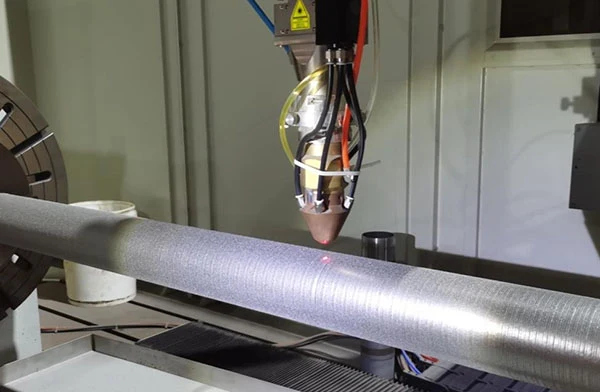
A concentrated laser beam melts or vaporizes material, enabling precise cutting or marking.
Advantages: No mechanical contact, suitable for microfabrication.
Industries: Electronics, medical devices, aerospace.
Pressurized water (often with abrasives) cuts through metal, plastic, and composites without generating heat.
Benefits: No heat-affected zone, eco-friendly with minimal dust.
Applications: Aerospace components, artistic designs, food processing.
These high-energy beam techniques allow micrometer-level accuracy in machining and finishing.
Uses: Semiconductor fabrication, MEMS, surface modification.
An ionized plasma jet melts and cuts metal at high velocity.
Ideal For: High-speed cutting of thick, conductive materials.
Industries: Shipbuilding, structural steel fabrication.
Definition:
CNC (Computer Numerical Control) machining revolutionizes traditional processes by automating tool movement and machining operations via programmable software.
Instead of relying on manual control, CNC systems execute precise, repeatable sequences, translating digital models into physical parts with high fidelity.
Advantages:
Enhanced Precision and Repeatability: CNC systems consistently achieve tight tolerances across large production runs.
Flexible and Rapid Reprogramming: Operators can quickly switch between parts, supporting both prototyping and mass customization.
Increased Production Efficiency and Safety: Automation reduces human error, minimizes downtime, and allows for lights-out manufacturing.
Impact on Manufacturing:
CNC has expanded the scope of feasible geometries and finishes, fostering innovation across industries.
It has also shifted workforce demands from manual machinists to skilled CNC programmers and machine operators. This evolution requires cross-disciplinary expertise in CAD/CAM software, materials science, and process optimization.
Types of Tools:
End Mills: Multi-tooth cutters for milling flat or contoured surfaces.
Drill Bits: Tools for creating round holes.
Reamers: Fine-finishing tools to perfect hole size and roundness.
Broaches: Multi-tooth tools for linear removal of internal shapes.
Grinding Wheels: Abrasive tools for finishing and dimensional accuracy.
Single-Point Cutting Tools: Used in turning and facing operations.
Selection Criteria:
Material Properties: Hardness, toughness, and thermal behavior dictate tool material (e.g., carbide, HSS, ceramic).
Operation Type: Turning, milling, drilling, etc., each require specific tool geometries and coatings.
Machine Compatibility: Spindle speed, torque, and tool holding systems must align with tool specifications.
Surface Finish and Tolerance Requirements: Tool sharpness and feed rates affect finish quality and dimensional accuracy.
Quality Control:
Precision metrology tools such as micrometers, coordinate measuring machines (CMMs), profilometers, and optical comparators are essential to verify compliance with design tolerances and surface finish specifications.
Selecting the right machining method depends on a nuanced balance of technical and economic factors:
Material Characteristics: Machinability varies with hardness, ductility, and thermal sensitivity. For example, nickel-based superalloys require slower cutting speeds and specialized tools.
Part Geometry and Complexity: Intricate geometries or deep cavities may necessitate multi-axis CNC machining or non-conventional methods like EDM or LBM.
Production Volume: High-volume production favors processes with low cycle times and high tool life.
Cost Efficiency: Tool wear, machine setup time, and scrap rates affect overall cost-effectiveness.
Environmental and Safety Considerations: Non-toxic coolants and energy-efficient methods are preferred in sustainable manufacturing.
Equipment Availability: Process selection is constrained by in-house capabilities and production timelines.
Precision and Surface Finish: Aerospace and medical applications often demand sub-micron accuracy and mirror-like finishes.
Technological advancements are redefining machining efficiency, intelligence, and integration:
Automation and Robotics: Multi-machine cells and robotic arms automate loading/unloading, part transfer, and in-line inspection.
Internet of Things (IoT): Smart sensors and machine monitoring enable predictive maintenance and real-time data analytics.
Hybrid Manufacturing: Integrating additive (3D printing) and subtractive methods allows complex geometries with precise finishing.
Advanced CNC Programming: Adaptive control systems adjust feed and speed based on live feedback, enhancing consistency.
In-Machine Inspection: Probing systems and laser scanners verify part dimensions without removing the part from the fixture.
Nitro-Milling and Cryogenic Cooling: Emerging techniques reduce thermal distortion and improve tool life during high-speed cutting.
Goals:
Green machining seeks to reduce the ecological footprint of production through:
Lower energy use
Reduced coolant/lubricant consumption
Minimization of material waste and emissions
Sustainable Techniques Include:
Abrasive Jet and Water Jet Machining: These methods generate minimal thermal load and avoid chemical contaminants.
Cold and Cryogenic Machining: Reduces heat without conventional coolants, ideal for environmentally sensitive facilities.
Electrochemical and Ultrasonic Machining: Offer precision with low waste and no thermal deformation.
Benefits:
Compliance with environmental regulations
Improved workplace safety
Long-term cost savings via resource conservation
Enhanced brand reputation for sustainability
Aerospace:
Precision machining of titanium and Inconel for turbine blades and fuselage frames
Tighter tolerances and surface finishes reduce fatigue and improve aerodynamics
Automotive:
High-throughput machining of engine blocks, transmission gears, and steering components
Integration of CNC machining centers with conveyor and robotic systems enhances lean manufacturing
Medical:
Fabrication of orthopedic implants, surgical tools, and microfluidic devices
Demand for biocompatibility and micron-level accuracy met through advanced CNC and EDM
Case Study:
A Tier-1 automotive supplier reduced prototype lead time by 40% after implementing a training initiative and upgrading to 5-axis CNC centers with real-time toolpath simulation.
This improved not only throughput but also first-pass yield and operator confidence.
Machining remains a bedrock of industrial production—offering unmatched precision, material versatility, and scalability.
From conventional cutting to advanced, digitally driven systems, machining adapts to evolving product demands and material innovations.
Choosing between conventional and non-conventional methods depends on part complexity, material behavior, and production goals.
The increasing integration of CNC, automation, and green practices ensures machining remains both competitive and sustainable in the modern manufacturing landscape.
Engineers are tasked not only with selecting appropriate processes but also with leveraging technology to optimize cost, quality, and environmental performance.
Q1: What are the most common machining processes?
A: Turning, milling, drilling, and grinding are foundational machining techniques used across most industries.
Q2: When should conventional vs. non-conventional machining be used?
A: Use conventional methods for straightforward materials and geometries requiring high material removal rates. Non-conventional techniques are best for hard, brittle, or highly complex parts.
Q3: What role does CNC play in machining?
A: CNC systems automate machining operations, ensuring high accuracy, efficiency, and consistency, while enabling complex part geometries and reduced human intervention.