How to efficiently machine shaped parts on CNC mill-turn machines?


The rapid development of advanced manufacturing technology has put forward higher requirements for the quality and performance of parts.
A variety of new machining processes are emerging, but the traditional material removal process in the manufacturing field still has an irreplaceable position.
The performance of manufactured parts is primarily influenced by the quality of the machined surface, which is determined by the geometric, mechanical, and metallurgical properties of the surface and subsurface layers.
Residual stress, as a key evaluation parameter of surface quality, has received increasing attention.
In the machining process, accompanied by high temperatures, high pressures, and high strain rates of plastic deformation, a certain layer depth of residual stress distribution forms on the processed surface.
Cutting surface residual stress is divided into residual tensile stress and residual compressive stress.
Residual stress will have a huge impact on the fatigue life of parts, creep, and corrosion resistance.
In recent decades, numerous scholars have studied the mechanisms of residual stress generation in machining, making remarkable achievements.
Residual stress is retained in the solid internal self-equilibrium stress after the unloading of external loads, machining residual stresses from the machining process of mechanical loads, temperature gradients, phase transitions, and other non-uniform material deformation.
The concept of internal stress was first introduced by the German railroad engineer Wöehler in 1860. He believed that the fracture of the train spindle was a factor of internal stress.
In 1973, the German scholar Macherauch redefined internal stress, categorizing the macroscopic residual stress as the first type of residual stress and the microscopic residual stress as the second and third types of residual stress.
Macroscopic residual stress exists in the material’s subsurface layer over a larger range; microscopic residual stress exists within the grain size range.
Generally, the actual measured residual stress refers to the first type of residual stress.
Residual stresses can have both beneficial and detrimental effects on the performance of a part depending on the magnitude and distribution of the residual stresses.
In many cases, residual stresses are only recognized when a part fails or is damaged.
It is generally recognized that a particular layer depth distribution of residual compressive stresses is beneficial to the fatigue life, creep life, and stress corrosion resistance of the part.
Brinksmeier et al.[1] in 1982 summarized the most essential effects of residual stress on electromechanical products, as shown in Figure 1.
Residual stress not only has a significant effect on the performance of the product, but its size and distribution can also be used as a crucial criterion for selecting processing parameters.

Over the past few decades, many advanced techniques have been developed for measuring residual stress. Generally, the measurement of residual stress can be categorized into two types: lossy and nondestructive.
The measurement of residual stress distribution in layer depth requires a certain degree of damage to the workpiece; therefore, a direct or indirect effective measurement method is necessary.
Lu [2] summarized the various methods for measuring residual stress and their advantages and disadvantages, as shown in Table 1.
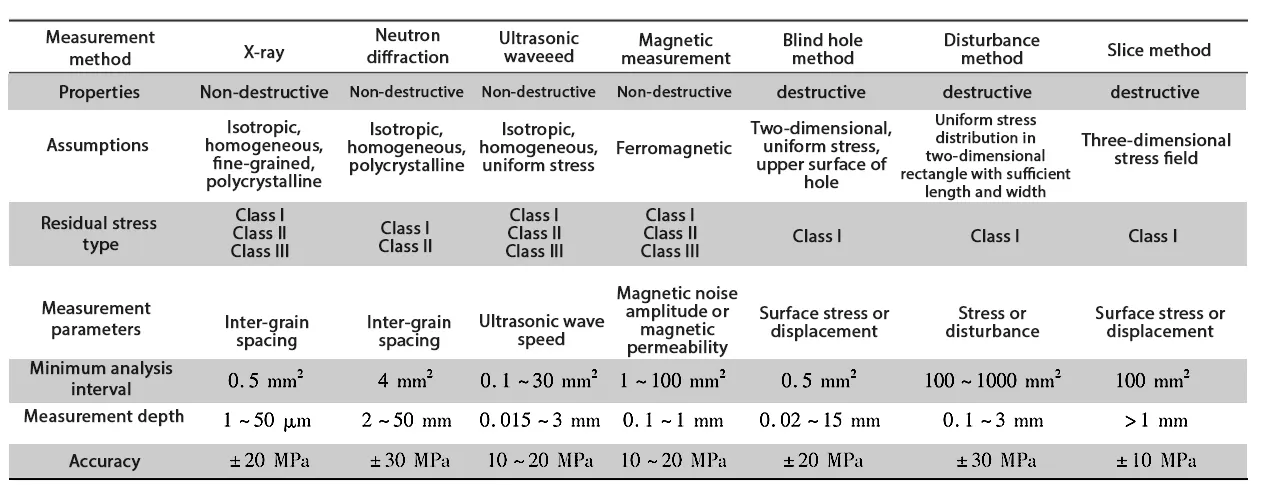
Tab. 1 Comparison of measurement methods of residual stress[1].
In the current study, X-ray diffraction, neutron diffraction and blind hole method are the three most commonly used residual stress measurement methods.
The experimental results show that the results of neutron diffraction and X-ray diffraction are close to each other.
The main advantage of the neutron diffraction method is that a penetration depth of millimeters can be achieved; however, its disadvantages include high cost and low spatial resolution.
The blind hole method is suitable for measuring residual stresses in coarse-grained crystalline materials; however, it is not possible to measure residual stresses between different phases.
In contrast, X-ray diffraction is a non-destructive measurement method that can measure residual stress at different depths using the peeling method, which is the most widely used method at present.
The basic research content of the concept of surface integrity, proposed in the 1970s, is illustrated in Fig. 2. As an important characterization parameter of surface integrity, research on residual stress has achieved remarkable results.
The cutting parameters, tools (tool geometry [3-5], coatings [3,6-9], tool wear [10], etc.), and workpiece materials (hardness [9], thermal softening rate, and thermal conductivity [11]) in the cutting process all affect the generation of residual stresses, among which the effects of feed rate, tool edge rounding, and tool wear are more significant on residual stresses. The influence of feed rate, tool edge rounding angle, and tool wear on the residual stresses is more significant.
Controlling the process parameters to achieve better residual compressive stress and thereby extending service life has become a popular research topic.
In this paper, we mainly introduce the generation law of residual stress in cutting processing from three aspects, such as experimental method, analytical model and finite element method.
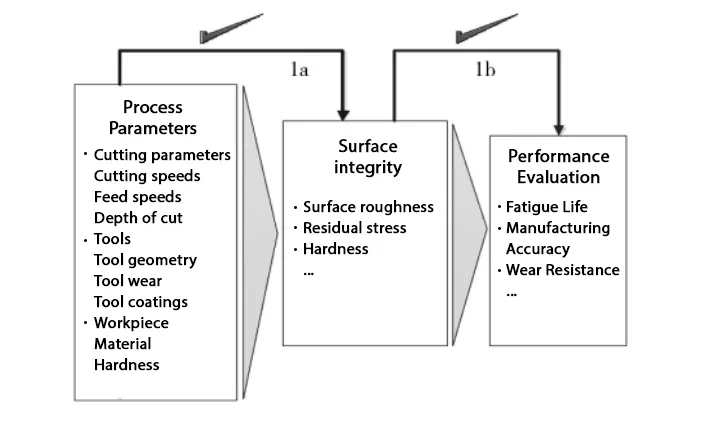
Fig. 2 Research contents of surface integrity in machining [12].
The most common and practical method to study the mechanism of cutting machining is experimentation. Through the design of different process parameters for comparison and summarization, the corresponding conclusions have a high degree of credibility.
However, due to the numerous influencing factors in the experimental process, it is challenging to control the variables accurately. Considering the consistency of experimental devices, instruments, environment, and experimental samples, the repeatability of experimental results is poor.
Under the premise of ensuring the basic consistency of experimental conditions, experiment is still the most reliable way to study the influence of process parameters on residual stress.
Many scholars have conducted experimental research on the mechanism of generating residual stress during machining, yielding numerous results.
Dahlman et al [5] found that a large negative rake angle and significant feed rate can produce good surface residual compressive stresses.
The depth of maximum stress increases with larger tool rake angle, and the depth of cut has little effect on the residual stress.
Toshiaki et al [14] designed a new type of milling cutter, which can generate residual compressive stress in the cutting layer, the residual stress on the machined surface is in the range of – 100 ~ – 200 MPa, and the size of the residual stress at 0.05 mm below the surface is in the range of – 300 ~ – 400 MPa.
Capello [15] investigated the effects of feed rate, tool fillet angle, and entry angle on the residual stresses on the surface of three materials during the cutting process.
The results showed that the basic principle of residual stress generation is independent of the material’s mechanical properties, which only affect the average level of residual stress.
The residual stresses can be generated mainly by the mechanical properties of the material, but also by the mechanical properties of the material.
And the residual stress can be mainly controlled by the feed rate and tool angle.
Pawade et al [16] carried out experiments on high-speed turning of 718 chromium-nickel-iron alloy, studied the machining process and tool edge geometry parameters on the machined surface residual stresses, and the results of the research constructively put forward the integrated effect of the 3 elements of cutting on the machined surface residual stresses, and suggested that in the cutting speed of 475 m / min, the feed rate of 0.05 mm /rev, depth of cut 0.5 /0.75 m /rev, depth of cut 0.5 /0.75 m /rev, depth of cut 0.5 /0.75 m /rev. It is also suggested that better residual compressive stresses can be obtained at a cutting speed of 475 m /min, a feed rate of 0.05 mm /rev, a depth of cut of 0.5 /0.75 mm, and the use of polished tool edges.
Qin Mengyang et al [14] investigated the effect of the blunt circle of the cutting edge on the residual stress, and the results showed that the larger the radius of the blunt circle, the higher the residual compressive stress and the thicker the stress layer.
The process parameters selected through the experiment can yield a relatively satisfactory residual stress distribution; however, they do not reveal the mechanism-level generation principle of residual stress in the machining process.
Therefore, based on experimental results, further simulation modeling work should be conducted to elucidate the fundamental principles of residual stress generation through simulation modeling and a comparison of experimental results, thereby laying a theoretical foundation for improving the applicability of the prediction model.
The analytical method is the most difficult to implement among all the prediction methods, because there are many uncertainties in the cutting process, which need to be simplified by other methods of characterization or assumptions.
The results obtained from the simplified model differ significantly from the actual situation. However, analytical models are derived from physically based theories and can reflect the physical nature of the cutting process and the surface integrity generation mechanism.
In the past decades, most scholars have focused on surface integrity modeling and residual stress modeling.
Liang et al. [18] combined the predictable shear force model of Oxley [19], the plow force model of Waldorf et al. [20], and the heat source model of Komanduri [21-23] for the analytical prediction of the force-heat loads and calculated the residual stresses under orthogonal cutting conditions using Mc-Dowell’s algorithm for elastoplastic-plastic roll/slip contact problem [24]. The residual stresses under orthogonal cutting conditions were calculated by McDowell’s algorithm [24].
Su [25] predicted the distribution of residual stresses on cutting surfaces by firstly predicting the cutting force and cutting temperature distribution during the cutting process, secondly calculating the mechanical stress field distribution of the workpiece in cutting based on the contact mechanics theory, and assuming that the material obeys the law of random hardening, and then finally predicting the distribution of the residual stresses by the elastic-plastic loading/unloading hybrid algorithm.
Su et al. [26] considered the geometrical conditions of end mills based on the original study and extended the method to predict residual stresses in milling machining.
Ulutan et al [27] used the finite difference method to calculate the temperature distribution of the workpiece, tool and chip in the cutting zone when modeling the residual stresses in cutting by analytical process, and used it for the calculation of thermal stresses, and assumed that the material obeyed the isotropic hardening law when calculating the plastic strain increment.
Finally, the distribution of residual stresses was obtained by using elasto-plastic modeling and stress relief treatment, and the results predicted by the model were in good agreement with the experimental data in the literature.
Agrawal et al [28] proposed a new distribution of mechanical stresses based on Su’s idea, and then investigated the analytical model of residual stresses in right-angle cut AISI 4340.
Outeiro et al. [6] investigated the effect of coated and uncoated tools on the generation of residual stresses during the turning process. They calculated the variation of residual stresses during the process using temperature and force measurements, as well as by developing an analytical model with thermal partitions.
In general, analytical modeling is an effective method for studying the surface formation mechanism of the cutting process; however, it is complicated to implement.
The force generated during the cutting process creates heat through shear and friction processes. Under the combined effect of force and heat, plastic deformation and phase transformation of the material occur.
Under the combined effect of force and heat, the material undergoes plastic deformation and phase transformation. Plastic deformation and phase transformation generate a work-hardening layer on the surface of the material.
Most of the analytical models proposed so far can only guarantee the consistency of the predicted trends, and a certain distance remains between the models’ practicality.
In future research, it is necessary to incorporate geometry, force, heat, hardness, and phase change into the analytical model of the cutting process, thereby making the modeling process closer to the real situation of the cutting process.
Due to the generation of residual stress in the machining process being influenced by numerous factors, the analytical model cannot fully characterize the relationship between process parameters and residual stress.
Since 1980, numerous scholars have employed finite element technology to simulate the generation of residual stresses during the cutting process.
Finite element simulation, as a method for studying the cutting process, has gained favor among an increasing number of scholars due to its relative accuracy, simplicity, low cost, and other advantages.
Some scholars have studied the effect of tool geometry on the generation of residual stresses, and Sasahara et al. [29] proposed a prediction model for surface residual stresses by combining the orthogonal cutting model and the tool rounding indentation model, which takes into account the effects of tool rounding angle and feed rate on the surface residual stresses.
The results show that a slight tool fillet angle can generate better residual compressive stresses in the vertical cutting direction. With a decrease in feed rate, the surface residual stresses change from tensile to compressive stresses.
T. zel [30] simulated the cutting process by building a three-dimensional finite element model and completed the modeling of metallurgical organization and grain size by using the JNAK (Johnson-Mehl-Avrami-Kolmogorov) model [31]. The results showed that the residual compressive stresses increased with the increase of the obtuse circle radius of the cutting edge.
Some scholars have also incorporated improved material properties, such as hardness, the J-C intrinsic model, thermal conductivity, and thermal softening rate, into finite element modeling.
Hua et al [32-33] added a flow stress-based hardness model to the elastic-viscoplastic finite element model. They investigated the effects of tool geometry, workpiece hardness, and cutting parameters on the residual stresses.
Umbrello et al. [34] incorporated a J-C intrinsic model for five different materials to describe the behavior of the machined materials in numerical simulations of machining, and predicted cutting forces, chip morphology, temperature distribution, and residual stresses using an elasto-viscoplastic finite element model.
Nasr et al [35] proposed an ALE (Arbitrary-Lagrangian-Eulerian) finite element model to investigate the effect of cutting edge obtuse circle on the generation of residual stresses during orthogonal cutting, and predicted the impact of thermal conductivity and thermal softening rate on the generation of residual stresses by this model. Sun Yazhou [36-39] and others have conducted substantial work on finite element modeling of cutting machining.
The finite element method is a practical and effective way to study the cutting mechanism. In future research, more effort should be devoted to modeling material properties, as the current research does not account for phase transitions during the cutting process.
Compared with analytical modeling, the finite element method can be more intuitive to observe the changes in the material surface during the cutting process, and can be integrated into a variety of material properties, low cost, the results and experiments can be in line with the better, is the future study of the cutting mechanism of an essential means.
After cutting, a layer of residual stress field will form on the surface of the part. The residual stress field will have a significant impact on the fatigue life of the part.
It is generally believed that a particular layer depth distribution of residual compressive stress will improve the fatigue life of the parts. In contrast, the role of residual tensile stress is just the opposite.
Many scholars have investigated the effect of residual stress on fatigue life and have achieved some results.
Matsumoto et al.[4] found that the peak residual compressive stress in the subsurface layer has a significant influence on the fatigue life, as noted by Sasahara et al.[40] It was found that the most extended fatigue life was achieved when the residual stress was compressive and the hardness of the specimen exceeded 290 HV.
Schwach et al. [41] investigated the effect of hard turned surface integrity on fatigue life by detecting fatigue damage using the acoustic emission technique. The results showed that the residual compressive stress near the surface can improve the rolling contact fatigue life.
The depth and value of the maximum residual compressive stress in the sub-surface layer do not have a significant effect on the rolling contact fatigue life.
Liu [42] coupled the residual stress and microhardness, and modified the prediction model based on fracture mechanics to predict the fatigue life of rings.
Javidi et al. [43] found that the tool fillet angle and feed rate are two crucial parameters affecting the residual stress in the surface layer of machined parts. By controlling both of them, a better residual compressive stress can be generated, which in turn improves the fatigue life of the parts.
Li et al [44] found that the high residual compressive stress and work hardening obtained after hard turning made the fatigue life of the machined surface exceed 106 cyclic loads.
Some scholars have also investigated the effect of process on fatigue life by using different process methods. Ghanem et al. [45] investigated the effect of two different machining processes (EDM and milling) on fatigue life.
It was found that compared to EDM, conventional milling could generate good residual compressive stresses near the surface layer, and the fatigue life was increased by 35% accordingly.
Hashimoto et al. [46] investigated the effects of hard turning and grinding on surface integrity and rolling contact fatigue life, and the results showed that the fatigue life of parts generated by hard turning was approximately doubled compared with that generated by grinding, with a slight difference in surface roughness.
Scholars have also researched the effect of residual stress on fatigue life. Zhang Dingquan [47] found that the surface residual compressive stress is beneficial for parts subjected to axial loads, as it prevents fatigue cracks from sprouting on the surface.
Wang Xin et al [48] investigated the effect of residual stress field generated by circular grinding and shot peening on fatigue life.
Based on the finite element software MARC, Li Zhen [49] established a two-dimensional rolling contact fatigue life prediction model with plane strain characteristics.
Liu Yanchen [50] fitted the effect of residual stress on fatigue life by Eq.
Gao Yukui [51] found that the surface residual compressive stress obtained from shot peening and extrusion peening can significantly extend the fatigue life of perforated members.
Zeng Quanren et al. [52] established a linear regression empirical model of the fatigue life of GH4169 high-temperature alloy cylindrical model fatigue specimens with variation in surface residual stress.
Yang Wenyu group [53,54] for nuclear power key components and marine heavy-duty equipment on the high service performance requirements of manufacturing parts, a systematic study of the formation mechanism of surface integrity of cutting, through the modeling of the cutting process to study the impact of cutting parameters on the residual stress, and through experimental methods to study the effect of residual stress on the fatigue life.
Residual stress has a significant influence on the fatigue life of parts; however, most current work focuses on studying the effect of residual stress on fatigue life using experimental methods, which cannot reveal the mechanism of residual stress on fatigue life at the mechanistic level.
At the same time, the detection of residual stress, especially the measurement of layer depth distribution residual stress, as well as the fatigue test, is costly and time-consuming.
In the future, more modeling and simulation work should be conducted, and the experiment should be utilized as an auxiliary means of verification.
Residual stress, as a crucial evaluation parameter of surface integrity, is of increasing scientific and economic importance.
Intense thermal coupling changes accompany the generation of residual stresses in the cutting process. The establishment of analytical models as a theoretical breakthrough has led to an emphasis on using finite element simulations to assist the cutting experimental research method.
At the same time, understanding the effect of residual stress on fatigue life can guide the formulation of process parameters, which is of great practical significance.