Design of Gear Processing Fixtures


Aerospace products widely use cylindrical parts. They are primarily found in actuation systems. Applications include the propulsion systems of various doors and landing gear systems.
Cylindrical parts have strict angular relationships and positional requirements.
These apply to their internal bores, external contours, and various hole systems.
This complexity poses significant challenges during the manufacturing process.
Our company specializes in the machining of cylindrical parts.
With the opening of the aerospace market, customer orders have been increasing, delivery cycles have been shortening, and there is a growing demand for lower product prices.
All these factors have increased production and delivery pressures.
To reduce manufacturing costs and enhance corporate competitiveness, it is necessary to optimize the manufacturing process of cylindrical parts to improve machining efficiency.
The company aims to implement unmanned intelligent manufacturing from a long-term corporate planning perspective.
In the current stage, we are promoting single-machine automation improvements to lay the foundation for future development.
An international subcontracting customer uses the cylinder parts targeted for improvement in this plan.
These parts have a relatively high product price.
Delivery performance in 2023 was poor, with a contract fulfillment rate of 78.2%.
The customer has lodged multiple complaints, and the company continues to underdeliver the parts.
If the company continues to underdeliver the parts, it will negatively impact its image in the customer’s eyes.
In 2024, the order volume for this component increased by 20% compared to 2023.
If the company does not resolve the processing efficiency issues for this component, it will further impact delivery performance.
This may also affect orders for other components.
In addition, it could damage the company’s reputation and hinder future development.
To meet delivery requirements, it is imperative to address the low processing efficiency of this component. Improving efficiency will help ensure timely delivery.
It will also enhance the company’s image and demonstrate its capabilities.
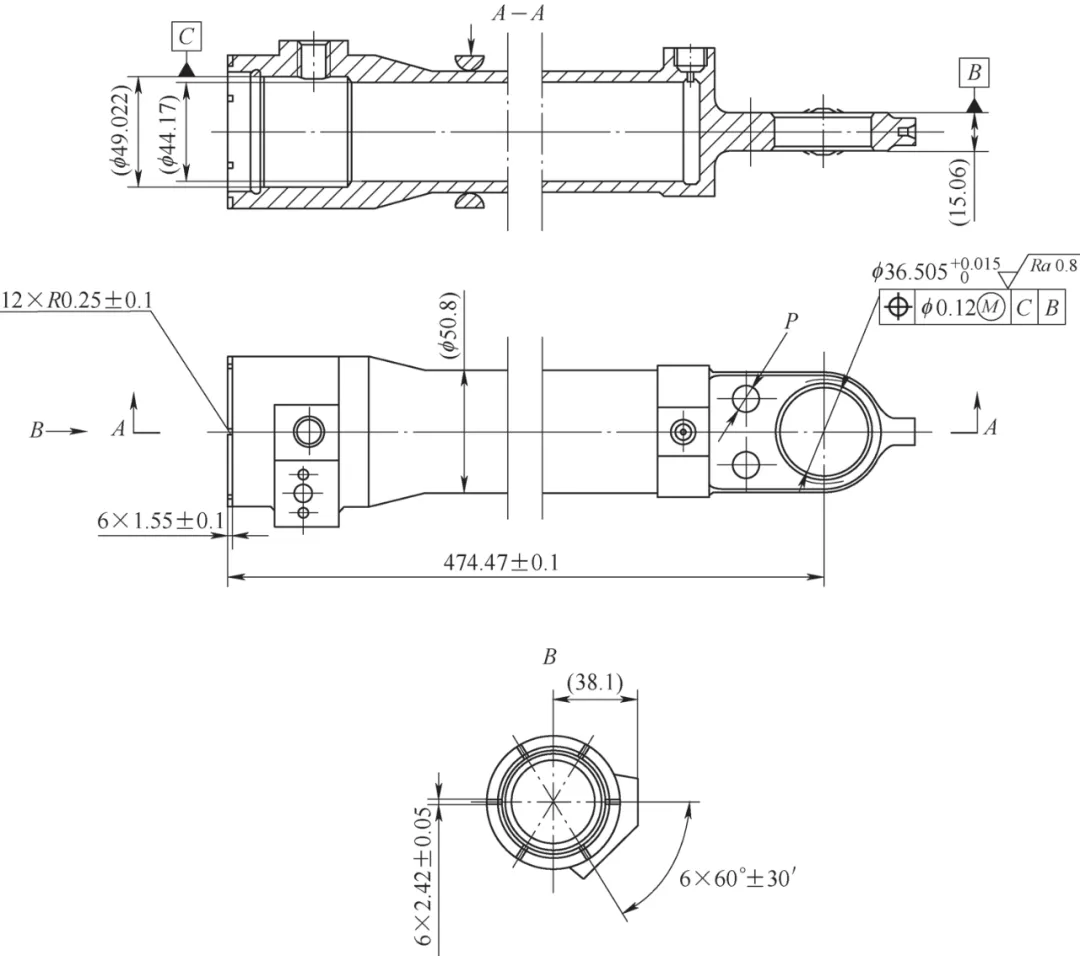
The part shape is shown in Figure 1.
We organize the part processing procedures in a specific sequence.
The manufacturing process includes the following steps: material preparation, rough turning, rough milling, heat treatment, deep hole processing, precision turning, precision milling, vertical-horizontal conversion, honing, and surface treatment.
Because the vertical-horizontal conversion process takes a long time, the part yield rate is low.
This step has become the bottleneck in the manufacturing of this part.
We process this cylinder component using a vertical-horizontal conversion process.
Currently, the processing time per piece is 50 minutes.
This results in low efficiency and high capacity utilization.
This severely impacts the output of parts from the vertical-horizontal conversion equipment.
Figure 2 shows the processing requirements for the vertical-horizontal conversion process.
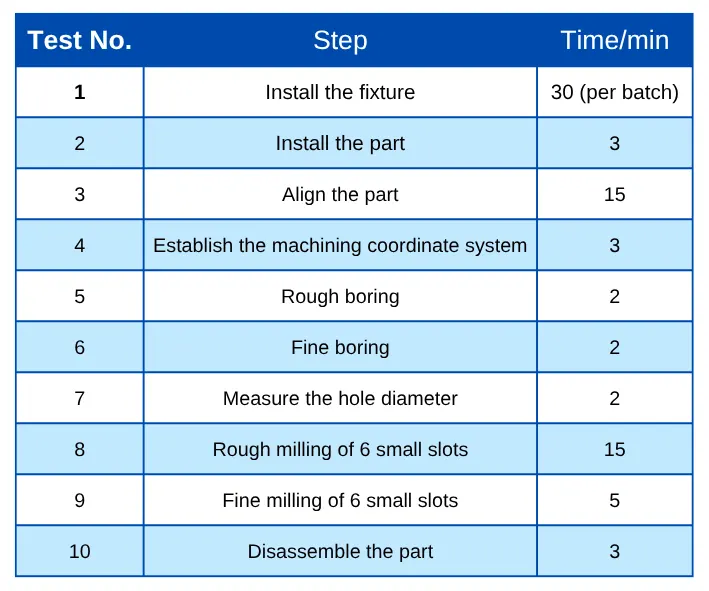
During processing, this process primarily involves 10 work steps.
These steps are: installing fixtures, installing parts, aligning parts, establishing the machining coordinate system, rough boring, finish boring, measuring hole diameter, rough milling 6 small slots, finish milling 6 small slots, and disassembling parts.
Table 1 shows that completing all work steps requires a total machining time of 50 minutes.
The main reasons for the long processing time of parts are as follows:
① Because the fixture cannot control the angular position, operators must align each part individually.
② Since operators clamp parts freely, they need to establish a coordinate system for each part individually.
③ Operators clamp the parts using screws, which is inefficient.
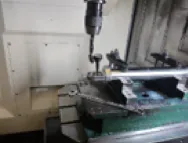
④ The milling cutter for keyways is too long and lacks sufficient strength.
The influencing factors are shown in Figure 3, and the milling cutter for keyways is shown in Figure 4.
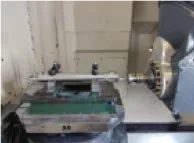
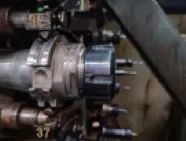
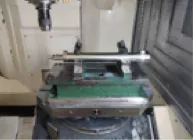
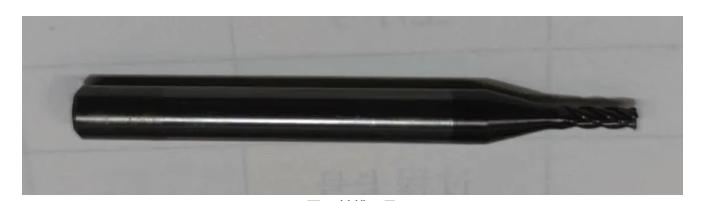
As can be seen, most issues stem from the fixtures, and there are also cases of improper tool selection.
By analyzing the existing issues and implementing targeted improvements, we can optimize the design of both fixtures and tools.
The requirements for custom fixtures are as follows:
① Install pins with fixed angles and positions within the fixture to ensure proper part alignment after clamping, achieving axial positioning.
② Use a double V-shaped positioning system to prevent radial displacement after clamping.
③ Design the fixture with pneumatic clamping plates to enable rapid part clamping.
④ Create a pressure-holding structure on the specialized fixture to ensure stable clamping, even if machining air supply is interrupted.
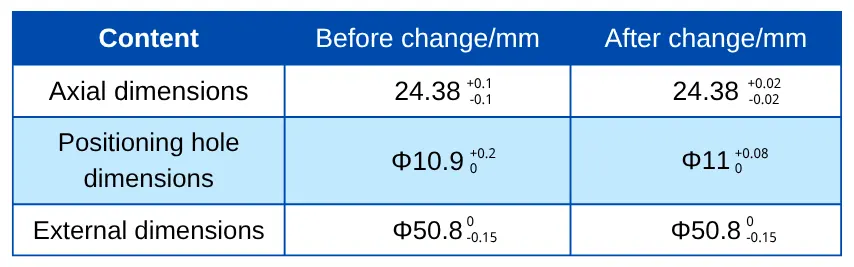
We optimized and controlled the machining process to ensure interchangeability and stability between vertical and horizontal machining of parts.
① By using small holes for positioning, we limit the axial dimensions and angular orientation of the parts.
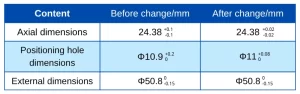
Additionally, we reduce the diameter tolerance of the small holes and the positioning dimension tolerance.
② We adopted a double V-shape design for the radial positioning of the part.
This reduces the tolerance of the part’s outer diameter to ensure radial positioning accuracy.
The above control of the process ensures the uniform quality of parts before the vertical and horizontal conversion processes.
This is a key element in improving single-machine automation.
We can achieve stable interchangeability only by controlling the part’s state within the required precision range.
Process optimization is shown in Table 2.
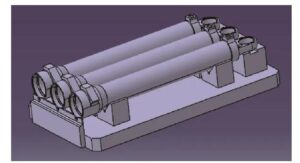
After analyzing the fixture requirements for clamping parts, we designed the fixture structure and functions specifically to address these challenges.
Our objective was to achieve automated operation.
We designed the fixture to meet these requirements.
It fully integrates the structural characteristics of the cylindrical parts and the processing needs of the vertical-to-horizontal conversion process.
After several design iterations, we ultimately chose a solution that balances automation with multi-station functionality.
The following section outlines the reasons for selecting the three solutions.
1. Solution 1: Position the part using its end face, limit the axial dimensions, and define the angular relationship of the part using the flat surface of the ears.
Design a double V-shape for radial positioning of the part. However, we abandoned this solution because the flat surface and V-shape positioning simultaneously restricted the part’s Z-axis dimensions and caused over-positioning.
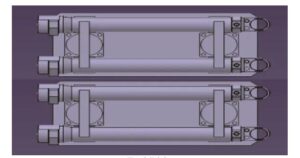
2. Option 2: Use small holes for positioning, limiting the axial dimensions and angular orientation of the parts.
Design a double V-shape for radial positioning of the parts. Fixture option 2 is shown in Figure 6.
We designed a 4-station fixture, but abandoned this option because its 70 kg weight made it too heavy.
3. Solution 3: Positioning using small holes to limit axial dimensions and angular orientation of the part.
We adopted a double V-shape design for the radial positioning of the part.
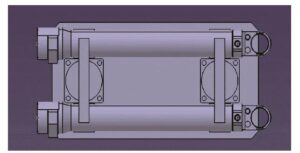
The fixture design for Solution 3 is shown in Figure 7.
We designed a dual-station fixture.
This solution ensures precise axial and radial positioning of the part.
It also minimizes repeat clamping errors and enables interchangeable clamping of parts.
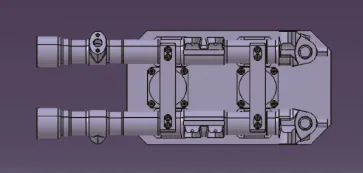
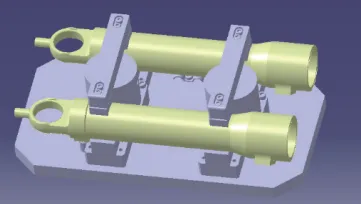
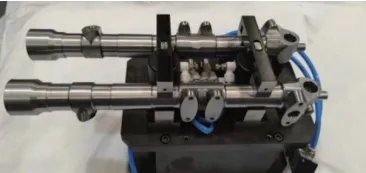
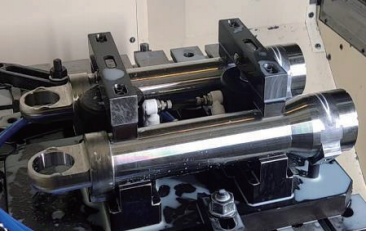
Our company also uses this automated fixture design scheme for similar parts, Cylinder A and Cylinder B, as shown in Figures 8 and 9.
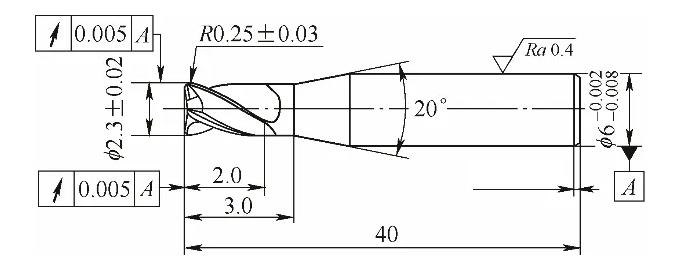
We optimized the milling cutter with a tool diameter of 23 mm and a cutting edge length of 2 mm.
This enhances tool rigidity while increasing the depth of cut.
The new milling cutter design is shown in Figure 10.
After the fixture is in place, it is necessary to confirm its performance and status.
It is also important to verify that the fixture meets the functional requirements for automated operation.
Below, we describe the key elements to verify.
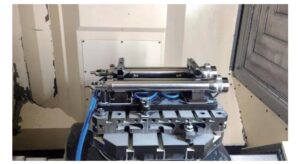
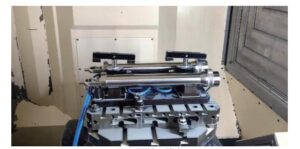
The new fixture design achieves pneumatic clamping and release functions, effectively addressing the prolonged clamping time issue of the original fixture.
Figure 11 shows the state of the part after clamping, and Figure 12 shows the state after release.
During the design phase, we specified angular control requirements for the parts.
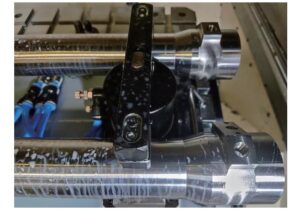
After clamping, the fixture achieves angular positioning, eliminating the need to realign each part during machining.
The orientation after part clamping is shown in Figure 13.
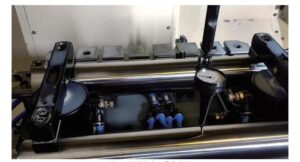
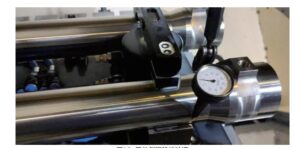
According to the positional accuracy requirements for this cylindrical part, the runout of the part’s generatrix must be <0.03 mm.
After clamping the part, we must verify the upper and side surfaces.
We must keep the runout of the upper surface and side surfaces below 0.015 mm to meet process requirements.
The verification of the upper surface runout is shown in Figure 14, and the verification of the side surface runout is shown in Figure 15.
This factor is critical to achieving single-machine automation.
Only when we ensure stable repeat positioning of parts can we guarantee the quality of part processing.
During process adjustments, we reduced the positional dimensions of the locating holes to 24.38 ± 0 mm, with a tolerance of 0.04 mm.
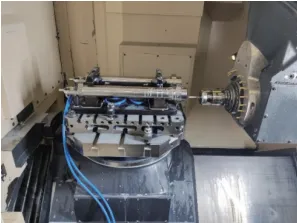
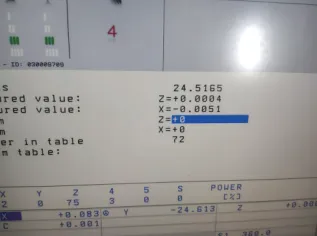
After verification, we controlled the repeat clamping position of the parts within 0.015 mm, enabling stable interchangeability after clamping.
The verification of part repeatability positioning accuracy is shown in Figure 16.
The fixture protection is shown in Figure 17.
We designed the fixture’s switch as a rotary type.
This prevents accidental operations or collisions from opening the release switch.
As a result, the design ensures the safety of part clamping.
Additionally, the fixture uses compressed air as its power source.
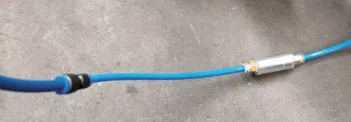
We install a check valve at the air inlet of the fixture to prevent it from releasing the part in the event of a power outage.
This ensures the stability of the air supply, and even if a power outage occurs, the check valve ensures that the fixture securely holds the part in place.

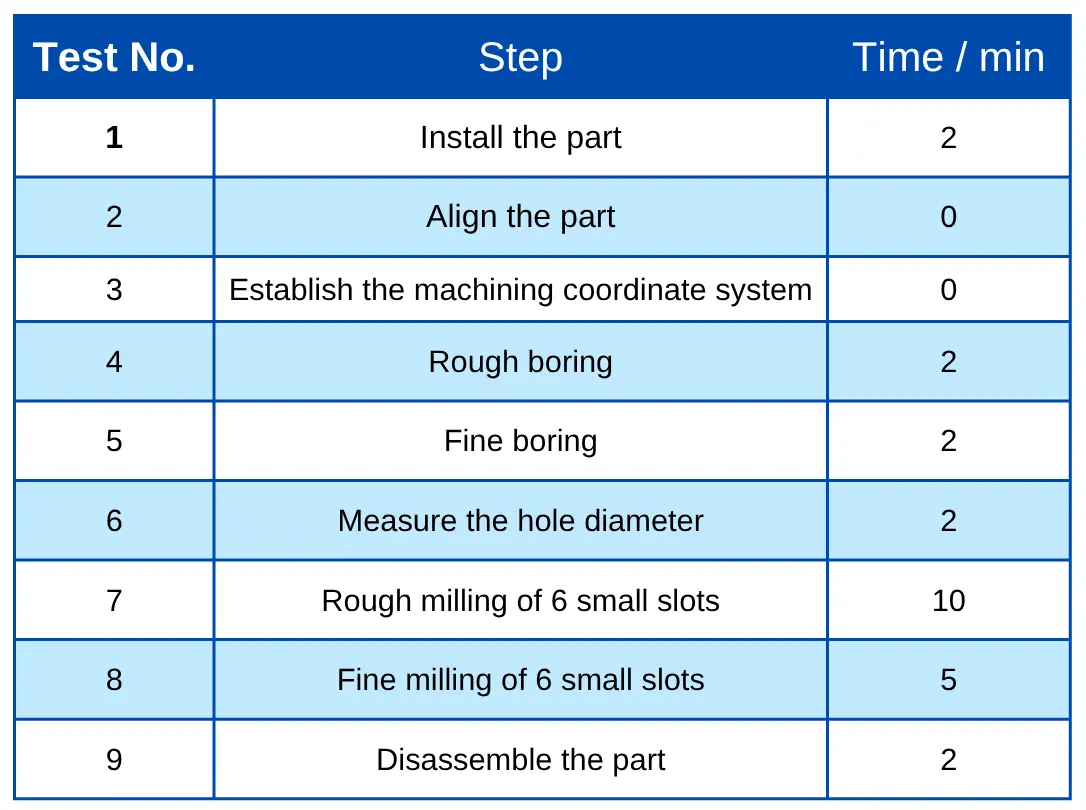
After implementing the project, we reduced the processing time for this part to 25 minutes.
The specific processing statistics are shown in Table 3.
At the same time, the good interchangeability between the fixture and the part enabled us to process the part automatically.
Continuous batch processing of parts only required one calibration.
The design and operation of the tooling and process for this project helped personnel master the core technology of single-machine automated operation.
This provided valuable guidance for subsequent improvements to other parts.
The successful implementation of single-machine automation for cylinder parts mainly depends on the following factors.
1. During project planning, we conducted a detailed analysis of the parts processing process.
Our analysis revealed that the old fixtures had several limitations: they couldn’t fix angles, caused long alignment times, required an independent coordinate system, and necessitated time-consuming disassembly.
These findings clarified the direction for us to make subsequent improvements.
2. After thoroughly analyzing the high process stability requirements of automated fixtures, we effectively controlled the critical positioning dimensions of the parts.
This ensured stable interchangeability.
3. During the design phase, we thoroughly evaluated relevant factors and their impact, and ultimately selected the most suitable solution.
The successful implementation of this process plan for cylinder parts has laid a solid theoretical foundation.
It also provides practical guidance for subsequent improvements in single-machine automation for similar parts.
Based on the success of this part, our company designed and manufactured automated fixtures for other parts.
This has resulted in significant efficiency improvements.