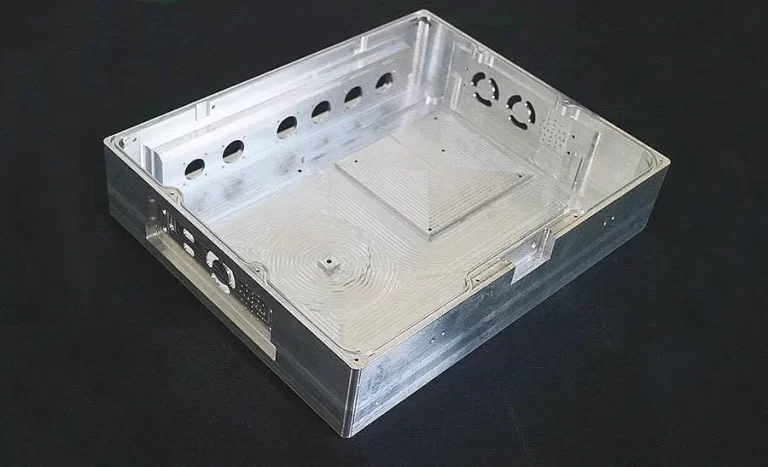
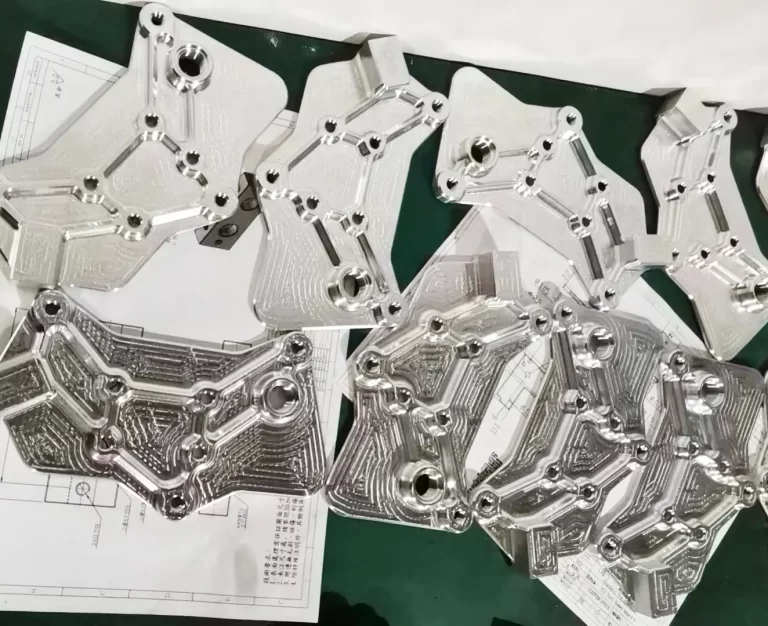
How to efficiently machine shaped parts on CNC mill-turn machines?
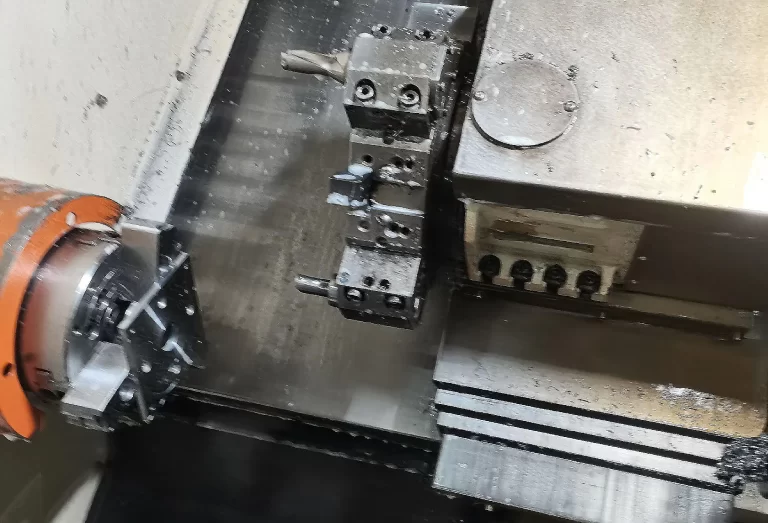


The effective cutting edge range of ball-nose end mills can reach 180°, making them suitable for CNC machining mold cavity surfaces and complex formed surfaces.
During ball-nose end milling operations, properly designing machining parameters helps achieve higher-quality parts.
Key machining parameters include cutting depth, cutting width, feed rate, cutting speed, and feed rate.
Additionally, the tool’s orientation and the spindle speed of the CNC machine significantly impact the workpiece’s surface roughness.
To achieve higher-quality workpieces, it is essential to rationally design all parameters during the ball-nose end milling process.
This design should balance machining efficiency and quality to maximize overall benefits.
Surface roughness closely affects the actual performance and service life of components.
During the milling process of workpieces, friction between the tool and the component surface is a significant contributor to surface roughness and unevenness.
Tool vibration also plays an important role.
Additionally, plastic deformation occurring during chip separation contributes to surface roughness and unevenness.
To accurately and comprehensively represent workpiece surface roughness, this paper selects the “arithmetic mean deviation of the profile (R)” as the characteristic parameter.
We define it as the arithmetic mean of the absolute values of the distances y between each point on the workpiece profile and the profile centerline within a sampling length l.
The formula for calculating R is as follows:

The spherical head of an end mill features a complex geometry.
Areas farther from the tip exhibit sharper cutting edges, while those closer to the tip become increasingly dull.
This structural characteristic results in non-uniform cutting thickness along the tool axis during machining.
When machining free-form surfaces with the tool axis perpendicular (90°) to the workpiece surface, the linear speed at the tool tip approaches zero.
This causes compressive friction between the tip and the workpiece surface.
The heat generated by this friction elevates the tool temperature to high levels, negatively impacting the surface finish quality of the workpiece, resulting in increased surface roughness.
To improve workpiece surface quality while extending tool life and reducing manufacturing costs, specific adjustments are necessary.
When milling with a ball-nose end mill, engineers must incline the tool axis at an angle ω relative to the surface normal.
This inclination is shown in Figure 1.

In the scenario depicted in Figure 1, the actual cutting radius of the tool exceeds the original radius, resulting in an increase in cutting line speed.
In Figure 1, D represents the tool diameter when the tool axis is perpendicular to the curved surface.
The symbol d denotes the effective cutting diameter of the tool.
The symbol h indicates the straight-line distance between the tool tip edge and the workpiece surface.
Engineers can calculate the effective cutting diameter d using the following formula:
-1.jpg "(2)")
In actual machining, operators tilt the body of the ball-nose end mill to assign the cutting function to the cutting edge where the cross-sectional radius of the ball nose is larger.
This approach not only accelerates cutting speed to a certain extent but also ensures a sharper cutting edge at this location, facilitating easier chip evacuation.
The combined effect of these two factors significantly reduces the surface roughness of workpieces machined with the tilted angle.
It is important to note that if the tilt angle is too large, the distance between the cutting edge and the junction of the ball nose and the cylindrical section becomes too close.
This excessive structural change in the cutting edge can lead to increased surface roughness.
Therefore, this study examined both flat milling and inclined milling scenarios to investigate the influence of machining parameters on surface roughness.
For inclined milling, the tilt angle was set to 15°.
The CNC machine tool used for the experiment is a VMC650 high-speed five-axis machining center.
Spindle speed: 21,000 rpm. Maximum working feed rate: 4,800 mm/min.
Table dimensions: 800 mm (length) × 600 mm (width).
The test specimen material is an aluminum alloy, 6061, with a tensile strength of 125 MPa, a yield strength of 56.1 MPa, an elongation of 24.8%, and a Poisson’s ratio of 0.33.
The cutting tool used is an imported SECO carbide ball-nose end mill with a diameter of 10 mm, two cutting edges, and a helix angle of 30°.
Researchers measured the arithmetic mean deviation (R) of the workpiece surface using a MAHR M1 surface roughness tester.
After commencing the experiment, researchers milled the specimen’s flat and inclined surfaces using a ball-nose end mill.
Researchers selected three milling parameters: spindle speed, cutting depth, and feed per revolution.
At each of these three parameters, three levels were chosen to conduct an L9(33) orthogonal test.
Researchers employed the single-variable method to investigate how each parameter influences the surface roughness achieved by the ball-nose end mill.
The L9(33) orthogonal test is shown in Table 1.
After milling the inclined and flat surfaces of the workpiece on a CNC machine, a surface roughness tester was used to obtain the arithmetic mean deviation of the profile (R).
Researchers took three measurements on the same workpiece to control measurement errors and used the average of the three data sets as the final surface roughness value.

When investigating the relationship between spindle speed and surface roughness, the cutting depth and feed per revolution were held constant, with spindle speed as the sole variable.
The effects of varying spindle speed on surface roughness during flat milling and inclined milling were examined.
The results are shown in Figures 2 and 3.


In Figures 2 and 3, curve A represents the relationship between spindle speed and surface roughness when the cutting depth is 0.4 mm and the feed rate is 0.1 mm/r.
Similarly, curve B represents the relationship for a cutting depth of 0.6 mm and a feed rate of 0.3 mm/r; curve C represents the relationship for a cutting depth of 0.8 mm and a feed rate of 0.5 mm/r.
Overall, whether using flat milling or inclined milling, the fundamental principle remains that higher spindle speeds yield lower surface roughness on workpieces.
This occurs because higher spindle speeds minimize the formation of built-up edges during milling.
Additionally, faster milling speeds lead to smoother machining processes, thereby reducing deformation.
Comparing the results, the surface roughness achieved when milling inclined surfaces with a ball-nose end mill is significantly lower than that obtained when milling flat surfaces.
Taking a cutting depth of 0.6 mm and a feed rate of 0.3 mm/r as an example (line B in the figure), at a spindle speed of 4000 r/min, the surface roughness of the former is 0.7 μm, while that of the latter is 2.2 μm.
This data also confirms that tool inclination affects the surface roughness of the machined part.
In summary, engineers recommend increasing the spindle speed when milling workpiece surfaces with ball-nose end mills.
This should be done within the permissible operating conditions of the CNC machine tool.
Increasing spindle speed helps achieve lower surface roughness and improves part surface quality.
With cutting depth as the sole variable, spindle speed and feed rate per revolution were kept constant.
For example, spindle speed was maintained at 4000 r/min and feed rate at 0.1 mm/rev.
Researchers then investigated the effect of cutting depth on surface roughness during flat milling and inclined milling.
Results are presented in Table 2.

As shown in Table 2, when the cutting speed and feed rate are fixed, the surface roughness of the workpiece increases as the cutting depth increases during flat milling with a ball-nose end mill.
Conversely, the opposite occurs during inclined surface milling.
Analyzing the cause reveals that during inclined surface milling, cutting depth affects the tool geometry.
As cutting depth increases, the distance between the active cutting edge of the ball-nose end mill and its ball nose tip grows progressively larger.
The sharp cutting edge and unique structure enable rapid evacuation of chips generated during milling.
Consequently, even with increased cutting depth and larger chip volume, the milling process remains largely unaffected.
Simultaneously, increasing the cutting depth effectively tilts the tool at a certain angle.
A larger cutting depth corresponds to a greater tilt angle, resulting in finer surface roughness.
In summary, appropriately increasing the cutting depth when milling inclined surfaces can reduce the surface roughness of the workpiece.
Conversely, when milling flat surfaces, reducing the cutting depth facilitates achieving lower surface roughness.
With feed rate per revolution as the sole variable, spindle speed and cutting depth were kept constant.
Specifically, researchers maintained the spindle speed at 4000 r/min and the cutting depth at 0.4 mm.
This study investigates the impact of feed rate per revolution on the surface roughness of machined parts during flat turning and inclined milling.
Researchers present the results in Table 3.

As shown in Table 3, overall, ball-nose end mills exhibit a trend where both higher feed rates per revolution and increased surface roughness occur during both flat and inclined surface milling.
Analysis reveals that increasing the feed rate per revolution affects surface texture.
Specifically, the width of the grooves formed on the workpiece surface increases accordingly.
This leads to greater surface roughness.
Additionally, an increased feed rate per revolution leads to a corresponding increase in both the amount of metal removed from the workpiece surface and the resulting milling deformation.
This also contributes to higher surface roughness.
Therefore, in ball-end milling operations, it is advisable to set the feed rate per revolution as low as possible.
At the same time, engineers should maintain acceptable productivity.
This approach facilitates the achievement of lower surface roughness, thereby enhancing the overall machining quality of the workpiece.
Cutting tools are essential components of CNC machine tools.
Engineers commonly employ ball-nose end mills when machining various complex surfaces using CNC equipment.
To further enhance the surface quality of machined parts, it is imperative to rationally design the milling parameters of ball-nose end mills.
By maintaining a specific rake angle between the tool and the workpiece surface, engineers can reduce surface roughness.
Engineers can achieve this by appropriately increasing the spindle speed and cutting depth of the CNC machine tool.
At the same time, engineers should decrease the feed rate per revolution.
This approach achieves higher surface quality while meeting machining efficiency requirements, thereby enhancing the practical performance and service life of the workpiece.