

Quick Answers




CNC Milling Services Explained: Capabilities Materials and Uses
When it comes to manufacturing precision parts, CNC milling services play a crucial role in the process.
Understanding the capabilities of CNC milling can help engineers optimize their designs and workflows for better efficiency and precision.
What is CNC Milling?
CNC milling is a manufacturing process that uses computer numerical control (CNC) technology to remove material from a workpiece using rotary cutters.
The CNC machine follows instructions from a computer program to produce complex shapes and geometries with high precision.
This process is commonly used in industries such as aerospace, automotive, and medical manufacturing.
Click more: What is CNC machining?
Operations, Machine Types, and Material Selection
CNC milling is a core subtractive manufacturing process used to produce high-precision components across aerospace, automotive, medical, energy, and general industrial sectors.
Its flexibility arises from a wide range of milling operations, machine architectures, and material options.
Selecting the appropriate combination directly affects machining accuracy, surface integrity, cycle time, and overall production cost.
This article provides a structured technical explanation of CNC milling operations, machine types, and material selection from an engineering and manufacturing perspective.
CNC Milling Operations Explained
Face Milling
Face milling is a milling operation in which the cutter’s rotational axis is perpendicular to the workpiece surface.
Material removal is primarily achieved through the cutting edges located on the face and periphery of the cutter.
This cutting configuration enables high material removal rates while maintaining good control over flatness and surface finish.
Modern face milling cutters are commonly available in inserted designs using indexable carbide inserts, as well as solid carbide tools for smaller diameters. Insert geometry plays a critical role in cutting performance.
Positive rake inserts reduce cutting forces and are preferred for aluminum and thin-walled parts, while negative rake inserts provide higher edge strength for steel and cast iron machining.
Face milling is widely used for surface flattening, rough stock removal, and final facing operations.
Under stable cutting conditions, surface roughness values in the range of Ra 0.8–3.2 μm are typically achievable, with wiper insert technology capable of further improving surface finish without reducing feed rates.
Compared to end milling, face milling generally offers lower cost per unit area for large flat surfaces due to higher productivity and longer tool life.
Plain (Slab) Milling
Plain milling, also known as slab milling, involves a cylindrical cutter whose axis is parallel to the workpiece surface. Cutting is performed mainly by the peripheral teeth of the cutter.
This operation is traditionally carried out on horizontal milling machines, where rigid spindle orientation and arbor support allow stable cutting over large surface areas.
Plain milling is commonly used for machining large flat surfaces and simple geometries, particularly in heavy or roughing applications.
Feed direction can be either conventional or climb milling.
Climb milling typically produces better surface finish and dimensional accuracy but requires machines with minimal backlash and sufficient rigidity.
In modern CNC environments, the use of plain milling has declined due to limited flexibility and compatibility with multi-axis machining strategies.
Face milling and high-speed CAM toolpaths often provide superior efficiency and adaptability for contemporary production requirements.
Angular Milling
Angular milling is employed to produce surfaces at a specific angle relative to the cutter axis or workpiece datum.
This operation is commonly used to machine chamfers, bevels, V-grooves, and inclined surfaces that do not require full multi-axis interpolation.
Single-angle cutters are designed with one angled cutting face and are typically used for chamfering and angular shoulders.
Double-angle cutters feature symmetrical cutting edges and are suitable for machining V-shaped grooves and dovetail-like features.
Common industrial angles include 45° for chamfers and weld preparation, and 60° for V-grooves and locating features.
Angular milling remains a cost-effective solution when the required angle is fixed and repeated across large production volumes.
In such cases, it offers lower tooling and programming costs compared to 4- or 5-axis machining.
Form Milling
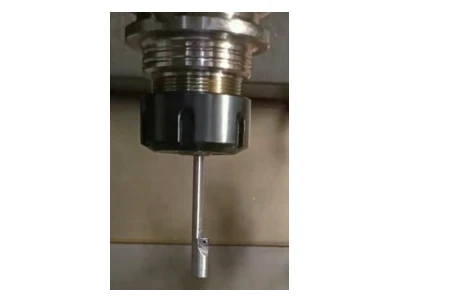
Form milling uses a cutter with a predefined profile to generate complex contours in a single machining pass.
The cutter geometry directly defines the final shape of the machined surface, making this operation highly productive for specific profiles.
Convex and concave form cutters are commonly used to produce radii, grooves, and custom contours.
Typical applications include gear-like features, mold components, and specialized industrial profiles.
While form milling offers excellent repeatability and high throughput in mass production, it is associated with high tool manufacturing costs and limited flexibility.
For low-volume production, frequent design changes, or freeform surfaces, form milling is generally less economical than CNC contour milling or multi-axis machining.
Other Common CNC Milling Operations
Slot milling is used to create keyways, channels, and T-slots, while side milling generates vertical walls and shoulders with controlled depth and surface finish.
Gang milling employs multiple cutters mounted on a single arbor to machine several surfaces simultaneously, improving productivity in dedicated high-volume applications.
However, with the advancement of CAM software and automatic tool changers, multi-tool strategies on modern CNC machines have largely replaced gang milling in flexible manufacturing environments.
| Operation | Typical Applications |
|---|---|
| Slot milling | Keyways, channels, T-slots |
| Side milling | Vertical walls, shoulders |
| Gang milling | Multi-surface machining in one pass |
Types of CNC Milling Machines
Vertical CNC Milling Machines
Vertical CNC milling machines feature a spindle oriented perpendicular to the machine table.
This configuration provides excellent visibility, ease of setup, and simplified programming, making it the most common machine type in general manufacturing.
Turret-style vertical mills are often used for prototyping and light production, while bed-type vertical mills offer increased rigidity and are better suited for CNC production work.
Vertical mills are widely used in automotive, medical, and electronics industries for prismatic parts, pockets, and complex 2.5D geometries.
Their primary limitation lies in heavy material removal and chip evacuation during deep cavity machining.
Horizontal CNC Milling Machines
Horizontal CNC milling machines employ a spindle parallel to the workpiece surface.
This configuration offers superior rigidity and more efficient chip evacuation due to gravity, which contributes to longer tool life and improved surface integrity during heavy cutting operations.
Horizontal mills are particularly effective for large prismatic components, heavy roughing, and long production runs.
Although they involve higher initial investment and setup complexity compared to vertical machines, their productivity advantages often justify the cost in medium- to high-volume manufacturing.
Cost and Rigidity Comparison:
| Aspect | Vertical | Horizontal |
|---|---|---|
| Initial cost | Lower | Higher |
| Material removal | Medium | High |
| Tool life | Moderate | Longer |
| Automation | Limited | Excellent |
Multi-Axis CNC Milling Machines
Multi-axis milling machines extend machining capability by adding rotational axes.
Two-axis machines are limited to simple planar operations, while three-axis machines remain the industry standard due to their balance of capability and cost.
Four-axis machines introduce a rotational axis that enables indexing or continuous rotation, allowing complex features to be machined on multiple faces without re-fixturing.
Five-axis CNC milling machines provide simultaneous multi-axis movement, significantly reducing the number of setups required.
Studies and industrial case data indicate that 5-axis machining can reduce setup time by 60–70% and improve dimensional accuracy by minimizing tolerance stack-up.
These benefits must be weighed against higher capital cost and increased programming complexity.
Turret vs Bed Milling Machines
Turret milling machines feature a fixed spindle with a moving table and are valued for their versatility in drilling, boring, and light contouring operations.
They are commonly found in job shops and maintenance environments.
Bed milling machines, by contrast, employ a fixed table with a moving spindle.
This configuration provides greater structural rigidity and higher load capacity, making bed mills more suitable for large, heavy workpieces and precision production machining.
Material Selection for CNC Milling
Material selection for CNC milling must consider functional requirements, mechanical loads, dimensional stability, thermal behavior during machining, and overall cost constraints.
Over-specifying material properties often leads to unnecessary machining difficulty and increased production cost.
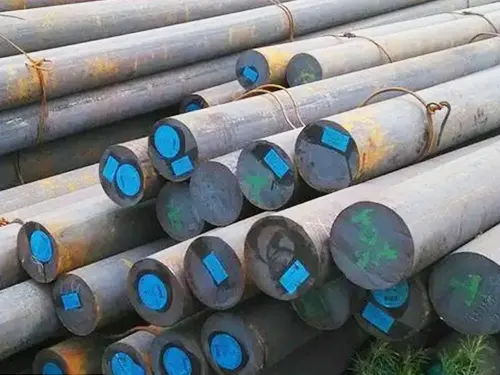
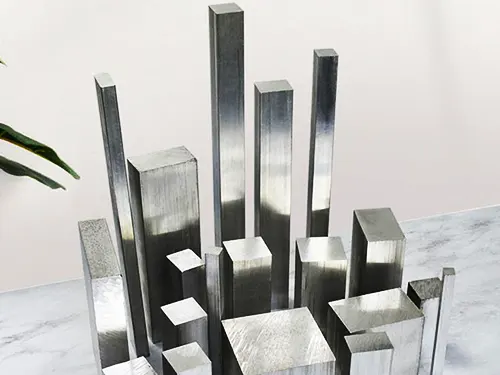
Aluminum alloys are widely used due to their excellent machinability and high strength-to-weight ratio, particularly in aerospace and electronics applications.
Stainless steels offer superior corrosion resistance and mechanical strength, but require lower cutting speeds and more rigid setups.
Carbon and tool steels provide high hardness and wear resistance, often at the expense of machinability.
Brass and copper alloys are valued for their electrical conductivity and superior surface finish.
Engineering plastics such as ABS, polycarbonate, and nylon are frequently milled for lightweight, corrosion-resistant components, while advanced materials such as ceramics and composites present significant tooling and process challenges due to their hardness and anisotropic behavior.
| Material | Key Advantages | Typical Applications |
|---|---|---|
| Aluminum alloys | Excellent machinability, low weight | Aerospace, electronics |
| Stainless steel | Strength, corrosion resistance | Medical, food equipment |
| Carbon/tool steel | High hardness | Tooling, dies |
| Brass & copper | Conductivity, surface finish | Electrical components |
Click more: CNC materials
How to Choose the Right CNC Milling Operation, Machine, and Material
Optimal CNC milling outcomes are achieved by aligning part geometry with the most efficient milling operation, selecting a machine with sufficient rigidity and axis capability, and choosing materials that meet functional requirements without excessive machining difficulty.
Common design and manufacturing errors include unnecessarily tight tolerances, poor tool access, and inappropriate material selection.
Early collaboration between design and manufacturing teams is essential to avoid these issues and achieve cost-effective production.
References
- ASM Handbook, Volume 16: Machining
- ISO 8688 – Tool Life Testing in Milling
- SME Manufacturing Engineering Handbook
- Sandvik Coromant, Modern Milling Technology
- Kennametal Engineering Application Data