

Quick Answers




Aluminum CNC Machining: Grades Advantages and Applications
Aluminum CNC machining has become the backbone of modern manufacturing, supporting industries ranging from consumer electronics and automotive to aerospace and medical devices.
Its unique combination of low density, excellent machinability, high strength-to-weight ratio, and corrosion resistance makes aluminum the most frequently machined metal in CNC workshops worldwide.
As product lifecycles shorten and precision requirements increase, CNC machining of aluminum continues to outperform alternative manufacturing methods in both flexibility and accuracy.
This guide provides a comprehensive, up-to-date technical overview of aluminum CNC machining in 2026, covering materials science, alloy selection, manufacturing processes, cost drivers, and real-world applications.
It is written to support both engineers making design decisions and buyers evaluating suppliers.
What Is Aluminum CNC Machining? (Beginner → Buyer Friendly)
Aluminum CNC machining is the process of removing material from aluminum stock using computer numerical control (CNC) machine tools to produce precise, dimensionally accurate parts.
The process relies on pre-programmed toolpaths to control cutting operations such as milling, turning, drilling, and tapping with micron-level repeatability.
Aluminum dominates CNC machining because it offers an optimal balance between machinability, mechanical performance, and cost.
Compared with steels and titanium alloys, aluminum requires lower cutting forces, supports higher spindle speeds, and significantly reduces tool wear.
These properties translate directly into shorter cycle times and lower manufacturing costs.
CNC machining is preferred over casting and forming when tight tolerances, complex geometries, and excellent surface finishes are required.
Unlike casting, CNC machining avoids porosity and shrinkage defects, while also enabling rapid design iteration without tooling changes.
Aluminum CNC machining is used extensively in products most people interact with daily, including smartphone housings, automotive structural components, heat sinks, aircraft fittings, and industrial automation equipment.
Aluminum CNC machining is the process of precisely shaping aluminum materials into functional components using automated machine tools controlled by digital instructions.
Why Aluminum Is the Most Machined Metal in CNC Shops
Machinability Compared to Steel, Titanium, and Plastics
From a machining science perspective, aluminum alloys exhibit low cutting resistance, excellent chip formation, and superior thermal conductivity.
These characteristics allow aluminum to be machined at cutting speeds three to five times higher than carbon steel, while maintaining tool stability and surface quality.
The table below illustrates typical cutting speed ranges for common CNC materials under similar conditions:
|
Material |
Typical Cutting Speed (m/min) | Tool Wear Rate | Heat Dissipation |
|---|---|---|---|
| Aluminum 6061 | 300–800 | Low | Excellent |
| Carbon Steel | 120–250 | Moderate | Moderate |
| Titanium Ti-6Al-4V | 40–70 | Very High | Poor |
| Engineering Plastics | 200–500 | Very Low | Low |
Aluminum’s ability to dissipate heat rapidly away from the cutting zone reduces built-up edge formation and extends tool life, which is a major cost factor in high-volume CNC production.
Strength-to-Weight Ratio Explained (With Use Cases)
Aluminum’s density of approximately 2.7 g/cm³ is roughly one-third that of steel, yet many aluminum alloys achieve yield strengths exceeding 250 MPa, with high-strength grades such as 7075 surpassing 500 MPa.
This strength-to-weight advantage supports the global trend toward lightweighting, particularly in aerospace, electric vehicles, and robotics.
In aerospace structures, aluminum CNC machined parts are used where stiffness, fatigue resistance, and weight reduction are critical.
In electric vehicles, aluminum contributes directly to extended driving range by reducing overall vehicle mass.
Structural aluminum parts are typically designed for load-bearing applications, while cosmetic aluminum components emphasize surface finish, anodizing compatibility, and dimensional consistency.
Corrosion Resistance Without Coatings
Aluminum naturally forms a dense oxide layer when exposed to air, providing intrinsic corrosion resistance without the need for additional coatings.
This passive layer protects the base metal from further oxidation and is self-healing if scratched.
For many indoor, automotive, and consumer applications, this eliminates the need for plating or painting, resulting in both cost and weight savings.
In corrosive environments, aluminum alloys can be further protected through anodizing without compromising dimensional accuracy.
Where Does Aluminum Come From? (Entity + E-E-A-T Boost)
From Bauxite to Aluminum Billets
Primary aluminum production begins with bauxite ore, which is refined into alumina (aluminum oxide) through the Bayer process.
This chemical refining stage removes impurities and concentrates aluminum oxide to a purity exceeding 99%.
The alumina is then converted into metallic aluminum through electrolytic reduction in the Hall–Héroult process.
While energy-intensive, this process produces aluminum with excellent purity and predictable metallurgical properties.
The molten aluminum is subsequently cast into billets, slabs, or plates, which serve as the starting stock for CNC machining.
Why Aluminum Is Sustainable
Aluminum is one of the most sustainable engineering metals available. It can be recycled indefinitely without degradation of mechanical properties.
Producing recycled aluminum requires approximately 95% less energy than primary aluminum production, significantly reducing carbon emissions.
Compared to steel, aluminum offers a lower lifecycle environmental impact in applications where weight reduction leads to energy savings, such as transportation and aerospace.
As sustainability requirements increasingly influence procurement decisions, aluminum CNC machining aligns well with ESG-driven manufacturing strategies.
Types of Aluminum Used in CNC Machining
Wrought vs Cast Aluminum for CNC Machining
Wrought aluminum is the preferred material form for CNC machining due to its refined grain structure, superior mechanical properties, and consistent material behavior.
It is produced through rolling, extrusion, or forging processes, resulting in higher strength and better surface finish after machining.
Cast aluminum, while cost-effective for high-volume near-net-shape production, typically contains porosity and exhibits lower machinability.
CNC machining cast aluminum often leads to inconsistent finishes and reduced dimensional stability, making it less suitable for precision components.
Aluminum Alloy Series Explained (2xxx–7xxx)
Aluminum alloy numbers reflect their primary alloying elements and performance characteristics.
The 2xxx series is aluminum-copper based, offering high strength and fatigue resistance but limited corrosion resistance.
The 5xxx series uses magnesium, providing excellent corrosion resistance and weldability. The 6xxx series balances strength, machinability, and corrosion resistance, making it the most widely used in CNC machining.
The 7xxx series, alloyed primarily with zinc, delivers the highest strength among aluminum alloys, often rivaling steel.
Understanding these alloy families is essential when balancing mechanical performance, environmental exposure, and machining cost.
Best Aluminum Alloys for CNC Machining
6061 Aluminum CNC Machining
6061 aluminum is the industry standard for CNC machining due to its excellent machinability, good mechanical strength, and competitive cost.
With a typical yield strength around 275 MPa, it performs reliably in structural, automotive, and industrial applications. Its compatibility with anodizing and welding further increases its versatility.
7075 Aluminum CNC Machining
7075 aluminum is considered an aerospace-grade alloy, offering tensile strengths exceeding 570 MPa. It is selected when maximum strength and fatigue resistance are required.
However, its higher material cost, reduced corrosion resistance, and increased tool wear make it less economical for general-purpose parts.
5052 Aluminum for Corrosion-Resistant Parts
5052 aluminum excels in marine and outdoor environments due to its superior resistance to saltwater corrosion.
While its strength is lower than 6061, it machines well for brackets, enclosures, and sheet-based CNC components where environmental durability is critical.
2024 Aluminum for High-Fatigue Applications
2024 aluminum is widely used in aircraft structures due to its excellent fatigue performance and high strength-to-weight ratio.
It requires surface protection in corrosive environments and demands tighter process control during machining, but remains indispensable in aerospace engineering.
The table below summarizes key CNC machining characteristics of common aluminum alloys:
| Alloy | Yield Strength (MPa) | Machinability | Relative Cost | Best Applications |
|---|---|---|---|---|
| 6061 | ~275 | Excellent | Low | General CNC parts, frames, housings |
| 7075 | ~505 | Moderate | High | Aerospace, high-load components |
| 5052 | ~193 | Good | Medium | Marine, corrosion-resistant parts |
| 2024 | ~325 | Moderate | Medium-High | Aircraft structures, fatigue-critical parts |
Aluminum Temper & Heat Treatment (Hidden Ranking Opportunity)
Aluminum temper and heat treatment conditions are among the most misunderstood variables in CNC machining, yet they have a direct and measurable impact on dimensional accuracy, surface finish, and long-term part stability.
Many machining issues attributed to “poor process control” are, in reality, caused by inappropriate temper selection at the material stage.
What T6, T651, and T4 Actually Mean
Aluminum temper designations describe the thermal and mechanical history of the material after it is formed.
In CNC machining, the most common tempers encountered are T4, T6, and T651.
T4 aluminum is solution heat-treated and naturally aged.
The alloy remains relatively soft and ductile, making it easy to machine but more susceptible to deformation during and after machining.
This temper is often used when subsequent forming or bending is required before final machining.
T6 aluminum is solution heat-treated and artificially aged to achieve maximum strength.
While this temper provides excellent mechanical performance, it also introduces residual internal stresses from the heat treatment process.
During CNC machining, the release of these stresses can lead to part warping, especially in thin-walled or asymmetrical geometries.
T651 aluminum is a stress-relieved version of T6. After heat treatment, the material undergoes controlled stretching to reduce residual stresses.
For CNC machining, T651 is preferred for precision components because it significantly lowers the risk of distortion during material removal.
How Temper Affects CNC Machining Accuracy
Material temper directly influences tool life, chip formation, and dimensional stability.
Softer tempers such as T4 tend to generate built-up edge on cutting tools, which can degrade surface finish and accelerate tool wear if cutting parameters are not optimized.
Harder tempers like T6 and T651 produce cleaner chips and more predictable cutting forces.
From a dimensional accuracy standpoint, stress-relieved tempers consistently outperform non-relieved materials.
When tight tolerances below ±0.05 mm are required, using T651 aluminum can reduce post-machining deformation by more than 50% compared to standard T6 plate, particularly in large-format or thin-profile parts.
Aluminum CNC Machining Processes Explained
Aluminum’s favorable machinability allows it to be processed efficiently across a wide range of CNC operations, from simple 2D profiling to complex multi-axis contouring.
The choice of machining process is driven by part geometry, tolerance requirements, and production volume.
CNC Milling Aluminum
CNC milling is the most widely used process for aluminum parts. Three-axis milling is suitable for prismatic components, flat surfaces, pockets, slots, and standard contours.
It offers high rigidity, lower setup costs, and excellent repeatability for most industrial applications.
Five-axis CNC milling is employed when complex geometries, undercuts, or multi-face machining are required in a single setup.
In aluminum machining, five-axis systems reduce fixturing complexity and improve positional accuracy by minimizing part re-clamping.
This is particularly valuable in aerospace, robotics, and precision housings where datum alignment is critical.
CNC Turning Aluminum
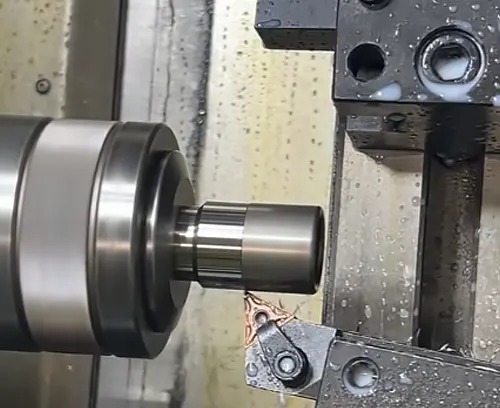
CNC turning is optimized for rotationally symmetric aluminum components such as shafts, bushings, spacers, and threaded fittings.
Aluminum’s low cutting resistance allows high spindle speeds and fine surface finishes during turning operations.
Threaded aluminum parts benefit from precise tool control, but thread engagement length must be carefully designed to avoid stripping under load.
Drilling, Tapping, and Boring Aluminum
Drilling aluminum is generally straightforward due to its softness and thermal conductivity, but chip evacuation becomes critical at higher depths.
Tapping aluminum requires careful selection of thread form and cutting parameters to maintain thread strength without galling.
Boring operations are commonly used when hole accuracy, roundness, and positional tolerance are more critical than speed.
Hole accuracy in aluminum CNC machining can routinely reach IT7–IT8 tolerance grades when boring or reaming is applied, making aluminum suitable for precision bearing and alignment features.
Sheet Aluminum CNC Processes
For flat aluminum components, sheet-based CNC processes complement traditional machining.
Laser cutting provides high-speed processing with excellent edge quality for thin aluminum sheets, typically up to 6 mm.
Waterjet cutting supports thicker materials without introducing heat-affected zones, preserving material properties.
Plasma cutting, while cost-effective, is generally limited to less precise applications due to wider kerf widths and thermal distortion.
Surface Finishing Options for Aluminum CNC Parts
Surface finishing enhances both the functional and aesthetic performance of aluminum CNC parts.
The chosen finish affects corrosion resistance, wear behavior, electrical insulation, and visual quality.
Anodizing is the most common aluminum surface treatment. Type II anodizing produces a thin oxide layer suitable for corrosion protection and decorative finishes.
Type III hard anodizing creates a much thicker and harder oxide layer, improving wear resistance and surface hardness, often exceeding 400 HV.
Hard anodizing is widely used for sliding components, housings, and aerospace parts.
Bead blasting creates a uniform matte surface by impacting the aluminum with fine media.
It is frequently used as a pre-treatment before anodizing to achieve consistent appearance.
Polishing aluminum enhances reflectivity and surface smoothness, typically for cosmetic or optical components.
Powder coating adds a durable polymer layer, offering a wide range of colors and improved environmental resistance, though it introduces additional thickness that must be accounted for in dimensional design.
Design Guidelines for Aluminum CNC Machining
Design for manufacturability (DFM) plays a decisive role in CNC machining cost, quality, and lead time.
Aluminum is forgiving compared to harder metals, but ignoring basic design principles can still result in unnecessary expense or performance issues.
Minimum Wall Thickness
For most aluminum alloys, a minimum wall thickness of 1.0–1.5 mm is achievable with stable machining conditions.
However, walls below 2.0 mm increase the risk of vibration, deflection, and dimensional variation, especially in tall features.
Internal Corner Radii
Sharp internal corners are not feasible with rotary cutting tools.
Designing internal radii of at least 1.5 times the tool diameter reduces machining time and improves surface quality.
Larger radii also reduce stress concentration in load-bearing parts.
Hole Depth-to-Diameter Ratios
For standard drilling operations in aluminum, a depth-to-diameter ratio of up to 5:1 is considered safe and economical.
Deeper holes require specialized tooling, peck drilling, or coolant-through drills, increasing cost and cycle time.
Tolerance Guidelines
Aluminum CNC machining can routinely achieve tolerances of ±0.05 mm without significant cost impact.
Tighter tolerances, such as ±0.01 mm, are possible but increase inspection requirements, machining time, and scrap risk. Designers should specify tight tolerances only where functionally necessary.
Aluminum vs Steel CNC Machining (Comparison Magnet)
Aluminum and steel dominate CNC machining, but their performance and cost characteristics differ significantly. The table below highlights key differences relevant to engineering and sourcing decisions:
| Factor | Aluminum | Steel |
|---|---|---|
| Weight | Very low (2.7 g/cm³) | High (7.8 g/cm³) |
| Cost | Lower machining cost | Higher machining cost |
| Machinability | Excellent | Moderate |
| Tool Wear | Low | High |
Aluminum’s advantages become more pronounced as part complexity and volume increase, while steel remains preferable for extreme load or wear conditions.
How Much Does Aluminum CNC Machining Cost?
The cost of aluminum CNC machining is influenced by several interconnected factors. Material alloy selection affects both raw material price and machining time.
High-strength alloys such as 7075 increase tool wear and cycle time, raising overall cost.
Tolerance requirements are one of the most significant cost drivers. Each reduction in tolerance band increases machine time, inspection effort, and scrap risk.
Part geometry complexity, particularly deep pockets and thin walls, further increases machining time.
Production volume plays a crucial role in pricing. Low-volume prototypes carry higher per-part costs due to setup and programming overhead, while medium to high volumes benefit from optimized tooling strategies and reduced setup amortization.
Industries That Rely on Aluminum CNC Machining
Aluminum CNC machining is foundational to aerospace manufacturing, where weight reduction and structural reliability are critical.
Aircraft frames, brackets, and housings rely heavily on high-strength aluminum alloys.
In automotive and electric vehicle production, aluminum CNC parts support lightweight chassis components, battery enclosures, and thermal management systems.
Robotics and industrial automation depend on aluminum for rigid yet lightweight frames that enable speed and precision.
Consumer electronics leverage aluminum for enclosures that combine strength, heat dissipation, and premium appearance.
In medical devices, aluminum CNC machining supports non-implantable components requiring high precision, cleanliness, and repeatability.
Common Aluminum CNC Machining Problems (And How to Avoid Them)
Despite aluminum’s reputation for excellent machinability, CNC machining issues still occur when material behavior, tool selection, and process parameters are not properly aligned.
Understanding the root causes of these problems is essential for achieving consistent quality, dimensional accuracy, and cost efficiency.
Chip welding is one of the most frequent problems encountered when machining aluminum, particularly at high cutting speeds.
It occurs when aluminum chips adhere to the cutting edge due to localized heat and pressure. This phenomenon degrades surface finish, alters cutting geometry, and accelerates tool wear.
Chip welding is most effectively prevented through the use of sharp tools with polished flutes, appropriate coatings designed for non-ferrous metals, and sufficient coolant or air blast to evacuate chips from the cutting zone.
Maintaining correct spindle speed and feed balance is critical, as excessive heat generation is the primary trigger.
Warping is another common issue, especially in thin-walled or asymmetrical parts.
It is often caused by the release of internal stresses during machining, particularly when using non-stress-relieved material such as standard T6 plate.
Aggressive material removal on one side of the part can further exacerbate distortion.
Warping can be minimized by selecting stress-relieved tempers such as T651, using balanced machining strategies that remove material evenly, and applying intermediate stress-relief steps for highly precision-sensitive components.
Poor surface finish in aluminum CNC machining is typically linked to tool condition, cutting parameters, or material temper.
Dull tools, excessive feed rates, or built-up edge formation result in tearing rather than cutting, producing visible surface defects.
Achieving high-quality finishes requires sharp tooling, stable fixturing, optimized feeds and speeds, and, where necessary, finishing passes with reduced tool engagement.
Material temper also plays a role, as overly soft aluminum can smear under cutting forces rather than shear cleanly.
Broken taps represent a costly and time-consuming failure mode in aluminum machining.
Although aluminum is relatively soft, improper tapping parameters can lead to galling, chip packing, and sudden tool fracture. This risk increases with deep holes and small thread sizes.
Preventing tap breakage requires selecting thread forms suitable for aluminum, ensuring adequate lubrication, controlling tap depth-to-diameter ratios, and using thread milling where appropriate for high-value or critical parts.
FAQs About Aluminum CNC Machining (PAA Capture)
- Is aluminum stronger than steel?
In absolute terms, most steels are stronger than aluminum.
However, aluminum offers a significantly higher strength-to-weight ratio, meaning it provides substantial strength at a much lower mass.
For applications where weight reduction is critical, aluminum often outperforms steel from a structural efficiency perspective.
- What’s the easiest aluminum to machine?
Among commonly used alloys, 6061 aluminum is widely regarded as the easiest to machine.
It combines stable chip formation, low tool wear, and consistent material behavior, making it suitable for a broad range of CNC machining applications.
- How tight can tolerances be with aluminum CNC machining?
Under controlled conditions, aluminum CNC machining can reliably achieve tolerances of ±0.05 mm as a standard capability.
With specialized tooling, stable environments, and additional inspection, tolerances of ±0.01 mm or tighter are possible, though they significantly increase manufacturing cost.
- Is aluminum good for structural parts?
Yes, aluminum is widely used for structural components in aerospace, automotive, and industrial systems.
High-strength alloys such as 6061, 7075, and 2024 provide excellent load-bearing capability when properly designed, particularly in applications where weight reduction is a priority.
- Which file format is best for aluminum CNC machining?
STEP files are generally considered the best format for aluminum CNC machining because they preserve precise geometric data and are universally compatible with CAM software.
IGES files are also acceptable, while STL files are less suitable for precision machining due to their faceted geometry.
Conclusion
Aluminum CNC machining remains one of the most versatile, cost-effective, and technically capable manufacturing methods available in modern production.
Its dominance is driven not by a single advantage, but by a rare convergence of machinability, mechanical performance, lightweight efficiency, corrosion resistance, and sustainability.
From alloy selection and temper control to machining processes, surface finishing, and design optimization, every decision in aluminum CNC machining has a direct impact on part quality and total cost.
Engineers and buyers who understand these relationships gain a significant advantage in product performance, lead time, and sourcing efficiency.
As industries continue to demand lighter, stronger, and more precise components in 2026 and beyond, aluminum CNC machining will remain a foundational technology, bridging advanced engineering requirements with scalable and reliable manufacturing.