
How to efficiently machine shaped parts on CNC mill-turn machines?
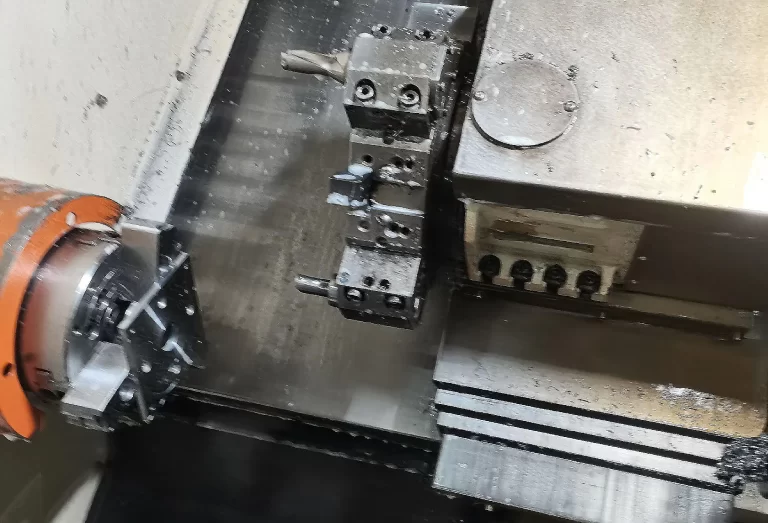

The quality of metallurgical products and machining precision are directly linked to the overall level of industrial manufacturing.
Modern industrial technology continues to advance.
As a result, the metallurgical industry imposes increasingly stringent requirements on machining processes.
Precision control in machining processes is a core component in the manufacturing of metallurgical products.
It directly impacts product performance, service life, and production costs.
This article aims to thoroughly examine the influence of machining processes on processing precision in the metallurgical industry.
It also analyzes key influencing factors and proposes corresponding optimization measures.
It seeks to provide theoretical support and practical guidance for the high-quality development of the metallurgical industry.
Within the metallurgical industry, machining processes play a crucial role.
The processes aim to transform raw metallurgical materials into high-precision, high-quality components and structures.
They achieve this through a series of precise operations, including cutting, grinding, and forming.
This process heavily relies on advanced machine tools and precise measurement and inspection technologies.
It also depends on optimized cutting parameters and tool selection to ensure improvements in both machining accuracy and surface quality.
In the production of metallurgical products, machining processes determine product performance and lifespan.
They also directly impact production efficiency and cost control.
They represent one of the key technologies driving the metallurgical industry’s transition toward intelligent and green manufacturing.
Through continuous process optimization and innovation, the metallurgical industry is steadily enhancing its machining capabilities.
This allows it to meet the growing demand for high-quality products.
In the metallurgical industry, machining processes play a crucial role in controlling processing precision.
Equipment accuracy is a core element that profoundly influences the enhancement and assurance of machining precision.
It affects multiple aspects, including machine tool structure, transmission, thermal deformation control, guidance, and detection feedback.
Specifically, equipment precision profoundly influences machining accuracy through five key aspects:
First, the overall structural precision of machine tools determines the positioning and clamping stability of metal parts during processing.
This, in turn, affects dimensional accuracy.
Second, the precision and stability of transmission systems directly affect the consistency and coordination of movement across machine tool axes.
This, in turn, impacts surface finish and geometric accuracy.
Third, the machine tool’s thermal deformation control capability, which is particularly critical for machining in high-temperature environments within the metallurgical industry.
Changes in geometric accuracy caused by thermal deformation directly affect machining precision.
Fourth, the precision of the guidance system, such as the fit between guideways and ball screws, plays a decisive role in machining path accuracy.
It directly affects the straightness and angular precision of the paths.
Fifth, the accuracy of the detection and feedback system is a critical component of modern precision machining.
It directly impacts the effectiveness of real-time error monitoring and compensation.
Ultimately, it determines the achievement of final machining precision.
In the machining processes of the metallurgical industry, tool selection and wear conditions exert a critical influence on controlling and enhancing machining accuracy.
This impact manifests primarily through multiple aspects.
These aspects include tool durability, geometric parameter optimization, dimensional changes, variations in cutting forces, and thermal deformation.
First, the hardness and wear resistance of tool materials directly determine their durability during metallurgical material processing.
This, in turn, affects process continuity and stability.
As a result, it can lead to fluctuations in machining accuracy.
Second, optimizing tool geometric parameters—such as cutting edge angles and cutting edge shapes—significantly impacts metal material cutting efficiency and surface finish quality.
Improper parameter selection directly reduces machining precision.
Third, dimensional changes caused by tool wear—such as edge blunting and cutting edge deformation—directly affect the dimensional and geometric accuracy of machined parts.
Fourth, variations in cutting forces due to tool wear intensify machine tool vibration, thereby compromising surface finish and contour accuracy.
Fifth, heat generated during tool wear, if not effectively dissipated, will cause thermal deformation of the workpiece, further compromising machining accuracy.
In metallurgical machinery processing, material properties and thermal deformation exert a comprehensive influence on machining precision control and optimization.
They affect multiple aspects, including cutting difficulty, tool wear, machine tool vibration, workpiece thermal deformation, and material phase transitions.
These two factors are primary contributors to enhancing the processing quality of metallurgical products.
Specifically, these two factors significantly impact machining accuracy through the following five aspects:
First, the physical properties of metallurgical materials—such as hardness, toughness, and thermal conductivity—directly determine the difficulty of cutting operations and tool wear rates.
These factors, in turn, affect dimensional stability and shape accuracy during processing.
Second, microstructural inhomogeneities within the material—such as grain size, distribution, and phase composition—cause fluctuations in cutting forces during machining.
This exacerbates machine tool vibration, compromising surface finish and contour accuracy.
Third, thermal expansion and stresses induced by cutting heat during processing lead to thermal deformation of the workpiece.
This deformation significantly affects dimensional and geometric consistency.
Fourth, differences in thermal conductivity create uneven temperature distribution in the cutting zone.
This forms localized heat-affected zones that further exacerbate thermal deformation and compromise machining accuracy.
Fifth, phase transformation behaviors at elevated temperatures—such as oxidation, softening, or hardening—alter the material’s machinability.
These changes increase processing difficulty and adversely affect dimensional precision.
In the metallurgical industry, deformation of the process system under applied forces is also a critical factor affecting precision control in mechanical machining processes.
Specifically, deformation of the process system significantly impacts machining accuracy through the following five aspects:
First, the substantial cutting forces generated between the tool and workpiece during cutting cause elastic deformation in the process system, which comprises the machine tool, fixture, and workpiece.
This elastic deformation directly affects the dimensional and geometric accuracy of the machined part.
Second, dynamic variations in cutting forces—such as periodic fluctuations or abrupt changes—intensify vibrations within the process system.
These vibrations cause surface waviness and compromise surface finish quality.
Third, uneven distribution of contact stresses among system components can induce localized stress concentrations.
These stress concentrations may lead to component wear or fatigue failure, which subsequently degrades machining accuracy.
Fourth, thermal stresses induced by cutting heat, interacting with cutting forces, further exacerbate thermal deformation of the process system.
This significantly compromises dimensional consistency and stability.
Fifth, prolonged operation under heavy loads and high temperatures causes gradual material degradation, such as reduced stiffness and increased thermal expansion coefficients.
This degradation results in more pronounced deformation under load and further deterioration of machining accuracy.
First, implement precision upgrades to machine tools by adopting high-precision components such as guideways, ball screws, and precision spindles.
This ensures high rigidity and accuracy in the machine’s overall structure, minimizing processing errors caused by machine deformation.
Second, introduce advanced error compensation technology.
By continuously monitoring motion errors across all axes and utilizing high-precision sensors with control systems, processing errors resulting from insufficient equipment accuracy are effectively mitigated.
These systems enable real-time compensation to maintain machining precision.
Third, thermal stability control is enhanced through efficient cooling systems and thermal deformation compensation devices.
These measures maintain stable thermal conditions during prolonged, high-intensity machining.
As a result, thermal distortion impacts on precision are minimized.
Additionally, transmission systems undergo optimization with low-friction, low-wear components and high-precision gearing.
This improves accuracy and stability while ensuring synchronized, coordinated axis movements.
Finally, strengthen equipment maintenance and upkeep by conducting regular precision inspections and calibrations of the machine tools.
Severely worn components should be promptly replaced to ensure the machine tools remain in optimal working condition.
This provides a solid foundation for the continuous improvement of machining accuracy.
Machining precision in the metallurgical industry can be significantly enhanced by optimizing tool selection and cutting parameters.
The use of modern CNC technology and intelligent monitoring methods further supports this improvement.
This provides robust technical support for high-quality product manufacturing.
Specifically, first, the unique characteristics of metallurgical materials—such as high hardness, high toughness, and significant variations in thermal conductivity—must be considered.
Tool selection should then adhere to the principles of “material compatibility and geometric optimization.”
Select tool materials with high hardness, wear resistance, and thermal stability—such as cemented carbide, ceramics, or cubic boron nitride (CBN)—to meet the machining demands of metallurgical materials.
Simultaneously, based on the workpiece’s geometry, dimensional accuracy requirements, and surface finish objectives, tool geometric parameters should be meticulously designed.
These parameters include rake angle, clearance angle, edge inclination angle, and cutting edge geometry, and are optimized to improve the cutting process.
This reduces cutting resistance and tool wear, thereby ensuring machining accuracy. Secondly, optimizing cutting parameters is another crucial approach to enhancing machining precision.
Reasonably setting parameters like cutting speed, feed rate, and depth of cut plays a crucial role in controlling cutting forces, heat generation, and tool wear.
By combining theoretical calculations with experimental verification, the optimal cutting parameter combinations for different metallurgical materials and processing stages can be determined.
While maintaining machining efficiency, appropriately reducing cutting speed and feed rate helps minimize heat generation.
It also reduces workpiece thermal deformation, mitigates tool wear, and extends tool life.
These measures collectively help sustain machining accuracy stability.
Furthermore, integrating modern CNC technology with intelligent monitoring enables dynamic adjustment and adaptive control of cutting parameters.
High-precision sensors continuously monitor critical cutting process indicators such as cutting force, vibration, and temperature.
Based on real-time monitoring data, cutting parameters are dynamically adjusted to address uncertainties such as material inhomogeneity and tool wear.
This enhances the controllability and stability of machining accuracy.
By rigorously controlling machining temperature and thermal deformation, the machining precision of metallurgical machinery can be significantly enhanced.
This is further supported by the application of high-efficiency cooling lubrication systems, machine tool thermal stability control, and localized cooling technologies.
This provides robust technical support for high-quality product manufacturing.
Specific measures are as follows:
First, to address the substantial cutting heat generated during the machining of metallurgical materials, a high-efficiency cooling lubrication system is employed.
This system ensures timely and thorough cooling of the cutting zone.
This system precisely regulates coolant flow rate, pressure, and spray angle to effectively dissipate cutting heat.
It lowers the temperatures of the workpiece, tooling, and machine tool while minimizing thermal deformation.
This ensures stable machining accuracy.
Additionally, coolants with excellent thermal conductivity and chemical stability are selected.
This prevents adverse effects on workpiece materials—such as corrosion or hardening—and further safeguards machining quality.
Second, enhanced thermal stability control is achieved by optimizing the machine tool’s structural design.
High-performance thermal insulation materials are also employed to minimize external environmental impacts on internal temperatures.
Advanced thermal deformation compensation technology is integrated into the system.
It utilizes high-precision sensors to monitor real-time temperature changes in critical machine components.
Intelligent algorithms predict thermal deformation trends.
They automatically adjust axis positions to counteract machining errors caused by thermal expansion.
Furthermore, regular thermal balance testing and calibration of the machine tool are conducted.
These measures ensure the machine maintains stable thermal conditions during prolonged, high-intensity machining.
This provides a solid foundation for sustained improvements in machining precision.
Furthermore, localized cooling techniques—such as laser cooling and liquid nitrogen cooling—are applied.
These techniques precisely cool specific cutting zones where localized high-temperature areas may occur during metallurgical material processing.
This effectively controls the impact of cutting heat on workpiece material properties.
It reduces defects like thermal cracks and thermal stresses.
These measures further safeguard machining accuracy and surface quality.
Through comprehensive evaluation and optimization of process systems, the stability of machining precision in the metallurgical industry can be significantly improved.
Strengthening dynamic stability control, enhancing maintenance and upkeep, and introducing advanced manufacturing processes and equipment further contribute to this improvement.
This provides robust technical support for high-quality product production.
Specifically:
First, conduct a comprehensive evaluation and optimization of the process system to identify and eliminate potential vibration sources.
For the process system comprising machine tools, fixtures, cutting tools, and workpieces, high-precision sensors monitor vibration in real time.
Methods such as spectral analysis identify primary frequency components and sources of vibration.
Corresponding measures are implemented to eliminate identified vibration sources.
These measures include optimizing machine tool structural design, enhancing fixture rigidity, and selecting high-performance cutting tools.
The goal is to minimize vibration’s impact on machining accuracy.
Second, enhance dynamic stability control of the process system.
Advanced dynamic compensation technology is introduced, utilizing high-precision sensors to monitor the system’s dynamic response in real time.
Intelligent algorithms predict and compensate for machining errors caused by factors like vibration and thermal deformation.
Concurrenly, advanced servo drive and control systems ensure high-precision, high-response motion control across all machine axes.
They guarantee synchronized and coordinated movement during processing to further improve system stability.
Third, enhance maintenance and upkeep of the process system.
Conduct regular inspections and calibrations of critical components, such as machine tools, fixtures, and cutting tools.
Promptly replace severely worn parts to ensure the process system remains in optimal working condition.
Simultaneously, perform periodic replacement and purification of media, such as coolants and lubricants.
This helps maintain stable media performance and prevents adverse effects on process system stability.
Fourth, introduce advanced manufacturing processes and equipment, such as five-axis machining technology and laser processing technology.
These innovations enhance the processing capabilities and precision levels of the process system.
By adopting high-precision, high-efficiency machining equipment and processes, sources of error during processing are reduced.
This further improves the stability and machining accuracy of the process system.
Advanced measurement and inspection technologies include but are not limited to:
3D laser scanning measurement technology employs laser beams to perform non-contact scanning of workpieces.
It rapidly acquires three-dimensional coordinate data of the workpiece surface, enabling precise measurement of machining accuracy and error analysis.
High-precision optical measurement technologies, such as interferometers and length gauges, employ optical principles to achieve high-accuracy measurement of minute dimensions.
These technologies provide reliable data support for precision machining.
Intelligent online inspection technologies combine high-precision sensors with intelligent algorithms to monitor critical parameters during machining in real time, such as cutting force, vibration, and temperature.
They promptly detect and correct machining errors to ensure stable machining accuracy.
Furthermore, advanced measurement and inspection technologies enable regular calibration and maintenance of machining equipment.
This ensures the equipment remains in optimal working condition and prevents accuracy degradation due to equipment errors.
Simultaneously, by accumulating extensive measurement data and applying big data analytics, patterns and trends within the machining process can be deeply explored.
This exploration provides a scientific basis for subsequent process optimization and equipment upgrades.
This paper thoroughly examines the impact of machining processes on processing accuracy within the metallurgical industry.
It identifies key factors that significantly influence machining precision.
These factors include equipment accuracy, tool selection and wear, material properties and thermal deformation, as well as deformation under stress within the process system.
Based on these findings, targeted optimization measures are proposed.
These measures include enhancing equipment precision and rigidity.
They also involve optimizing tool selection and cutting parameters.
Strictly controlling processing temperature and thermal deformation is another key measure.
Finally, improving process system stability is included.
These aim to elevate the overall precision and efficiency of mechanical processing in the metallurgical industry.
Looking ahead, machining processes will evolve toward higher levels of intelligence and precision.
This evolution is driven by the continuous advancement of smart manufacturing and advanced materials technology.
This evolution will inject new vitality into the sustained innovation and high-quality development of the metallurgical industry.
Machining processes transform raw metallurgical materials into high-precision, high-quality components, directly impacting product performance, service life, and production efficiency.
Equipment accuracy affects structural stability, transmission systems, thermal deformation control, guidance systems, and detection feedback, ultimately determining final machining precision.
Tool properties like hardness, wear resistance, and geometric parameters influence cutting efficiency, surface finish, dimensional stability, and thermal deformation, all of which affect machining precision.
Physical properties, microstructural inhomogeneities, and thermal effects such as expansion or phase transformation affect cutting difficulty, tool wear, vibration, and dimensional consistency.
Elastic deformation, dynamic cutting force variations, stress concentrations, thermal stresses, and material degradation under heavy loads can compromise dimensional and geometric accuracy.
Upgrading machine tool components, implementing error compensation, controlling thermal deformation, optimizing transmission systems, and maintaining regular inspections all help maintain precision.
Choosing materials compatible with workpiece properties, designing precise tool geometry, setting optimal cutting speed, feed rate, and depth, and using CNC and intelligent monitoring enhance accuracy and surface quality.
Using high-efficiency cooling systems, thermal deformation compensation, structural optimization, and localized cooling reduces heat effects, preventing thermal cracks, stresses, and dimensional errors.
Eliminating vibration sources, applying dynamic compensation technology, using high-precision servo drives, regular maintenance, and adopting advanced manufacturing equipment improve system stability and accuracy.
Technologies like 3D laser scanning, optical measurement, intelligent online inspection, and big data analytics enable precise error detection, calibration, real-time monitoring, and informed process optimization.
With the rapid development of the modern manufacturing industry, the…
Easy to deform thin-walled parts processing, has been the processing…
Now we attach importance to the design of intelligent agricultural…