
Quick Answers




Are CNC-machined violins better than hand-carved ones?
- September 28, 2025
- Jason Chang
- 6:09 am
In the world of violin making, traditional craftsmanship has long been revered for its precision and artistry.
However, with advancements in technology, the introduction of CNC (Computer Numerical Control) machining has challenged the traditional practice of hand-carving violins.
The discussion between CNC-machined and hand-carved violins reflects a broader question in modern manufacturing: the balance between precision and tradition.
This article analyzes both approaches, considering their advantages, limitations, and how each impacts efficiency, consistency, and product quality in the instrument-making process.
Traditional Hand-carved Violins
Hand-carving violins is a meticulous and time-consuming process that demands exceptional skill and craftsmanship.
Master luthiers painstakingly shape and carve each component of the violin, from the top and back plates to the scroll and pegbox, using only hand tools like chisels, knives, and planes.
This hands-on approach allows for a high level of customization and attention to detail, resulting in unique, one-of-a-kind instruments.
One of the main advantages of hand-carved violins is the human touch that goes into their creation.
Luthiers can fine-tune the thickness and graduation of the plates, adjust the arching to optimize tone and projection, and adjust the fingerboard and bridge to achieve the desired playability.
This level of customization yields instruments that are tailored to the musician’s preferences, fostering a personal and intimate connection between player and instrument.
Additionally, hand-carved violins are often prized for their aesthetic beauty.
Luthiers can choose premium tonewoods with eye-catching grain patterns, figure, and color, creating visually stunning instruments that are as much works of art as they are musical instruments.
The intricate detailing and hand-applied varnish add to the overall beauty and character of hand-carved violins, making them highly sought after by collectors and musicians alike.
CNC-Machined Violins
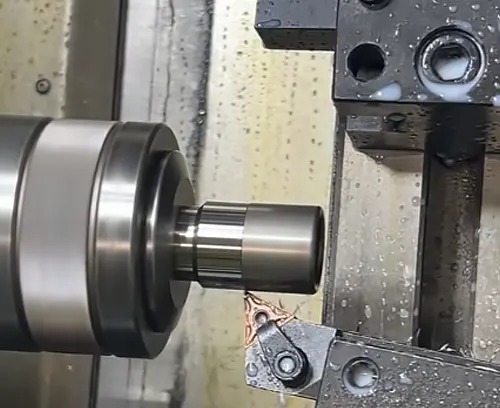
On the other hand, CNC machining offers a more automated and precise method of violin production.
Using computer-aided design (CAD) software and CNC routers or mills, manufacturers can program machines to carve out violin parts with unparalleled accuracy and consistency.
This level of precision ensures that each component meets exact specifications, resulting in uniformity and quality control that is difficult to achieve by hand.
One of the key advantages of CNC-machined violins is the repeatability of the manufacturing process.
Once a CAD model is created and optimized, machines can reproduce the same violin design with minimal variation, allowing for mass production of identical instruments.
This consistency in production results in violins that have a high level of precision in their geometry, thicknesses, and contours, which can contribute to a more consistent and predictable tonal output.
Furthermore, CNC machining can offer increased efficiency and cost savings in violin production.
While hand-carving requires skilled labor and a significant amount of time to complete each instrument, CNC machines can operate continuously and produce multiple parts simultaneously, thereby reducing overall production time and labor costs.
This scalability of production makes CNC-machined violins more accessible to a wider range of musicians, including students and professionals.
Comparison and Conclusion
When comparing CNC-machined violins to hand-carved ones, it is essential to consider the trade-offs between tradition and technology.
Hand-carved violins offer a level of craftsmanship and customization that is unparalleled, allowing for individual expression and artistry in each instrument.
The human touch and attention to detail that goes into hand-carving can result in instruments with a rich, complex tone and unparalleled playability.
On the other hand, CNC-machined violins offer precision, consistency, and efficiency in production that can result in high-quality instruments at a lower cost.
The repeatability of CNC machining can ensure that each violin meets exact specifications and technical requirements, providing musicians with reliable and predictable performance.
While CNC-machined violins may lack the individuality and character of hand-carved instruments, they offer a level of consistency and quality control that is unmatched.
In conclusion, the debate between CNC-machined violins and hand-carved ones ultimately comes down to personal preference and the specific needs of the musician.
Traditionalists may prefer the artistry and craftsmanship of hand-carved violins, valuing the uniqueness and tradition that goes into each instrument.
In contrast, modern musicians may appreciate the precision and efficiency of CNC-machined violins, prioritizing consistency and performance over traditional methods.
Ultimately, both CNC machining and hand-carving have their strengths and limitations, and the choice between the two methods depends on the individual musician’s priorities and preferences.