
Quick Answers






Can a 4-axis CNC machine replace a lathe?
As technology advances, the manufacturing industry continually evolves to enhance efficiency and productivity.
One of the key advancements in this field is the development of Computer Numerical Control (CNC) machines, which have revolutionized the manufacturing process for many products.
CNC machines are capable of precision machining operations that were previously only achievable through manual labor.
Differences Between a 4-Axis CNC Machine and a Lathe
Before we compare a 4-axis CNC machine to a lathe, let’s first understand the basic functions of each machine.
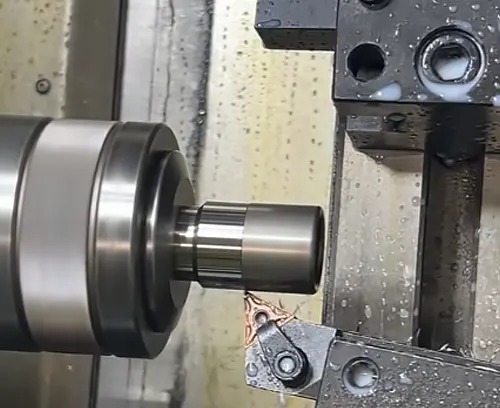
A lathe is a machine tool that rotates a workpiece on its axis to perform various operations such as cutting, drilling, sanding, or turning.
On the other hand, a 4-axis CNC machine is a versatile machining tool that can perform multiple operations simultaneously using different axes of motion.
While a lathe is limited to rotational motion around a single axis, a 4-axis CNC machine offers the flexibility of rotating the workpiece along four axes – X, Y, Z, and a rotational axis.
This additional axis of motion allows for more complex and intricate machining operations to be carried out with precision.
Advantages
One of the primary advantages of using a 4-axis CNC machine over a lathe is the ability to perform multi-axis machining operations.
With a 4-axis CNC machine, manufacturers can produce geometrically complex parts with higher accuracy and efficiency.
The additional rotational axis enables the machining of intricate shapes and contours with ease, resulting in improved overall product quality.
Another advantage of using a 4-axis CNC machine is the automation and repeatability it offers.
CNC machines can be programmed to execute a series of operations automatically, reducing the need for manual labor and minimizing the chance of errors.
This level of automation ensures consistency in production, enabling manufacturers to produce parts with tight tolerances consistently.
Additionally, 4-axis CNC machines are versatile and can perform a wide range of machining operations, including milling, drilling, tapping, and contouring.
This versatility allows manufacturers to consolidate multiple machining processes into a single setup, reducing production time and costs.
Limitations
Despite the numerous advantages of using a 4-axis CNC machine, manufacturers should be aware of certain limitations.
One of the main limitations is the initial investment cost.
4-axis CNC machines are generally more expensive than traditional lathes, making them less accessible to small-scale manufacturers with limited budgets.
Another limitation of using a 4-axis CNC machine is the complexity of programming and setup.
CNC programming requires specialized skills and knowledge; operators must undergo training to operate the machine effectively.
Additionally, setting up and calibrating a 4-axis CNC machine can be time-consuming, especially for complex machining operations.
Furthermore, 4-axis CNC machines may not be suitable for all types of machining operations.
While they excel at producing complex, high-precision parts, they may not be as efficient for simple turning or facing operations that can be easily performed on a lathe.
Can a 4-Axis CNC Machine Replace a Lathe?
While a 4-axis CNC machine offers many advantages over a lathe, it is essential to note that they are not always direct replacements for one another.
The decision to use a 4-axis CNC machine or a lathe depends on the specific requirements of the manufacturing process and the complexity of the parts being produced.
For manufacturers who require high precision and intricate machining capabilities, a 4-axis CNC machine is a valuable asset that can streamline production and improve overall product quality.
The automation and versatility of a 4-axis CNC machine make it an ideal choice for complex machining operations that require multi-axis motion.
On the other hand, a lathe is still a valuable tool in many manufacturing processes, particularly for simple turning operations.
Lathes are more straightforward to operate and are well-suited for tasks that do not require complex machining capabilities.
Additionally, lathes are generally more cost-effective for small-scale manufacturers or those with limited machining needs.
Conclusion
In conclusion, while a 4-axis CNC machine offers advanced capabilities and versatility compared to a lathe, it is not always a direct replacement for this traditional machining tool.
Each machine has its own strengths and limitations, and the choice between a 4-axis CNC machine and a lathe should be based on the specific requirements of the manufacturing process.
Ultimately, the decision to invest in a 4-axis CNC machine or stick with a lathe depends on factors such as the complexity of the parts being produced, the level of precision required, and the manufacturer’s budget constraints.
By carefully evaluating these factors, manufacturers can determine the best machining solution that meets their unique needs and ensures efficient and cost-effective production processes.