
Quick Answers




Can a CNC machine produce turned newel posts for woodworking?
Woodworking has undergone significant evolution over the years, thanks to the introduction of new technologies that have revolutionized the industry.
One such technology is the CNC (Computer Numerical Control) machine, which has become a staple in modern woodworking shops.
Role of Newel Posts in Woodworking
Newel posts are a crucial component of staircases, providing both structural support and aesthetic appeal to the overall design.
Traditionally, newel posts were hand-turned by skilled craftsmen using lathes, a process that required precision and expertise.
However, with the advent of CNC machines, the possibility of automating this process has opened up new opportunities for woodworkers.
Understanding CNC Machines
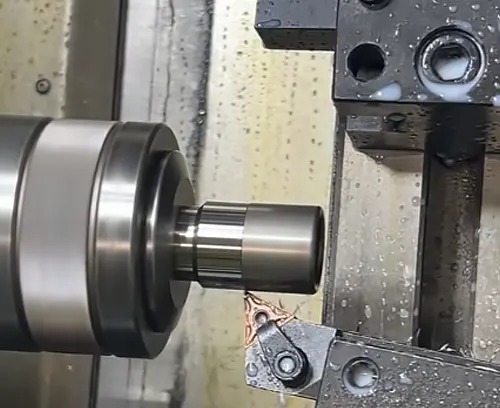
CNC machines are versatile tools that use computer programming to control the movement of cutting tools and other machinery.
These machines can accurately replicate complex designs with high precision, making them ideal for producing intricate woodwork such as turned newel posts.
Benefits of Using a CNC Machine for Turned Newel Posts
There are several benefits to using a CNC machine for producing turned newel posts:
- Accuracy: CNC machines can replicate designs with incredible precision, ensuring uniformity in the final product.
- Repeatability: Once a design is programmed into a CNC machine, it can be reproduced consistently, making it ideal for batch production.
- Complexity: CNC machines can produce intricate designs that may be challenging or impossible to achieve with traditional methods.
- Efficiency: CNC machines can operate continuously without requiring breaks, resulting in faster production times.
Process of Producing Turned Newel Posts with a CNC Machine
The process of producing turned newel posts with a CNC machine involves several steps:
- Design: The desired design for the newel post is created using CAD (Computer-Aided Design) software.
- Programming: The design is translated into G-code, which is the language that CNC machines understand.
- Setup: The wood blank is secured in the CNC machine, and the cutting tools are calibrated for the specific design.
- Production: The CNC machine follows the programmed instructions to cut and shape the wood blank into the desired newel post design.
- Finishing: After the newel post is produced, it may require additional finishing work, such as sanding and staining, to achieve the desired look.
Challenges of Using a CNC Machine for Turned Newel Posts
While CNC machines offer many benefits, there are some challenges to consider when using them for producing turned newel posts:
- Cost: CNC machines can be expensive to purchase and maintain, making them a significant investment for woodworking shops.
- Programming: Programming complex designs can be time-consuming and requires specialized skills.
- Limitations: CNC machines have size restrictions that may limit the size of the newel posts that can be produced.
- Maintenance: CNC machines require regular maintenance to ensure optimal performance and accuracy.
Conclusion
In conclusion, CNC machines have the potential to revolutionize the production of turned newel posts in the woodworking industry.
While there are challenges to overcome, the benefits of using a CNC machine for this purpose are significant.
With their accuracy, repeatability, and efficiency, CNC machines offer woodworkers a new level of precision and capabilities in producing intricate woodwork.
As technology continues to advance, CNC machines are likely to play an increasingly important role in the woodworking industry.