
Quick Answers




CNC Turning Services: Ideal Applications and Design Tips
CNC turning is one of the most established and widely used precision machining processes in modern manufacturing.
Known for its ability to deliver high accuracy, excellent surface finishes, and consistent repeatability, CNC turning plays a critical role in producing cylindrical and rotational components at scale.
From simple shafts to highly complex precision parts, CNC turning services enable manufacturers to meet tight tolerances while maintaining cost efficiency and production stability.
In today’s competitive manufacturing environment, where lead time, dimensional accuracy, and unit cost directly affect supply chain performance, CNC turning has become indispensable.
Industries such as aerospace, automotive, medical devices, and electronics rely heavily on precision machining to ensure functional reliability and regulatory compliance.
More importantly, well-informed design and machining decisions during CNC turning can significantly reduce production costs, shorten cycle times, and improve part quality.
Understanding how CNC turning works, where it excels, and where its limitations lie is essential for engineers, buyers, and product designers seeking optimal manufacturing outcomes.
2. What Is CNC Turning?
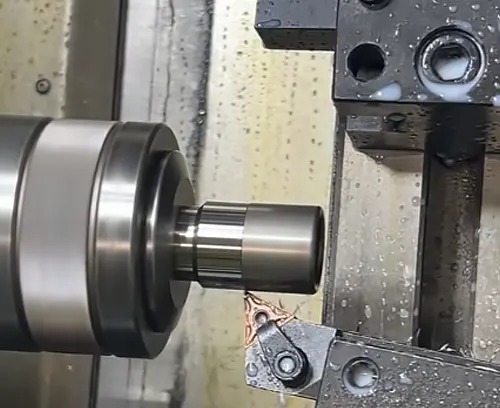
CNC turning is a subtractive CNC machining process in which material is removed from a rotating workpiece using a stationary cutting tool.
The workpiece is typically held in a chuck or collet and spun at high speed by the spindle, while the cutting tool advances along programmed toolpaths to create the desired geometry.
Unlike CNC milling—where the cutting tool rotates and the workpiece remains stationary—CNC turning relies on the rotation of the raw material itself.
This fundamental difference makes CNC turning particularly suitable for producing rotational parts such as shafts, bushings, pins, collars, and cylindrical housings.
Modern CNC turning machines operate using G-code programming, which precisely controls spindle speed, feed rate, tool position, and cutting depth.
Core machine components include the spindle for workpiece rotation, the chuck for secure clamping, a turret that holds multiple cutting tools, and a control system that executes the CNC machining process with high repeatability.
From simple two-axis lathes to advanced multi-axis turning centers, CNC turning has evolved into a highly automated and versatile manufacturing solution capable of meeting demanding industrial requirements.
3. How CNC Turning Machines Work
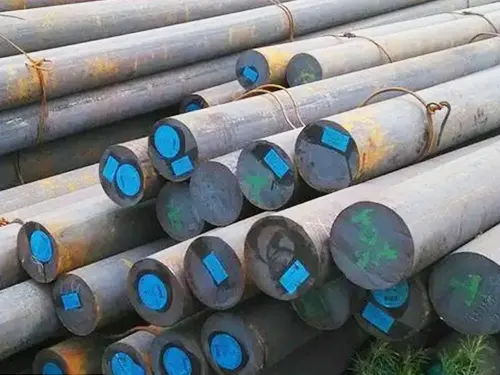
The CNC turning process follows a structured and highly controlled workflow. It typically begins with raw round bar stock or a forged blank mounted into the chuck.
Once clamped and aligned, the spindle rotates the workpiece at a calculated speed based on material type, diameter, and cutting parameters.
Material removal usually starts with roughing passes, where higher feed rates and deeper cuts are used to rapidly remove excess material and approximate the final shape.
This stage prioritizes efficiency and material removal rate. Finishing passes follow, using lighter cuts and slower feed rates to achieve precise dimensions, tighter tolerances, and refined surface finishes.
Different cutting tools are applied depending on the required features. Facing tools create flat end surfaces, turning tools shape outer diameters, boring bars machine internal diameters, grooving tools cut channels or recesses, and threading tools form internal or external threads.
All tool movements are synchronized through CNC programming to ensure dimensional accuracy and concentricity.
In terms of performance, standard CNC turning machines routinely achieve dimensional tolerances in the range of ±0.025 to ±0.125 mm, depending on material and part geometry.
Surface finishes typically range from 0.8 to 3.2 μm Ra, with finer finishes achievable through optimized tooling or secondary processes.
CNC turning equipment spans multiple configurations, from basic two-axis lathes for simple parts to multi-axis turning centers and mill-turn machines.
The latter integrate milling, drilling, and tapping capabilities, allowing complex parts to be completed in a single setup, reducing handling errors and cycle time.
4. Ideal Applications for CNC Turning
CNC turning is the preferred manufacturing method for parts that require rotational symmetry, tight concentricity, and consistent dimensional control.
Its application spans nearly every industrial sector where cylindrical precision components are essential.
In aerospace manufacturing, CNC turning is widely used for turbine shafts, landing gear pins, hydraulic fittings, and other safety-critical components where strength, balance, and accuracy are non-negotiable.
Automotive manufacturers rely on CNC turning for crankshafts, brake rotors, transmission components, and engine parts produced in large volumes with strict quality standards.
The medical industry uses CNC turning for implants, surgical instruments, and precision components that demand biocompatible materials and extremely tight tolerances.
In electronics, CNC turning enables the production of sensor housings, connectors, and micro-shafts that support miniaturized and high-performance devices.
Robotics and automation systems depend on CNC-turned actuators, joints, and precision shafts to ensure smooth motion and repeatable positioning.
Similarly, industrial machinery manufacturers use CNC turning to produce rollers, pump shafts, couplings, and other wear-resistant components designed for long service life.
Across all these applications, CNC turning is favored for its ability to deliver consistent precision, excellent concentricity, and high repeatability—especially when producing medium to high volumes of rotational parts.
5. Advantages of CNC Turning Services
CNC turning services offer a combination of speed, accuracy, and cost efficiency that is difficult to match with alternative manufacturing methods for cylindrical components.
Because the workpiece rotates continuously, CNC turning achieves high material removal rates, making it particularly efficient for round parts compared to CNC milling.
From a cost perspective, CNC turning becomes increasingly economical at medium to high production volumes.
Once programming and setup are complete, cycle times are short, scrap rates are low, and part-to-part variation is minimal.
The use of round bar stock also reduces material waste compared to machining prismatic shapes from rectangular blocks.
Another key advantage is surface quality.
CNC turning naturally produces smooth, uniform finishes and excellent concentricity between features, which is critical for components subjected to rotation, pressure, or sealing requirements.
Repeatable precision further enhances reliability, making CNC turning suitable for both prototype development and full-scale production.
The table below summarizes the primary advantages of CNC turning compared to other common machining approaches for rotational parts:
| Performance Factor | CNC Turning Services | CNC Milling (for round parts) |
|---|---|---|
| Material removal rate | High | Moderate |
| Cost efficiency (volume) | Excellent | Lower |
| Surface finish | Superior | Good |
| Concentricity control | Excellent | Moderate |
| Material waste | Low (round stock) | Higher |
6. Limitations and When Not to Use CNC Turning
Despite its strengths, CNC turning is not universally suitable for all part geometries. Its primary limitation lies in its reliance on rotational symmetry.
Parts with complex prismatic features, flat surfaces, or non-rotational geometries are often better produced using CNC milling or multi-axis machining.
Internal features can also pose challenges, particularly deep cavities or intricate internal profiles that are difficult to access with standard boring tools.
Additionally, very short or thin-walled parts may present fixturing difficulties, increasing the risk of deformation during machining.
In certain cases, alternative manufacturing processes may offer better performance or cost advantages.
CNC milling is preferable for complex three-dimensional shapes, while 3D printing excels in low-volume production of highly complex geometries.
Sheet metal fabrication is more suitable for thin, flat components, and injection molding becomes the most economical choice for very high-volume plastic parts.
Understanding these limitations ensures that CNC turning is applied where it delivers the greatest value—maximizing precision, efficiency, and return on investment.
7. Design Tips for CNC Turning
Effective CNC turning starts at the design stage. Well-optimized part geometry not only improves machinability but also reduces cycle time, tool wear, and overall production cost.
Applying DFM for turning principles allows designers to align part features with standard tooling and stable machining conditions.
Grooves and Fillets
Grooves are common features in CNC-turned components, particularly for O-rings, snap rings, and retaining features.
To ensure compatibility with standard tooling and sealing elements, groove dimensions should align with established standards such as AS568 for O-ring grooves or relevant DIN specifications.
Designing to these standards minimizes custom tool requirements and simplifies inspection.
Deep, narrow grooves should be avoided whenever possible.
As a general guideline, maintaining a reasonable depth-to-width ratio helps prevent tool deflection and chatter, both of which negatively impact surface finish and dimensional accuracy.
Wider grooves with moderate depth are easier to machine consistently and allow for higher feed rates.
Sharp internal corners are another frequent source of machining inefficiency.
CNC turning tools inherently have a nose radius, which makes perfectly sharp corners impractical.
Incorporating fillets that match standard tool radii not only reduces stress concentration in the finished part but also improves tool life and surface quality.
Threads and Reliefs
Threaded features benefit significantly from thoughtful design adjustments.
Adding thread reliefs at the end of threaded sections provides a clean tool exit, ensures full thread depth, and prevents incomplete or torn threads.
This is especially important for precision fits or sealing applications.
Whenever possible, designers should specify standard thread sizes rather than custom or non-standard pitches.
Standard threads are faster to machine, easier to inspect, and reduce the likelihood of tooling changes or special programming.
Wall Thickness and Length-to-Diameter Ratio
Thin walls and long, slender parts introduce stability challenges in CNC turning.
For most metals, a minimum wall thickness of approximately 0.8 mm is recommended, while plastics generally require at least 1.5 mm to prevent deformation during machining.
Increasing wall thickness improves rigidity and dimensional stability, particularly during finishing passes.
The length-to-diameter (L/D) ratio is another critical factor. Parts with an L/D ratio below 10:1 are generally straightforward to machine.
As this ratio increases, the risk of vibration, deflection, and tolerance variation rises sharply, often requiring additional support such as tailstocks or steady rests.
Material Selection
Material choice has a direct impact on machinability, cycle time, and achievable tolerances.
Aluminum alloys are widely favored for CNC turning due to their excellent machinability, low cutting forces, and good surface finish.
Stainless steels offer higher strength and corrosion resistance but require more conservative cutting parameters.
Titanium alloys are suitable for high-performance applications but demand specialized tooling and slower machining speeds.
For non-metallic parts, engineering plastics such as Delrin (POM) provide good dimensional stability and low friction, making them ideal for precision turned components.
Selecting materials that align with both functional requirements and machining efficiency is a key element of cost-effective CNC turning.
Tolerance Guidelines
From a practical manufacturing standpoint, standard CNC turning tolerances typically fall around ±0.05 mm for most features.
Finer tolerances, down to ±0.025 mm, are achievable but should be reserved for critical features due to increased machining time, inspection effort, and cost.
Applying tight tolerances only where functionally necessary is a core principle of effective DFM.
8. Latest Innovations in CNC Turning
CNC turning technology continues to evolve, driven by advances in digital manufacturing, automation, and data-driven optimization.
Modern turning centers increasingly integrate IoT connectivity and AI-based analytics to monitor machine health, predict maintenance needs, and adjust cutting parameters in real time.
These capabilities reduce unplanned downtime and improve overall equipment effectiveness.
Hybrid mill-turn machines represent another major innovation.
By combining turning and milling operations within a single setup, these systems enable the production of complex parts without secondary operations.
This not only shortens lead times but also improves accuracy by eliminating re-clamping errors.
Smart tooling solutions with built-in wear detection are also becoming more common.
Sensors embedded in toolholders or machine spindles track cutting forces and vibration patterns, allowing operators to detect tool wear before it leads to scrap or dimensional drift.
Automation further enhances CNC turning efficiency, particularly in high-volume production environments.
Robotic loading systems, bar feeders, and unattended machining cells allow manufacturers to operate with minimal supervision while maintaining consistent quality.
9. Choosing the Right CNC Turning Service Provider
Selecting a capable CNC turning service provider is as important as the part design itself. A well-equipped supplier should offer a broad range of machining capabilities, from basic 2-axis lathes to advanced multi-axis mill-turn centers. This flexibility ensures that both simple and complex components can be produced efficiently under one roof.
Material availability and certification are equally critical, especially for regulated industries.
Reputable providers typically support a wide range of metals and plastics and operate under recognized quality systems such as ISO 9001 or AS9100D.
These certifications indicate consistent process control and traceability.
Quality assurance practices distinguish professional CNC turning services from basic job shops.
In-process inspection, coordinate measuring machines (CMM), and documented inspection reports are essential for maintaining tight tolerances and customer confidence.
Lead time performance, prototyping capability, and scalability should also factor into the selection process.
The ability to move seamlessly from prototype to full production reduces risk and accelerates time to market.
Value-added services such as anodizing, polishing, heat treatment, and assembly further streamline the supply chain.
Practical Tips and Case Studies
Real-world CNC turning success often comes down to small but impactful design choices.
For example, properly dimensioned O-ring grooves and snap ring grooves designed to standard specifications improve sealing reliability and reduce inspection rework.
Threaded shoulders with adequate reliefs allow for clean thread formation and easier assembly, while fillets sized to accommodate bearing seats reduce stress concentration and extend service life.
In multiple production cases, optimizing groove geometry and eliminating unnecessary tight tolerances have reduced cycle times by double-digit percentages while improving yield.
These incremental improvements translate directly into lower unit costs and more consistent part quality.
Including diagrams or visual references for features such as groove profiles, thread reliefs, and fillet transitions can significantly enhance design clarity and reduce back-and-forth during manufacturing reviews.
Conclusion
CNC turning remains one of the most efficient and precise manufacturing processes for producing rotational components across a wide range of industries.
Its ability to deliver high accuracy, excellent surface finish, and repeatable quality makes it a cornerstone of modern precision machining.
By applying sound design principles, selecting appropriate materials, and understanding process limitations, engineers and buyers can fully leverage the advantages of CNC turning while controlling cost and lead time.
Partnering with an experienced CNC turning service provider further ensures that designs move smoothly from prototype to production.
For manufacturers seeking reliable, scalable, and cost-effective solutions, consulting a professional CNC turning service provider early in the design phase is the most effective way to maximize performance and manufacturability.