

Quick Answers





Design for Manufacturability in CNC Machining
In today’s fast-paced manufacturing landscape, the pressure to deliver products faster—without sacrificing reliability or quality—is unrelenting.
Companies that consistently meet demanding lead times gain a decisive competitive edge, but this speed must not come at the cost of increased defects or runaway expenses.
Nowhere is this balance more critical than in CNC machining, a process prized for its rapid turnaround but also highly sensitive to design choices.
Early design decisions have a cascading impact on cost, schedule, and quality.
Poor design for manufacturability (DFM) can result in rework, inspection bottlenecks, production delays, and cost overruns.
According to a McKinsey report, up to 80% of manufacturing costs are locked in during the design phase, underscoring the strategic importance of getting DFM right from the outset (McKinsey & Company, 2019).
What DFM Means in CNC Machining
-
Definition
DFM in CNC machining is a systematic approach that aligns part geometry, tolerances, materials, and inspection requirements with the real-world capabilities of manufacturing processes.
The goal is not just to make parts manufacturable, but to optimize them for robust, predictable, and efficient production.
-
Core Objectives
A well-implemented DFM strategy in CNC machining aims to:
- Reduce machining complexity and overall cycle time.
- Minimize setups, tool changes, and reliance on special tooling.
- Balance functional requirements with achievable tolerances.
- Improve repeatability and maximize first-pass yield.
-
Quantified Benefits
Industry data consistently show that DFM can reduce CNC part costs by 15–40% and lead times by 25–60% (Source: Protolabs, 2023; SME, 2021).
These savings come from smoother production ramp-up, fewer process interruptions, and reduced inspection and rework needs.
The table below summarizes these typical improvements: BenefitTypical ImprovementCost Reduction15–40%, Lead Time Reduction: 25–60%, Quality Risk ReductionSignificant
3. Why DFM Matters Across Industries
-
Universal Customer Priorities
All manufacturing customers, regardless of industry, prioritize lead time, cost control, quality, reliability, and risk mitigation.
DFM practices directly support these priorities by ensuring manufacturability and scalability from the earliest design phase.
-
Industry-Specific Drivers
However, DFM also addresses unique drivers in different sectors:
- Aerospace & Defense: Parts must balance weight reduction with manufacturability, meet extremely tight tolerances, and withstand rigorous inspection protocols.
- Medical Devices: Regulatory requirements demand strict validation, traceability, biocompatibility, and reliability.
- Electronics & Enclosures: DFM ensures proper sealing, electromagnetic interference (EMI) shielding, and optimal surface finish.
- Industrial Equipment: Scalability from prototype to high-volume production hinges on sound DFM principles.
The Multiplier Effect of Design Decisions
A single challenging feature—such as an inaccessible pocket or a complex curve—can multiply programming time, increase the number of setups, extend tooling lead times, and complicate both manufacturing and inspection.
These ripple effects are why DFM must be integrated at the concept stage, not retroactively after quoting.
Studies show that late-stage design changes increase costs by 10-fold or more compared to changes made early in the process (Boeing, 2022).
High-Impact Design Factors and Manufacturing Consequences
-
Geometry-Driven Cost and Lead-Time Drivers
Features such as sharp internal corners, knife edges, thin walls, deep pockets, complex curves, and obstructed areas can dramatically increase machining difficulty.
These choices often require custom tooling, slower feeds, and multiple setups, all of which drive up cost and extend delivery.
-
Axis Strategy
Selecting between three-axis and five-axis machining has significant implications for cost, capacity, and feature alignment.
While five-axis machines enable greater geometric freedom, they are less available and more expensive.
Whenever possible, design features to be machined in a single orientation using three-axis equipment to maximize efficiency.
-
Surface Finish Requirements
Specifying cosmetic finishes or ultra-smooth surfaces can double or triple production time and cost.
Overly tight finishes may also inadvertently reduce part performance by increasing friction or complicating coatings and sealing operations.
Tolerance Strategy and GD&T for CNC Machining
-
Over-Tolerancing: The Hidden Cost Driver
Defaulting to tight dimensional tolerances is a common but costly mistake.
Unnecessarily tight tolerances inflate both machining and inspection time, and may require specialized processes.
Understanding when to use profile tolerances instead can yield substantial savings.
-
Practical GD&T Guidelines
Best practice includes selecting datums aligned with functional needs, minimizing tolerance stack-up, and accounting for thermal expansion and fixturing complexity in the design.
-
Cost and Capability Thresholds
Standard CNC machines typically hold tolerances to ±0.005 inches (±0.127 mm).
Tighter tolerances often require special tooling, climate-controlled environments, or additional processes, each with substantial cost premiums (ASME B89.1.5-1998).
-
Designing for Measurability
Inspection must be feasible: probe access, line of sight, and measurement repeatability should be considered in parallel with production capability.
Inspection Planning as a Core DFM Activity
For complex parts, the time required for quality verification can match or even exceed the actual machining time.
Drawings that call out point measurements for every feature may unintentionally balloon inspection effort.
By consolidating requirements and leveraging profile scanning or in-process probing, inspection time can often be reduced by 50–80% without compromising quality (Quality Magazine, 2023).
CNC Geometry Best Practices (Engineer Reference)
-
Internal Corners
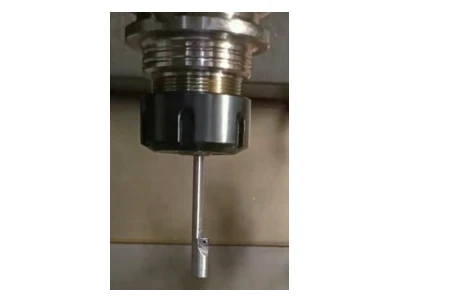
Wherever possible, use radii larger than the minimum tool size—typically, a 1.5× tool diameter is recommended to minimize tool deflection and improve surface finish.
-
Edges and Transitions
True sharp edges cannot be achieved with rotary tools. Specify fillets or chamfers to improve strength and manufacturability.
-
Curves and Freeform Surfaces
Reserve complex curves for when they are functionally justified. Simplifying toolpaths reduces cost and risk.
-
Holes, Threads, and Fasteners
Be explicit about thread depth, tap depth, and wall clearance. Avoid unnecessary thread callouts and design to prevent wall breakout.
Material Selection Through a DFM Lens
-
Machinability as a Cost Lever
Material selection is a foundational DFM decision because it determines not only part performance but also machining efficiency.
Materials with better machinability—those that produce short, manageable chips, generate less heat, and cause lower tool wear—can dramatically reduce CNC cycle times and tooling costs.
For example, 6061 aluminum is favored in many industries due to its ease of machining compared to harder alloys like stainless steel or titanium, which can increase tool costs by up to 50% and require slower feeds and speeds (Machinery’s Handbook, 31st Edition).
-
Stock Size and Availability
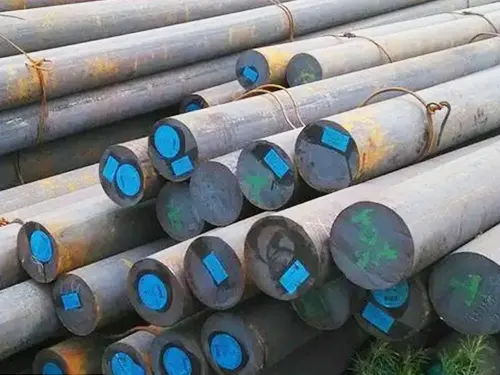
Specifying materials that are available in standard bar, plate, or billet sizes reduces both raw material lead time and scrap.
When designs align with standard stock dimensions, manufacturers can minimize waste and avoid costly custom orders.
According to the US Department of Commerce, scrap rates can exceed 20% when non-standard sizes are used—a direct hit to both cost and sustainability.
-
Performance vs. Total Cost of Ownership
Sometimes, specifying a higher-cost material can lower the overall part cost by improving machinability, reducing secondary operations, or eliminating post-machining treatments.
For example, using a pre-hardened alloy may avoid the distortion risks and extra processing time associated with heat treatment, resulting in higher yield and more predictable part quality.
The key is to consider the entire lifecycle cost, not just the price per pound or kilogram.
Process Selection and Design Conflicts
-
Machining vs. Casting vs. Other Processes
DFM is about choosing the right process for the right features.
Machined parts can have sharp, accurate edges and tight tolerances, while cast or molded parts require draft angles and uniform wall thickness to ensure proper material flow and mold release.
Overlooking these differences can lead to costly redesigns or performance failures later in the product lifecycle.
-
Prototype vs. Production Design Strategy
A single design seldom optimizes for both prototype speed and production efficiency.
Prototyping may allow for more complex geometry or looser tolerances, while production demands cost control and repeatability.
Leading manufacturers often create branched designs—one for prototyping, another for production—to avoid compromise and speed up both phases (MIT Manufacturing Innovation, 2022).
Common DFM Mistakes Engineers Make
Even experienced engineers can fall into common DFM traps. Over-engineering—adding features or tolerances that do not contribute to function—drives up cost and complexity.
Sometimes, CAD-enabled aesthetics result in shapes that are visually appealing but challenging or impossible to manufacture with standard tooling.
Poor tool and probe accessibility, as well as designing for the wrong manufacturing process or scale, can trigger downstream issues that are expensive to resolve.
Design Simplification Strategies That Drive Efficiency
Efficiency in CNC machining is often the result of design simplification.
Reducing the number of setups, standardizing features, and favoring toolpath-friendly geometry all cut costs and lead time.
Part consolidation—combining multiple components into fewer assemblies—can further reduce handling and inspection effort, but only when it does not compromise maintenance or function.
Adopting a function-first design philosophy ensures that every feature adds value and manufacturability remains central from concept to production.
Early Supplier Involvement (ESI) and Collaborative DFM
The cost of addressing manufacturability issues multiplies the later they are discovered in the product development cycle.
Early Supplier Involvement (ESI) enables engineering teams to leverage supplier expertise in process capability, tooling constraints, and alternative material choices, all before finalizing the design.
Suppliers can often identify opportunities to simplify features, recommend more readily available materials, or flag design elements that could pose production bottlenecks.
Aligning design intent with production reality not only reduces risk but builds a more predictable and cost-effective path to market.
Real-World DFM Case Studies
Medical Titanium Component Optimization: A medical device manufacturer collaborated with its CNC supplier early in the design phase, switching from a tight-tolerance, multi-piece assembly to a consolidated, CNC-machined titanium part.
The result: part cost dropped by 32%, lead time was cut by 45%, and first-pass yield improved from 88% to 99%.
Aerospace Precision Housing: An aerospace firm faced repeated delays due to over-toleranced internal features for a mission-critical housing.
By working with the supplier to relax non-functional tolerances and standardize radii, both cost and inspection time were reduced by more than 20%.
High-Mix, Low-Volume Prototype Acceleration: A contract manufacturer specializing in quick-turn prototypes implemented DFM guidelines for tool access and setup reduction.
This reduced average lead times across projects by 50% and lowered scrap rates by 18%.
Documentation and Communication Best Practices
Clear documentation is essential for translating design intent into manufacturable parts. Where CAD and drawings conflict, establish which takes precedence and annotate accordingly.
Always distinguish between critical-to-function and reference features, using clear notes and symbols.
Annotate functional requirements directly on the drawing, and eliminate ambiguity in tolerances and inspection criteria—miscommunication at this stage can lead to costly errors or rework.
Conclusion: DFM as a Design Mindset
DFM is not a corrective action to be applied after problems surface, but a preventative strategy embedded throughout the design process.
Organizations that make manufacturability a core principle reap compound benefits: faster innovation cycles, lower risk, and more predictable project outcomes.
Call to Action
Request a DFM review from your supplier or trusted manufacturing partner. Download comprehensive CNC machining design guidelines to inform your next project.
Engage manufacturing engineers early in your design process to bridge the gap between concept and production reality.
Move from design intent to production reality faster—make DFM your competitive advantage.
References
- SME. (2021). “Supplier Collaboration in Product Development.”
- Medical Device Manufacturing Magazine. (2023). “DFM in Medical Components.”
- Aerospace Manufacturing and Design. (2022). “Precision Housing Cost Reduction.”
- Protolabs. (2023). “CNC Machining FAQs.”