
Quick Answers





How accurate is CNC milling?
- June 19, 2025
- Jason Chang
- 8:14 am
Computer Numerical Control (CNC) milling is a widely used manufacturing process that utilizes automated machinery to produce precision parts.
One of the key factors that engineers consider when choosing CNC milling as a manufacturing method is the accuracy of the final product.
Understanding CNC Milling
Before we delve into the accuracy of CNC milling, it is essential to have a basic understanding of how the process works.
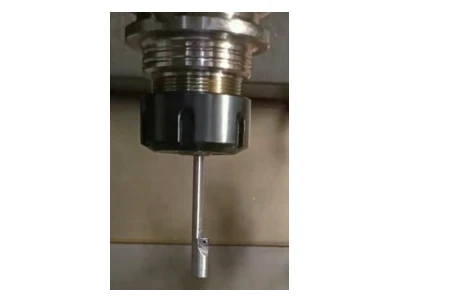
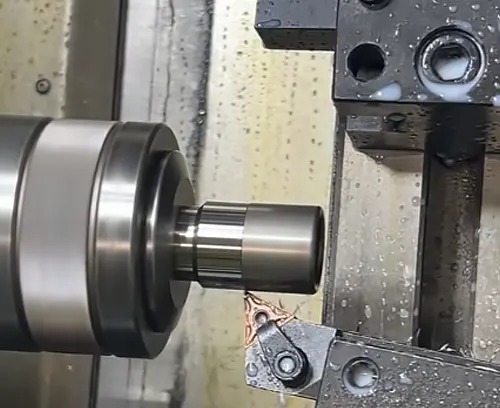
CNC milling involves the use of a computer-controlled machine to remove material from a workpiece and create a desired shape.
The machine follows a set of instructions provided by a computer program, which dictates the movement of the cutting tool along multiple axes.
This level of automation allows for precise and consistent machining operations.
Factors Affecting Accuracy
Several factors can impact the accuracy of CNC milling, including machine calibration, tool wear, material properties, and programming errors.
Machine calibration is crucial to ensure that the machine moves in the correct dimensions and positions. Tool wear can lead to dimensional inaccuracies in the final part, as worn tools may not cut as precisely as new ones.
Material properties such as hardness and thermal expansion can also affect the accuracy of the machining process.
Lastly, programming errors can result in incorrect tool paths and dimensions, leading to inaccuracies in the final part.
Comparing CNC Milling to Other Methods
When it comes to accuracy, CNC milling is often favored over traditional manufacturing methods such as manual milling or turning.
CNC machines can achieve high levels of precision due to their ability to follow complex tool paths with minimal human intervention.
In contrast, manual machining processes rely on the skill and experience of the operator, which can introduce human error and limit the achievable accuracy.
Another advantage of CNC milling is the ability to produce complex geometries with tight tolerances.
CNC machines can perform intricate cuts and contours that would be challenging or impossible to achieve with manual machining methods.
This level of precision and repeatability makes CNC milling an ideal choice for industries that require high-quality, consistent parts.
Measuring Accuracy
The accuracy of CNC milling can be measured using various methods, including dimensional inspections, surface roughness analysis, and coordinate measuring machines (CMMs).
Dimensional inspections involve measuring the final part’s dimensions against the design specifications to determine if it meets the required tolerances.
Surface roughness analysis assesses the quality of the machined surface, which can impact the part’s functionality and appearance.
CMMs are high-precision machines that can measure complex geometries with accuracy, providing detailed information about the part’s dimensions and tolerances.
Improving Accuracy
While CNC milling is known for its high level of accuracy, engineers can take additional steps to improve the precision of the final parts further.
One common technique is to utilize compensation methods, such as tool radius compensation and wear offsets, to account for dimensional variations resulting from tool wear or material properties.
Machine calibration and maintenance are also critical to ensuring consistent accuracy over time.
Additionally, optimizing cutting parameters such as feed rate, cutting speed, and depth of cut can help achieve the desired dimensional accuracy and surface finish.
Conclusion
In conclusion, CNC milling is a highly accurate manufacturing process that offers numerous advantages over traditional machining methods.
With the right techniques and equipment, engineers can achieve tight tolerances and high-quality finishes in their parts.
By understanding the factors that affect accuracy and implementing best practices, manufacturers can leverage CNC milling to produce precise and complex components for a wide range of industries.