
Quick Answers






How do you indicate and locate a hole on a CNC milling machine?
Operating a CNC milling machine requires precision and accuracy, especially when it comes to locating and indicating holes.
This task is crucial in the manufacturing industry as even a minor error can lead to significant consequences.
Methods of Indicating Holes
There are several methods to indicate a hole on a CNC milling machine, each with its own advantages and limitations. Let’s delve into some of the most common techniques:
1. Edge Finder
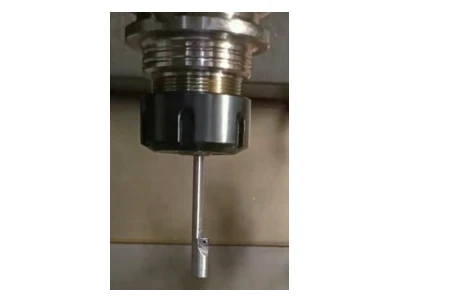
The edge finder is a popular tool used to locate the edges of a hole accurately. It works by aligning the edge finder with the corner of the workpiece and gradually moving it towards the hole.
Once the edge finder “kicks out,” indicating it has touched the edge, you can set this point as the reference for the hole position.
2. Electronic Probe
An electronic probe is another effective method used to indicate holes on a CNC milling machine.
This tool uses electrical signals to detect the edges of the hole, providing precise measurements for accurate positioning.
3. Center Drill
Using a center drill to create a starting point for a hole is a common practice in machining.
By accurately center drilling the hole, you can ensure proper alignment and positioning for subsequent drilling operations.
Techniques for Locating Holes
Once you have indicated the position of the hole, the next step is to locate it accurately on the CNC milling machine.
Here are some techniques to help you achieve this:
1. Coordinate System
Establishing a clear coordinate system is essential for locating holes on a CNC milling machine. By defining the X, Y, and Z axes, you can precisely position the tool over the hole location and ensure accurate drilling.
2. Workholding Devices
Using workholding devices such as vises, clamps, or fixtures can aid in securely holding the workpiece in place during hole location. This prevents any movement or shifting that could result in misalignment.
3. Tool Offset Compensation
Adjusting the tool offset compensation is crucial for achieving accurate hole locations on a CNC milling machine.
By accounting for the tool’s diameter and length, you can ensure that the hole is drilled in the correct position with the desired dimensions.
Conclusion
Indicating and locating holes on a CNC milling machine requires precision, attention to detail, and the use of proper techniques and tools.
By following the methods discussed in this article and implementing best practices in machining, engineers with a manufacturing background can ensure accurate hole positioning for optimal results in their manufacturing processes.