
Quick Answers






How to Calculate RPM in CNC Turning?
- July 29, 2025
- Jason Chang
- 7:17 am
In CNC turning, calculating RPM (Revolutions Per Minute) is essential for achieving optimal cutting speeds and feeds to ensure the best quality of machining.
RPM directly affects the cutting tool’s performance and the material removal rate.
Being able to accurately calculate RPM is crucial for success in CNC turning operations.
Understanding RPM in CNC Turning
Before we dive into the specifics of how to calculate RPM in CNC turning, let’s first understand why RPM is such a critical parameter in the machining process.
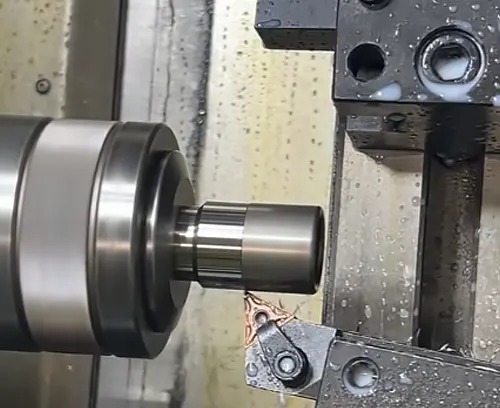
RPM refers to the number of times a workpiece rotates around its axis in one minute, and it directly impacts the cutting speed of the tool as it engages with the workpiece material.
The optimal RPM ensures that the cutting tool removes material efficiently without causing excessive tool wear or compromising the surface finish of the workpiece.
Factors Influencing RPM Calculation
Several factors need to be considered when calculating RPM in CNC turning.
These factors include the cutting speeds recommended for the material being machined, the diameter of the workpiece, and the type of cutting tool being used.
Understanding how these factors interplay is crucial for accurately determining the RPM needed for a successful turning operation.
Formula for Calculating RPM in CNC Turning
The formula for calculating RPM in CNC turning is:
RPM = (CS x 12) / (π x D)
where:
- RPM = Revolutions Per Minute
- CS = Cutting Speed (in feet per minute)
- D = Diameter of the workpiece (in inches)
- π (pi) = 3.14159
Step-by-Step Guide to Calculating RPM
Follow these steps to calculate the RPM required for a CNC turning operation:
1.Determine the cutting speed (CS) recommended for the material being machined.
This information can typically be found in cutting speed tables provided by tool manufacturers or machining handbooks.
2.Measure the diameter of the workpiece (D) that will be turned on the CNC lathe.
Ensure that the units are consistent with the cutting speed value (in feet per minute).
3.Plug the cutting speed (CS) and workpiece diameter (D) values into the RPM formula: RPM = (CS x 12) / (π x D).
4.Calculate the RPM using the formula provided. This value represents the optimal speed at which the workpiece should rotate during the turning process.
5.Adjust the spindle speed of the CNC lathe to match the calculated RPM for the specific turning operation.
Example Calculation of RPM in CNC Turning
Let’s walk through an example to illustrate how to calculate RPM in CNC turning:
Assume we are machining a steel workpiece with a cutting speed of 300 feet per minute and a diameter of 4 inches. Using the RPM formula:
RPM = (300 x 12) / (3.14159 x 4) = 900 / 12.56636 = 71.63
Therefore, the calculated RPM for this CNC turning operation is approximately 71.63 revolutions per minute.
Importance of Accurate RPM Calculation
Accurately calculating RPM in CNC turning is crucial for achieving optimal cutting speeds, prolonging tool life, and ensuring high-quality machining outcomes.
Incorrect RPM settings can lead to issues such as tool breakage, poor surface finish, and inefficient material removal, resulting in increased manufacturing costs and downtimes.
By mastering the RPM calculation process, engineers can enhance the efficiency and precision of their CNC turning operations.
Conclusion
Calculating RPM in CNC turning is a fundamental aspect of the machining process that directly impacts the cutting tool’s performance and the quality of the workpiece.
By understanding the factors influencing RPM calculation and following the appropriate formula, engineers can determine the optimal RPM for each turning operation, leading to enhanced productivity and machining outcomes.
Mastering the art of RPM calculation is essential for success in CNC turning and plays a crucial role in achieving manufacturing excellence.