
Quick Answers





What is offset in CNC turning?
- November 4, 2025
- Jason Chang
- 2:21 pm
When it comes to CNC turning, one of the key concepts that engineers with a manufacturing background need to grasp is offset.
Understanding how offsets work and how to implement them properly in CNC turning processes is essential for achieving precise and accurate results.
What is Offset in CNC Turning?
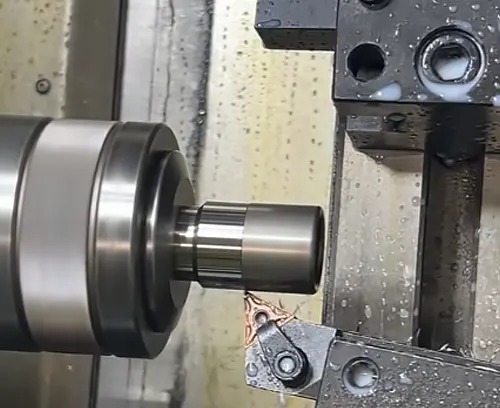
Offset in CNC turning refers to the adjustment made to the position of the cutting tool relative to the workpiece.
This adjustment is necessary to ensure that the cutting edge of the tool aligns with the desired location on the workpiece, enabling precise machining and achieving dimensional accuracy.
By shifting the tool offset, engineers can control the cutting path and achieve the desired dimensions and surface finish.
Types of Offset in CNC Turning
There are several types of offsets commonly used in CNC turning processes, each serving a specific purpose. The primary types of offsets include:
1. Tool Offset
Tool offset is the most basic type of offset in CNC turning, involving the adjustment of the cutting tool’s position along the X, Y, and Z axes.
By adjusting the tool offset values, engineers can precisely fine-tune the tool’s location relative to the workpiece, ensuring accurate cuts and dimensional precision.
2. Wear Offset
Wear offset compensates for tool wear during machining operations.
As the cutting tool wears down over time, the dimensions of the machined part may deviate from the desired specifications.
By applying wear offset values, engineers can adjust the tool’s position to compensate for wear and maintain accuracy throughout the machining process.
3. Geometry Offset
Geometry offset accounts for the geometry of the cutting tool, such as its shape, size, and cutting edge profile.
By specifying geometry offset values, engineers can ensure that the cutting tool’s geometry aligns with the desired cutting path, minimizing errors and improving machining precision.
Best Practices for Implementing Offset in CNC Turning
Implementing offset in CNC turning requires careful consideration and precision to achieve optimal results.
Here are some best practices to keep in mind when working with offset in CNC turning:
1. Measure and Calibrate Tool Offset Regularly
Regularly measure and calibrate tool offset values to ensure accurate positioning of the cutting tool.
By maintaining precise tool offset measurements, engineers can minimize errors and produce consistent results.
2. Monitor Tool Wear and Apply Wear Offset as Needed
Monitor tool wear during machining operations and apply wear offset values as necessary to compensate for tool wear.
By proactively adjusting wear offset, engineers can maintain dimensional accuracy and prolong the lifespan of cutting tools.
3. Optimize Geometry Offset for Cutting Tool Efficiency
Optimize geometry offset values to enhance cutting tool efficiency and accuracy.
By fine-tuning geometry offset parameters, engineers can maximize cutting performance and achieve superior surface finish on machined parts.
Conclusion
Offset plays a crucial role in CNC turning processes, enabling engineers to control the cutting tool’s position and achieve precise machining results.
By understanding the various types of offsets and implementing best practices, engineers can optimize their CNC turning operations, producing high-quality machined parts with accuracy and efficiency.