
Comparative analysis of various connection methods for sheet metal chassis structural components
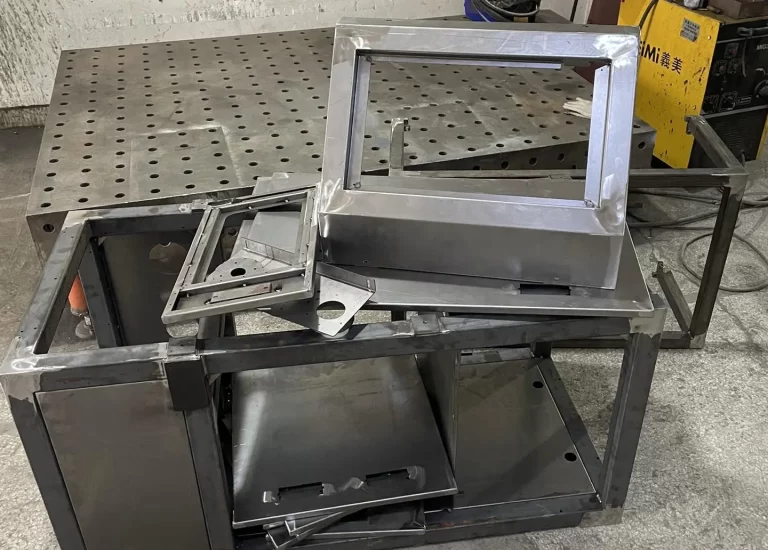

Sheet metal bending is a core manufacturing process in which flat metal sheets are transformed into three-dimensional shapes through controlled plastic deformation. Using tools such as press brakes and dies, materials are bent along straight axes to achieve functional, often highly precise geometries. Unlike cutting or machining, bending doesn’t remove material—rather, it repositions it, providing strength, structure, and functionality without adding cost through excess waste.
This process plays a pivotal role in the manufacturing chain, bridging the gap between raw material and end-use component. Whether producing an automotive bracket or an electronics enclosure, bending is often the stage where designs take their final form.
Bending is ubiquitous in nearly every modern industry. Its versatility allows manufacturers to form complex shapes with minimal assembly or welding, streamlining production and improving structural integrity. Key sectors leveraging sheet metal bending include:
Automotive – for components such as structural reinforcements, panels, and engine mounts.
Aerospace – where weight, strength, and precision are critical for parts like fuselage skins and brackets.
Construction – producing building envelopes, HVAC systems, and structural elements.
Electronics – enabling tight-tolerance enclosures and internal chassis.
Custom fabrication and prototyping – allowing rapid iteration and personalized product development.
These industries benefit from the repeatability and scalability of bending operations, especially when integrated into automated fabrication systems.
Sheet metal bending significantly influences multiple dimensions of product development:
Structural Performance: Properly bent components gain added strength due to work hardening and geometric rigidity.
Dimensional Accuracy: Tightly controlled bending minimizes the need for post-processing or adjustments.
Production Efficiency: Bending enables fast, repeatable shaping with minimal setup, especially when supported by CNC technologies.
Cost Optimization: Reduces reliance on welding, fasteners, and secondary machining, lowering material waste and labor hours.
By integrating bending considerations early in the design phase, engineers can dramatically enhance manufacturability and lifecycle performance while keeping costs under control.
This article serves as a practical and technical resource for engineers, designers, fabricators, and manufacturing decision-makers involved in the creation and optimization of sheet metal products. It aims to:
Explain the fundamentals of the bending process and the science behind it.
Compare common bending methods and their industrial applications.
Guide material selection and best practices for bending-specific design.
Share practical tips and advanced techniques to improve part quality and efficiency.
Whether you’re developing prototypes, scaling up production, or refining designs for lean manufacturing, this guide offers the insights necessary to master sheet metal bending as both a science and a craft.
At its core, sheet metal bending involves the application of mechanical force to deform a metal sheet plastically beyond its yield strength, without causing fracture. This controlled deformation reshapes the material along a desired axis, using tools such as press brakes equipped with punch-and-die sets. The aim is to form accurate, repeatable angles or contours, preserving the material’s structural integrity while meeting precise dimensional requirements.
This process plays a foundational role in metal fabrication, combining efficiency with a broad range of geometric possibilities.
Understanding the physical principles behind bending is crucial to predicting part behavior and optimizing designs.
During bending, the outer surface of the material is placed in tension, while the inner surface experiences compression. Between these two zones lies the neutral axis—a theoretical line where the material remains unstressed. Its location shifts depending on material type and thickness, influencing bend calculations such as bend allowance.
When bending force is removed, the material partially springs back due to its elasticity. The extent of this elastic recovery depends on:
Material stiffness and yield strength
Bend radius and angle
Method of bending (air bending has more springback than coining)
Engineers must account for this by overbending or using CNC-controlled compensation to achieve the intended final geometry.
Different metals react uniquely to bending forces. Key influencing properties include:
Malleability: Determines how easily a material can be bent without cracking.
Yield strength: A higher value means more force is required and more springback occurs.
K-Factor: The ratio that defines the neutral axis’s location relative to the material thickness—critical for calculating bend allowance and bend deduction.
Standard K-factor values range from 0.3 to 0.5, depending on material and bending method.
Press brakes are the workhorses of sheet metal bending. Their performance depends on a combination of tooling, force, and control.
Tooling Geometry: Punch and die shapes (e.g., V-die, U-die, gooseneck punch) determine the internal bend radius and achievable bend angles.
Machine Tonnage: Required force depends on material thickness, bend length, and tensile strength. Underpowered brakes risk incomplete bends; overpowered setups can cause deformation.
Control Systems: Modern CNC press brakes use real-time feedback, automated angle correction, and tool libraries to ensure high repeatability and minimize manual adjustments.
Selecting the right setup is essential for producing dimensionally stable parts with minimal rework.
Sheet metal can be formed through various bending techniques, each suited to specific geometries, tolerances, and production scales.
V-bending is the most widely used and flexible method, employing V-shaped dies and a punch to form bends. It includes three primary variations:
Air Bending: The punch presses the sheet partway into the die, without bottoming out. Offers flexibility in angle variation but involves more springback.
Bottoming: The punch forces the sheet firmly into the die, achieving greater precision and less springback at the cost of increased tooling wear.
Coining: The punch penetrates slightly into the material, plastically deforming it through the entire thickness. This achieves high accuracy and minimal springback but requires significantly more force.
V-bending is ideal for a wide range of bend angles and is compatible with various materials and thicknesses.
Roll bending uses a series of rollers—typically three—to form large-radius curves and cylindrical or conical shapes. Common in applications such as:
Pipe and ductwork
Cylindrical tanks
Curved architectural panels
This method excels at forming long bends and gentle radii, with adjustable roller spacing for different diameters.
U-bending is similar to V-bending but uses U-shaped dies and punches to produce deeper, flatter-bottomed profiles. It’s typically applied where:
Close-fitting channels are required
Formed parts need additional material support at the base
Due to the geometry, U-bending tends to have more pronounced springback, requiring compensation strategies or precision tooling.
This technique is preferred for tight-radius bends, often exceeding 90°, while maintaining wall thickness and cross-sectional integrity. A rotating die draws the material around a fixed radius, producing consistent, smooth results. Applications include:
Hydraulic tubing
Structural aluminum sections
Automotive exhaust components
Rotary draw bending offers high repeatability with minimal distortion, making it ideal for aesthetic and functional requirements.
Edge bending focuses on small flange formation along the edge of a part. It is used to:
Create stiffening features
Improve aesthetics and safety by eliminating sharp corners
Prepare components for assembly or joining
This method typically uses a form tool that pushes the edge over a radius block.
In wipe bending, the sheet is held in place with a pressure pad while a wipe die moves to form a bend. It’s especially effective for:
Small, accurate flanges
Thin-gauge materials
High-volume production where tight tolerances are required
Wipe bending is common in appliance housings, electronics, and parts where cosmetic consistency is critical.
Material selection is a critical aspect of sheet metal bending, affecting not only formability but also part function, appearance, and cost. Each material offers a unique combination of mechanical and physical properties that must be matched to the requirements of the application and the bending method.
Widely used in structural and industrial applications, carbon steel offers a balanced combination of strength, ductility, and affordability. It is highly formable, especially in low-carbon grades, making it ideal for general-purpose bending.
Pros: High tensile strength, good ductility, cost-effective, readily weldable, and recyclable.
Considerations: May require surface treatments (e.g., painting or galvanizing) to resist corrosion in exposed environments.
Aluminum is prized for its lightweight and corrosion-resistant nature, making it ideal for aerospace, automotive, and consumer products. However, it is more prone to cracking during bending, especially in harder alloys.
Pros: Lightweight, corrosion-resistant, good thermal/electrical conductivity.
Considerations: Requires larger bend radii to avoid cracking; soft tempers (e.g., 5052-H32) are more suitable than hard ones (e.g., 6061-T6) for forming.
Renowned for its corrosion resistance and mechanical strength, stainless steel is common in food processing, medical devices, and marine applications. Its work-hardening behavior demands higher bending forces and robust tooling.
Pros: Exceptional corrosion resistance, high tensile strength, durable finish.
Considerations: Requires higher tonnage and precision; springback is more pronounced, necessitating compensation in tooling or programming.
Titanium offers an outstanding strength-to-weight ratio, corrosion resistance, and biocompatibility, making it indispensable in aerospace and medical sectors. Its low ductility requires specialized handling.
Pros: Lightweight, corrosion-resistant, excellent in harsh or biologically sensitive environments.
Considerations: Expensive, sensitive to contamination, and difficult to bend without cracking—often requires hot forming or annealing.
Known for its electrical and thermal conductivity, copper is highly formable and aesthetically appealing. It is commonly used in electronics, architecture, and HVAC systems.
Pros: Highly ductile, excellent conductivity, resists corrosion.
Considerations: Soft and prone to surface damage—careful handling and protective films are recommended.
Successful sheet metal bending depends as much on good design practices as on material and tooling. The following considerations help ensure manufacturability, structural integrity, and cost efficiency.
Maintain a minimum inside bend radius of at least 1× the sheet thickness (1t) to reduce the risk of cracking or wrinkling. For harder materials or tighter bends, consider larger radii or post-forming heat treatments.
Tip: Increasing the bend radius often improves fatigue resistance and part longevity.
These calculations determine how much material is consumed in the bend area, allowing for precise flat-pattern development.
Bend Allowance (BA): The arc length of the bend.
Bend Deduction (BD): The amount by which the total length of the flat pattern is reduced due to bending.
Accurate use of these values is essential for dimensional accuracy, particularly in high-precision assemblies.
The K-factor represents the location of the neutral axis as a percentage of the material thickness. It directly affects bend allowance calculations.
Typical Range: 0.3 to 0.5 (varies with material and bending method).
Application: Use consistent values based on empirical data or material manufacturer guidelines for repeatable outcomes.
In tight bend zones or near intersecting features, bend relief slots prevent tearing, material deformation, and distortion during forming.
Guideline: Make relief cuts slightly wider than the material thickness and at least the height of the bend leg.
Plan bend operations to avoid tool collisions, material interference, or scrap generation.
Best Practice: Start with larger bends and work inward; leave complex or compound bends for later in the sequence.
Sheet metals exhibit directional strength based on rolling processes. Bends should ideally be made perpendicular to the grain direction to reduce cracking risks.
Note: Bending parallel to the grain can lead to stress fractures, especially in brittle or work-hardened materials.
To preserve strength and dimensional integrity, avoid placing holes and slots too close to bends.
General Rule: Keep holes at least 2.5× material thickness away from a bend line; for slots, use 4× thickness or more.
Different materials and bend angles exhibit varying degrees of springback. Compensation methods include:
Overbending: Bend slightly beyond the desired angle.
CNC Compensation: Use advanced press brake systems with angle sensors and feedback loops.
Accurately calculating the required bending force prevents overloading equipment or underforming parts.
Key Variables: Material type, thickness, bend length, and bend angle.
Formula Reference: Use press brake manufacturer charts or software to derive tonnage per linear inch.
Thermal cutting processes (e.g., laser, plasma, or oxy-fuel) can alter the microstructure of sheet edges, making them more brittle.
Mitigation: Minimize heat input when possible, deburr or post-process cut edges, and avoid placing bends directly within HAZ areas.
To achieve accurate, repeatable, and cost-effective results in sheet metal bending, manufacturers must blend theoretical knowledge with practical insights. The following guidelines can significantly improve outcomes across prototyping, low-volume runs, and mass production.
Thoughtful planning of bend order and placement is essential to avoid part distortion, minimize tooling changes, and ensure part accessibility throughout the forming process.
Tip: Bend larger flanges first and move toward smaller, more detailed features. Be aware of tool clearance and potential collisions, especially in complex geometries.
Always incorporate bend allowance (BA) into your flat pattern to ensure that the final part matches design dimensions after forming.
Best Practice: Use standardized BA tables or CAD-integrated calculators based on material properties, thickness, and radius. Incorrect allowances are a primary source of dimensional errors.
Elastic recovery, or springback, can lead to under-bending and angle inaccuracies, especially in high-strength materials.
Solutions:
Use overbend angles calibrated for specific materials.
Integrate CNC press brake software with real-time compensation and angle correction.
Avoid sharp internal corners which concentrate stress and increase the risk of cracking or failure. Design parts with a minimum inside radius of at least 1× material thickness (1t), or larger for brittle materials.
Engineering Tip: Tight radii can also damage tooling. Always consult machine specifications for minimum achievable radii.
Materials that are thick, work-hardened, or inherently rigid may benefit from annealing or hot forming processes prior to bending.
Example: Stainless steel or titanium parts that crack when cold-formed can often be successfully bent after localized heating.
Use protective films, masking tapes, or brush coatings to prevent surface scratching and marring during the bending process—especially important for cosmetic or visible components.
Note: Always remove masking before any welding or coating steps to prevent contamination.
Collaboration with experienced operators and tooling specialists can uncover valuable insights into:
Optimal punch and die selection
Tolerance stacking in multi-bend parts
Strategies for minimizing rework or scrap
Early engagement during design phases helps avoid costly redesigns or production delays.
Achieving precision in bending operations requires the appropriate mix of equipment, from advanced CNC machinery to manual tools for prototyping and low-volume tasks.
Press brakes are the cornerstone of sheet metal bending operations.
Manual Press Brakes: Suitable for small-scale production or simpler parts. Require operator skill and physical adjustments.
CNC Press Brakes: Feature computer-controlled back gauges, angle sensors, and automated tool changers, allowing for high-precision and repeatable operations in high-mix or high-volume environments.
Tooling Configurations: Includes V-dies, gooseneck punches, and hemming tools tailored for specific bend types and material thicknesses.
For small jobs, prototypes, or educational settings:
Hand Brakes (Box & Pan Brakes): Used for basic bends, flanges, and box shapes.
Jigs and Fixtures: Custom setups aid in bending repeatable geometries without full automation.
Verification tools ensure each bend meets specified angles and tolerances.
Angle Finders and Protractors: Digital or analog tools for post-bend inspection.
Laser Angle Gauges: Integrated into some CNC systems for real-time measurement and adjustment.
Custom punches, dies, and forming blocks are often required for non-standard profiles, high-strength materials, or close-tolerance parts.
Tip: Factor in lead time and cost for custom tooling in early design stages. Modular tooling systems can offer flexibility and reduce tooling costs.
Bent sheet metal components are foundational to modern engineered systems. Their strength-to-weight ratio, manufacturability, and cost-effectiveness make them indispensable across industries.
Applications: Brackets, chassis elements, body panels, and heat shields.
Requirements: High-volume production, tight tolerances, corrosion resistance, and crash safety compliance.
Applications: Fuselage frames, control surfaces, interior panels.
Requirements: Lightweight materials (e.g., aluminum, titanium), high strength, fatigue resistance, and precision.
Applications: Roofing panels, HVAC ducts, wall partitions, gutters.
Requirements: Structural integrity, weather resistance, ease of installation.
Applications: Racks, chassis, mounting brackets for consumer and industrial electronics.
Requirements: Precision bends, EMI shielding, aesthetic finishes, and integration with PCBs and fasteners.
Applications: Test fixtures, custom machinery guards, architectural features.
Requirements: Flexibility, quick turnaround, design iteration capabilities.
As manufacturing demands increase for tighter tolerances, greater repeatability, and integration with adjacent processes, sheet metal bending must evolve beyond basic forming. The following advanced techniques and technologies help manufacturers meet the challenges of precision engineering and high-mix production environments.
For applications requiring minimal springback and extremely tight dimensional control, coining and bottoming techniques are often employed:
Coining: The punch fully penetrates the material into the die cavity, plastically deforming it through the entire thickness. This results in near-zero springback and superior angular accuracy.
Bottoming: Similar to coining but with less force. The material is pressed firmly against the die with a defined bend angle and radius, reducing elastic recovery.
These methods demand higher tonnage and precise tooling, but offer superior repeatability for critical components in aerospace, electronics, and medical devices.
Modern press brakes increasingly leverage computer numerical control (CNC) and sensor technologies to automate and refine the bending process:
Real-Time Angle Control: Integrated sensors measure bend angles during forming, allowing the machine to adjust automatically to material variations or springback.
Automated Tool Changers (ATC): Enable rapid switching between toolsets for high-mix, low-volume production, reducing downtime and increasing throughput.
Smart Backgauges: Multiaxis systems support complex geometries and angled bends without manual repositioning.
CNC integration ensures higher efficiency, reduced operator error, and better compliance with digital manufacturing workflows.
Bending is often just one step in a broader fabrication workflow. Integrating it with other processes can streamline production and reduce handling:
Welding Integration: Designing bends to support weld seams or tab features can improve strength and reduce setup time.
Fastening and Assembly: Bend features can be optimized for rivet placement, PEM inserts, or snap-fit joints.
Surface Finishing: Bend sequencing should account for finishing processes (e.g., powder coating, anodizing), ensuring accessibility and preventing overbending that could trap contaminants.
Early collaboration between designers and fabrication teams enables better planning of downstream operations.
When parts are cut using laser, plasma, or oxy-fuel processes, heat-affected zones (HAZ) near the edges can lead to inconsistent bending due to altered material properties:
Solution: Deburr and clean cut edges prior to forming, or adjust bend locations away from HAZ regions.
Preventive Measure: Use waterjet cutting or mechanical shearing when possible to eliminate HAZ altogether for precision-critical parts.
Understanding how thermal processes interact with material behavior ensures consistent, high-quality bends across production batches.
Sheet metal bending remains one of the most versatile and widely used fabrication methods in modern manufacturing. From prototype development to large-scale production, bending enables the efficient transformation of flat sheet stock into strong, functional components across every industrial sector.
Design for Manufacturability: Prioritize consistent material thickness, appropriate bend radii, and proper hole/slot clearance from bends.
Use Accurate Calculations: Apply reliable bend allowance formulas, consider k-factor variations, and always account for springback.
Leverage Modern Technology: Utilize CNC press brakes, real-time feedback systems, and digital design tools for superior precision and repeatability.
Optimize Bend Sequences: Plan bends strategically to reduce complexity, tooling changes, and potential interference.
Collaborate Early: Engage fabricators during the design phase to ensure tooling compatibility, minimize rework, and improve turnaround times.
Stay Informed: As materials, tooling, and machinery evolve, continuous learning and process refinement are essential to maintaining efficiency and quality.
By following these principles and embracing both foundational knowledge and emerging technology, engineers and manufacturers can unlock the full potential of sheet metal bending—driving innovation, improving performance, and enhancing the bottom line.
With the continuous development and progress of industrial science and…
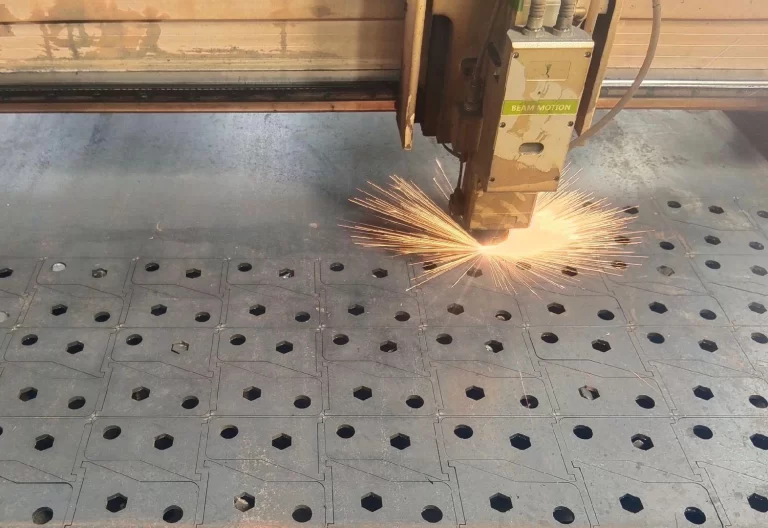
Laser welding, with its advantages of high energy density and…
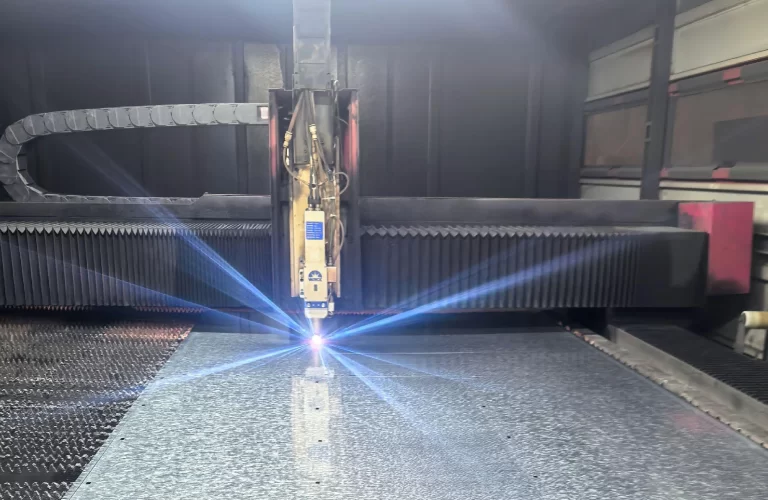
With the rapid advancement of modern manufacturing, laser cutting technology…