How to efficiently machine shaped parts on CNC mill-turn machines?
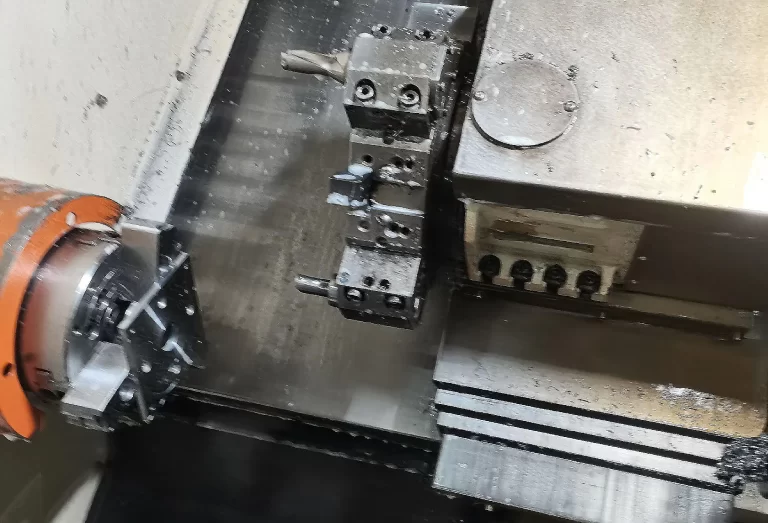


Shafts are one of the most commonly used parts of machines.
Their primary function is to support the transmission parts (gears, pulleys, clutches, etc.), transmit torque and carry loads.
Designers typically design shaft parts that include cylindrical surfaces, steps, end faces, rebate grooves, chamfers, and arcs.
Users classify them as bare shafts, trapezoidal shafts, eccentric shafts, and hollow shafts, depending on their use.
The stepped shaft machining process typically reflects most of the content and basic rules of shaft parts processing.
The following example of an output shaft in the gearbox introduces the development of general stepped shaft machining process regulations.
Engineers can equip the output shaft of the transmission with various gears, allowing it to engage with the corresponding gears of the intermediate shaft at any time under the control device’s action, thereby changing the output speed and torque.
Figure 1 illustrates that the output shaft falls into the stepped shaft category, comprising a cylindrical shoulder, back cutter groove, keyway, and other distinctive features.
The shoulder generally determines the axial position of the parts mounted on the shaft.
The ring groove ensures correct positioning during assembly and facilitates tool withdrawal during the turning process.
The keyway accommodates the installation of a key.
The two cylindrical segments—φ25.5(0/-0.052) and φ30.5 (-0.025/-0.064)—support the transmission parts and serve as both the mating and working surfaces.
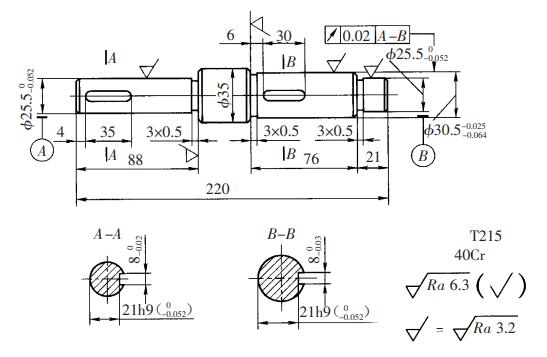
The tolerance value of ⌀25.5(0/-0.052) cylindrical dimension is 0.052mm, and the machining accuracy grade is IT9; the tolerance value of ⌀30.5(-0.025/-0.064) cylindrical dimension is 0.039mm, and the machining accuracy grade is IT8; and the cylindrical dimension of ⌀30.5(-0.025/-0.064) segment has radial runout requirements relative to the left end and the right end of the part.
Selection of blanks is one of the initial stages of the development of process regulations, but also a more important work, the shape and characteristics of the blank (hardness, precision, metallurgical organization, etc.) on the difficulty of machining, the number of processes have a direct impact.
The closer the shape and size of the blank are to the finished part—that is, the higher the blank’s accuracy—the less machining the part requires and the less material it consumes.
This improves labor productivity and reduces costs, although it increases the cost of manufacturing the blank.
When determining the blank, engineers should consider both machining and blank manufacturing aspects.
Manufacturers can produce blanks by forging, casting, welding, cold punching, or by directly selecting profiles.
The output shaft is a transmission part that requires a certain strength.
Since this part has a small outline size and an uncomplicated shape, with a medium-small shaft suitable for mass production, we have chosen hot-rolled round steel of φ38 mm × 240 mm as the blank, as the diameter differences of each outer circle are minimal.
Reasonable selection of positioning reference, to ensure that the size of the parts and positioning accuracy has a decisive role.
Generally, machinists cannot drill the center holes at both ends by clamping the blank’s outer circle twice.
Instead, they use the blank’s outer circle as a rough datum and first machine one end face, drill the center hole, and turn the outer circle at that end.
Then, they use the turned outer circle as the datum, clamp it with a three-jaw self-centering chuck (or sometimes use the center frame on the upper step of the turned outer circle), and finally turn the other end face and drill the center holes.
Machinists should select the center holes at both ends as the datum for finish machining and use double centers for clamping to ensure the radial runout of the main mating surfaces of the output shaft aligns with the datum axis A-B.
Machinists typically select machining methods to ensure the workpiece processing requirements are met, improve processing efficiency, and achieve economic benefits. They generally rely on machining data and their experience to make specific choices.
Machinists typically determine the optimal machining plan by combining the specific characteristics of the workpiece with the machining conditions at the site.
When parts require higher processing quality, manufacturers often cannot meet the requirements with a single process and instead use several methods to achieve the desired quality gradually.
To rationalize the use of equipment and manpower, engineers typically divide the machining process into three stages—roughing, semi-finishing, and finishing—based on the nature of the process.
Because the blank selected for this example has a small machining allowance, engineers divide the process into only two stages: roughing and finishing.
①During the roughing stage, machinists remove most of the allowance from the blank to bring its shape and size closer to the finished part.
The primary objective is to enhance productivity by minimizing allowances on the face and cylindrical surfaces, and to provide a finishing reference for subsequent processes.
②During the finishing stage, machinists remove very little metal, focusing mainly on ensuring overall machining quality so the parts meet the specified requirements for dimensional accuracy, surface roughness, and positional accuracy.
①Principle of benchmark first: Machining the benchmark surface first before machining other surfaces.
When roughing, machinists should first turn the end face to create the center hole, then use that center hole as the finishing reference to machine other surfaces.
This approach improves the accuracy of the positioning reference and ensures the positional accuracy requirements are met.
②Machinists should machine the main working surfaces first—these generally include surfaces with high accuracy and quality requirements and the assembly datum surfaces—followed by the secondary surfaces.
Because the keyway, screw holes, and other secondary surfaces have less impact on the machining process and their location depends on the main surface, machinists should complete them after partially machining the main surface and before the final finishing.
③Machinists should machine the face first, then the hole, to ensure positional accuracy between the hole and the plane, improve positioning stability, and make clamping more convenient.
At the same time, when machinists drill holes on the blank’s surface, the drill bit tends to drift. To ensure hole processing accuracy, they should machine the surface first and then drill the holes.
④Roughing and then finishing: To arrange roughing and then finishing processes, roughing will be in a relatively short period on the surface of the workpiece most of the residual cut, on the one hand, can improve the efficiency of metal cutting, on the other hand, can meet the requirements of finishing residual uniformity, if the roughing of the residual uniformity of the residual left to meet the requirements of the finishing process, then the arrangement of semi-finishing, as a way to prepare for the finishing of the car.
①Concentrating processes meansthat machinists focus the workpiece machining into a small number of operations.
Suppose each process has a large amount of machining content. In that case, the concentration of processes reduces the total number of processes, which in turn reduces the number of setups, decreases clamping time, reduces the number of clamps, and enables the use of high-productivity machines.
②Decentralization of processes: Decentralization of processes means that the processing of workpieces is spread across a larger number of processes, with the content of each process being relatively small.
Decentralizing work processes simplifies the equipment and tools used in each operation, makes machine tool adjustments easier, and reduces the skill required from operators.
③Auxiliary processes: Auxiliary processes generally include deburring, chamfering, cleaning, descaling, demagnetization, and inspection.
Because of the medium rigidity of the shaft, easy to deform, so the process should not be too centralized, but also because of medium volume production, in order to ensure the positional accuracy of the process can not be too dispersed, so should be comprehensive consideration of the process arrangement.
The purpose of heat treatment is to improve the mechanical properties of the material, to eliminate its residual stresses, and to improve the workability of the metal.
①Technicians should schedule heat treatment processes (annealing, normalizing) before cutting to improve cutting performance.
②Technicians should preferably arrange heat treatment to remove internal stresses (artificial aging) after rough machining.
③To improve the material’s mechanical and physical properties, technicians should perform the heat treatment process after semi-finishing and before finishing.
Technicians should complete quenching for the entire part before cutting any surfaces.
④Technicians generally perform heat treatment processes (e.g., chromium plating, galvanizing, blackening, bluing) at the end of the process to enhance the part’s surface wear and corrosion resistance.
In this case, the billet material is 40Cr steel, and technicians need to temper it to a hardness of 215 HBS.
Tempering the billet before machining can cause uneven hardness, so it is recommended to perform billet tempering after rough turning.
According to the above analysis of the parts and machining process to determine the basic principles, the machining process route can be initially determined. The specific program is shown in Table 1.

①Equipment selection: horizontal lathe for turning and vertical milling machine for milling.
②For rough machining, machinists adopt a one-clamp, one-top mounting method.
For finish machining, they mount two tops on top of each other to ensure the radial runout of the outer circle φ30.5 (-0.025/-0.064) against outer axes A and B stays within 0.02mm.
They use the V-block mounting method to mill the key groove.
③Tool selection: use 45°, YT15 carbide lathe when turning end face; use A type center drill when drilling center hole; use 90°, YT15 carbide lathe when rough turning; use 90°, YT30 carbide lathe when fine turning; use high-speed steel lathe or carbide lathe when cutting groove.
④Gauge selection: OD micrometers, vernier calipers, and percent gauges, etc.
Machinists can obtain most process dimensions directly, solving by working backward and forward and assigning tolerances based on economic accuracy.
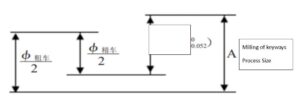
Machinists need to solve the milling slot size A using the dimensional chain. For example, to determine the keyway dimensions on the outer circle of the ⌀30.5 (-0.025/-0.064) mm section, they use the dimensional chain shown in Figure 2.
The drawing labels dimension 26h9 (0/ -0.052) as a closed ring, indicated by A0, while the other rings serve as constituent rings.
The formula is as follows:
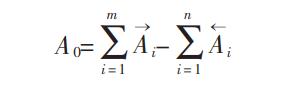
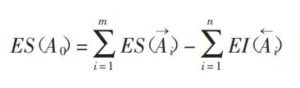
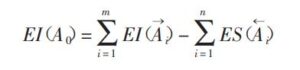
Where:m is the number of increasing ring;
N is the number of decreasing ring;
\(\vec{A}\)i is the basic size of increasing ring;
\(\overleftarrow{A}\)i is the basic size of decreasing ring;
ES(A0) is the upper deviation of the closed ring;
ES(\(\vec{A}\)i) is the upper deviation of increasing ring;
EI(\(\overleftarrow{A}\)i) is the lower deviation of decreasing ring;
EI(A0) is the lower deviation of the closed ring;
EI(\(\vec{A}\)i) is the lower deviation of increasing ring;
ES(\(\overleftarrow{A}\)i) is the upper deviation of decreasing ring.
Using the above equation, machinists can find the process size of the keyway to be milled after rough machining.
Machinists can determine the machining allowances for each surface from Table 1.
Machinists can determine the cutting amount and working hours for each process using a table or empirical methods.
In this case, they determine the cutting quantity for each surface by consulting the table and considering the enterprise’s actual production situation:
Turning face: rough turning, ap=1.5~3mm, f=0.2~0.5mm, vc=100m/min;
fine turning, ap=0.2~1mm, f=0.1~0.2mm, vc=100~120m/min;
Turning outer circle: rough turning, ap=2~4mm, f=0.3~0.6mm, vc=100m/min;
Precision turning, ap=0.1~0.3mm, f=0.1~0.2mm, vc=120~130m/min;
grooving: use high-speed steel turning tool, vc=20~30m/min, f=0.05~0.1mm;
use carbide turning tool, vc=70~100m/min, f=0.1~0.2mm.
To comply with the implementation of process documents, machinists must fill in the developed machining process regulations with the contents described above.
At present, production enterprises widely use machining process documents such as machining process cards, operation process cards, and routing cards.
Machining process card is a process as a unit, a brief list of the whole part processing through the process route (including blank manufacturing, machining and heat treatment, etc.).
Because each process’s content is not specific enough, production managers mostly use this kind of card for production management.
In small-lot production of single parts, production teams usually use this card to guide production without preparing other, more detailed process documents.
A machining process card serves as a process unit that details the product at a specific process stage, including the process number, process name, content, parameters, operating requirements, and equipment used.
The machining process card guides workers in production and helps workshop managers and technicians master the entire parts processing workflow.
It is widely used in batch production and in the small-batch production of important parts.
Technicians prepare the machining process card based on the process cards for each individual process.
The machining process card explains the processing requirements of each process in detail and guides workers in operating according to the process documents.
It is generally used for mass production of parts.
Parts of the correct specification of the process is the enterprise scientific organization of production, to ensure product quality is an important basis.
Since shaft parts are widely used and structurally similar, developing sound and reasonable machining process regulations for shaft parts processing provides important guidance.
These regulations also greatly help beginners in parts machining.