How to efficiently machine shaped parts on CNC mill-turn machines?
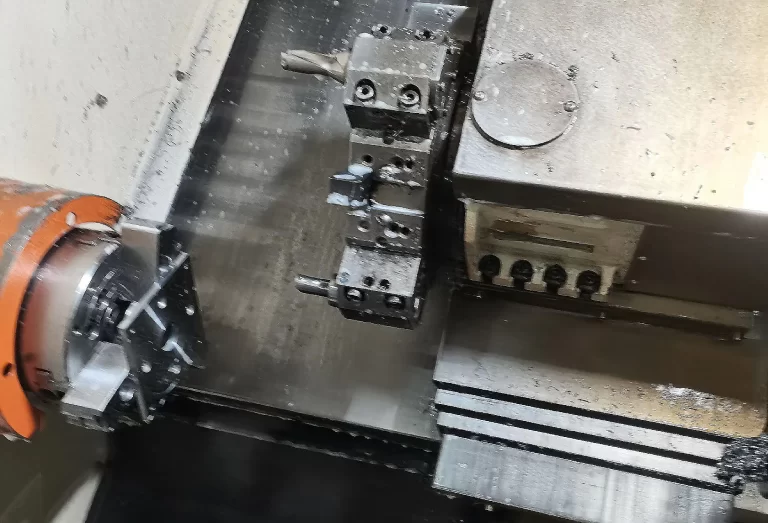


Multifunctional metal cutting machine tools are widely used in modern manufacturing.
However, high-speed cutting and module switching often lead to chip splashing, tool wear, and operational risks, compromising safety and efficiency.
Traditional research has primarily focused on optimizing individual factors, lacking systematic collaborative analysis.
This paper proposes a comprehensive optimization strategy encompassing machine tool structure, protective design, cutting parameters, and intelligent control.
This approach enables safe, reliable, and efficient production under high-speed multifunctional machining conditions, providing a reference for industrial applications.
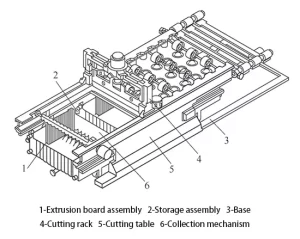
The main unit and motion system of the multi-functional cutting machine tool (see Figure 1) ensure machining accuracy and stability.
The bed features a high-rigidity structure, paired with precision guideways and ball screws, enabling smooth motion during high-speed cutting while minimizing vibration effects.
This design supports both cutting tools and workpieces, guaranteeing repeatable positioning accuracy.
The tooling system and workpiece clamping devices require high strength and reliability to guarantee tool wear resistance and workpiece stability, while facilitating rapid workpiece changeovers to enhance efficiency.
The control and monitoring system employs CNC, PLC, and sensors to continuously monitor machine status and adjust parameters in real time.
By integrating cutting path planning and multi-functional module switching, it enables automated machining of complex parts.
Simultaneously, it proactively detects anomalies, reducing risks of tool breakage and workpiece damage while enhancing overall machine safety and reliability.
The primary safety hazard in metal cutting is chip splatter.
High-temperature chips generated during high-speed cutting may cause cuts or burns to operators.
When falling into machine tool interiors, they can lead to wear and blockages, affecting machining quality.
The severity of chip splatter is influenced by material properties, cutting speed, and tool parameters.
By analyzing splatter trajectories, protective guards and chip guides can be designed to effectively control chip dispersion and reduce operational risks.
Tool breakage and electrical failures during high-speed cutting also pose significant safety concerns.
Tools may fracture or chip under heavy loads, increasing operational hazards.
Short circuits or misoperations in the machine’s electrical control system can cause sudden shutdowns or accidents.
Implementing risk prevention through optimized tool clamping, intelligent monitoring, and standardized operating procedures ensures safe and stable machining processes.
Guard covers, chip flutes, and chip guides are critical for mitigating machining safety risks.
Properly positioned, they block high-speed flying chips and direct chip flow away from the machining zone, reducing hazards to operators and machinery.
These designs balance maintenance accessibility with operational convenience to enhance production efficiency.
Safety designs should also be removable or adjustable to facilitate routine cleaning and tool changes, ensuring safe and efficient machine operation.
Anti-chip-jumping dies and optimized tool clamping further enhance safety.
By refining tool geometry and die structure, chips are directed to exit in a predetermined manner, reducing the risk of injury from flying chips.
Emergency stop systems, interlock mechanisms, and human-machine interface alerts enable timely shutdown and warning during anomalies, providing operators with intervention opportunities.
This comprehensive approach elevates both machine operation safety and machining reliability.
Cutting speed, feed rate, and depth of cut influence machining efficiency and precision.
Selecting appropriate cutting speeds balances chip formation and tool wear, while feed rates and depth of cut directly affect machining time and surface quality.
Parameter optimization maximizes material removal rates while ensuring machining accuracy, enabling efficient cutting and reducing tool and machine tool loads.
Different metallic materials exhibit significant variations in adaptability to cutting parameters.
For instance, cemented carbide requires reduced feed rates during high-speed cutting to prevent tool chipping, while aluminum alloys can be machined at higher speeds to enhance efficiency.
Cutting parameter strategies must be tailored to material properties to ensure efficient and stable machining of various metals, while balancing tool life and surface quality requirements.
Tool material and structure influence machining efficiency and quality.
High-speed steel tools are suitable for low-speed, high-precision machining, while cemented carbide tools are ideal for medium-to-high-speed cutting.
Coated tools significantly reduce friction and wear during high-temperature, high-speed machining, enhancing processing efficiency.
Selecting appropriate tool types and cutting conditions improves machining efficiency while ensuring part surface quality.
Tool wear significantly impacts machining efficiency and product accuracy.
Wear increases cutting forces, elevates surface roughness values, and causes dimensional accuracy fluctuations, necessitating regular tool condition monitoring and life management.
Through tool life prediction and timely replacement, combined with cutting parameter adjustments, downtime and machining failures can be minimized, ensuring continuous and efficient machining processes.
A rational machining sequence minimizes tool changes and workpiece movements, while optimized cutting path planning reduces idle travel and enhances machine utilization.
Multifunctional machining centers integrate diverse processing modules to accomplish multiple operations in a single setup, significantly boosting efficiency while ensuring machining accuracy.
The switching efficiency of multifunctional modules directly impacts overall production productivity.
Module changeover time, tool setting, and positioning accuracy require optimization.
Through preset machining programs and intelligent scheduling, rapid module switching and continuous machining can be achieved.
Combining path simulation with dynamic optimization reduces redundant movements and idle travel, further boosting machining capacity and efficiency.
CNC intelligent control utilizes sensors to monitor machining status in real time, enabling automatic parameter adjustment.
By detecting signals such as cutting force, vibration, and temperature, the system dynamically optimizes cutting speed and feed rate, reducing tool wear and machining deviations to ensure stable and efficient processing.
Intelligent control also responds instantly to abnormal conditions, minimizing downtime and defect rates while enhancing production continuity.
Process condition prediction and efficiency optimization are key functions of intelligent control.
Based on historical machining data and real-time monitoring information, the system can forecast trends in tool wear and machining deviations.
It proactively adjusts cutting parameters and path planning to dynamically optimize the machining process.
This approach not only enhances single-piece processing efficiency but also optimizes the entire production cycle, enabling efficient and safe machine tool operation.
In multi-functional metal cutting machine tool processing, while high-speed cutting significantly enhances material removal rates and production efficiency, it intensifies tool wear, chip ejection, and operational risks.
Simultaneously, module switching, tool and fixture adjustments, and process path planning under multi-functional machining modes increase operational complexity, elevating the likelihood of misoperation and equipment failure .
Without effective monitoring, intelligent control, and safety protection measures, this not only reduces production efficiency but also accumulates safety hazards, increasing the risk of operator injury.
A systematic, comprehensive optimization approach is required.
This should address multiple aspects—including cutting parameters, tool selection, protective devices, and intelligent monitoring—to achieve coordinated improvements in both machining efficiency and safety while ensuring operational security.
Such an approach provides reliable theoretical foundations and practical guidance for the application of multifunctional metal-cutting machine tools in industrial production.
Based on assessment results, collaborative optimization can be performed across cutting parameters, tool selection, and chip deflection device design.
For instance, by adjusting feed rate and cutting depth, employing wear-resistant coated tools, and improving chip guidance mechanisms, both machining efficiency and operational safety can be enhanced.
The optimized design accommodates diverse metal material machining requirements while balancing precision and production capacity.
Real-time sensor monitoring of cutting force, vibration, temperature, and chip condition, combined with CNC system automatic parameter and cutting path adjustment, dynamically reduces tool wear and safety risks.
The human-machine interface provides operational prompts and interlock protection, enabling visual monitoring for operators.
By integrating intelligent regulation with optimized design, overall efficiency is enhanced while ensuring machining safety, achieving a harmonious balance between high-speed cutting, multi-functional processing, and safety protection.
A one-week machining trial was conducted on a multi-functional metal cutting machine tool to validate the improved protective device and optimized cutting parameters.
SPCC cold-rolled steel plate and aluminum alloy materials were selected as workpieces, with two control groups set: high-speed cutting and standard cutting.
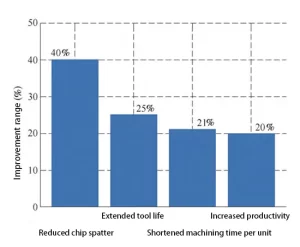
Measurement results indicate that under identical feed rates, cutting depths, and tool types, the optimized protective system reduces chip splatter by approximately 40% (see Figure 2).
Monitoring via high-speed cameras and chip collection devices confirms significantly reduced operator exposure to chips.
Optimized tool clamping and coating selection extended tool life by approximately 25%, reduced vibration amplitude and temperature rise during machining, significantly enhanced processing stability, and decreased downtime and maintenance frequency.
In machining efficiency trials, adjusting cutting sequences and path planning—combined with rapid multi-module changeover testing—reduced single-part processing time from 12 minutes to approximately 9.5 minutes.
Module changeover time averaged 18 seconds (down from 30 seconds), optimizing overall production cycles.
Output increased by about 20%, while machining accuracy remained within ±0.05mm and tool wear slowed.
The tests demonstrate that optimizing safety protection while enhancing efficiency achieves a balanced approach to high-speed cutting, multi-functional machining, and operational safety.
By optimizing protective devices, cutting parameters, and tool selection, combined with intelligent CNC control, this multi-functional metal cutting machine has achieved a significant increase in machining efficiency while ensuring operational safety.
Test results demonstrate approximately 40% reduction in chip splatter, 25% increase in tool life, 21% reduction in per-piece processing time, and 20% boost in production capacity.
Processing accuracy remains stable, with overall performance significantly enhanced.
This provides a reliable solution for safe and efficient industrial machining applications.