

Quick Answers




Are gears easier to produce with a CNC machine or a lathe?
Gears are an integral component in various mechanical systems, facilitating the transfer of motion and power between rotating shafts.
In the manufacturing industry, the production of gears requires precision and accuracy to ensure optimal functionality.
Two common methods for producing gears are using a CNC machine or a lathe.
Overview of CNC Machines and Lathes
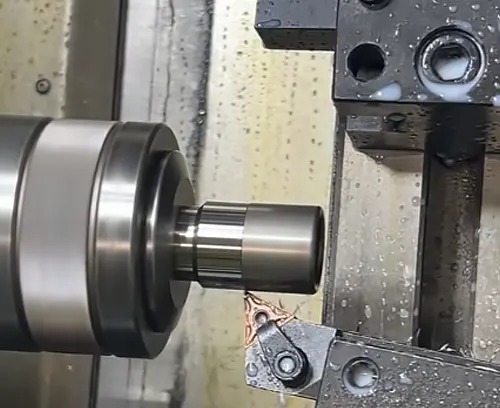
CNC (Computer Numerical Control) machines are automated tools that can accurately cut and shape materials based on programmed instructions. These machines operate with high precision and can produce complex shapes with tight tolerances. On the other hand, lathes are traditional machining tools that rotate a workpiece on its axis while a cutting tool is applied to create cylindrical shapes, including gears.
Accuracy and Precision
One of the key factors to consider when producing gears is accuracy and precision.
CNC machines have the advantage in this aspect as they can achieve extremely tight tolerances that may be challenging for a lathe to replicate consistently.
The automated nature of CNC machines allows for intricate designs and complex geometries to be produced with minimal errors.
Complexity of Gears
When it comes to producing gears with complex shapes or non-standard geometries, CNC machines are the preferred choice. The versatility of CNC machines allows for the creation of custom gears with features such as helical teeth, involute profiles, and asymmetric designs. Lathes, while capable of producing basic gears, may struggle with more intricate designs.
Production Time and Efficiency
In terms of production time and efficiency, CNC machines typically outperform lathes when producing gears. CNC machines can operate continuously without the need for manual intervention, leading to faster turnaround times and higher productivity.
Lathes, on the other hand, may require frequent tool changes and adjustments, which can slow down the production process.
Cost Considerations
Cost is a significant factor to consider when deciding between using a CNC machine or a lathe for gear production.
CNC machines are generally more expensive to purchase and maintain compared to lathes.
However, the improved accuracy, efficiency, and versatility of CNC machines may justify the higher initial investment for companies producing gears in large quantities or with complex designs.
Flexibility and Adaptability
Another important aspect to consider is the flexibility and adaptability of each method.
CNC machines can easily switch between different tasks and designs by simply reprogramming the machine, making them ideal for producing various types of gears without extensive setup or tool changes.
Lathes, while versatile in their own right, may require more time and effort to switch between different gear configurations.
Surface Finish and Quality
The surface finish and quality of the final gears produced also play a crucial role in their functionality.
CNC machines are known for their ability to achieve smooth finishes and high-quality surface profiles due to their precise cutting capabilities.
Lathes, while capable of producing decent surface finishes, may exhibit limitations in achieving the same level of precision and consistency as CNC machines.
Conclusion
In conclusion, both CNC machines and lathes have their strengths and weaknesses when it comes to producing gears.
CNC machines offer superior accuracy, precision, and efficiency, making them the preferred choice for producing complex gears with tight tolerances.
However, lathes remain a viable option for simpler gear designs and may be more cost-effective for smaller production runs.
Ultimately, the choice between using a CNC machine or a lathe for gear production will depend on the specific requirements of the project and the resources available to the manufacturer.