
How to efficiently machine shaped parts on CNC mill-turn machines?
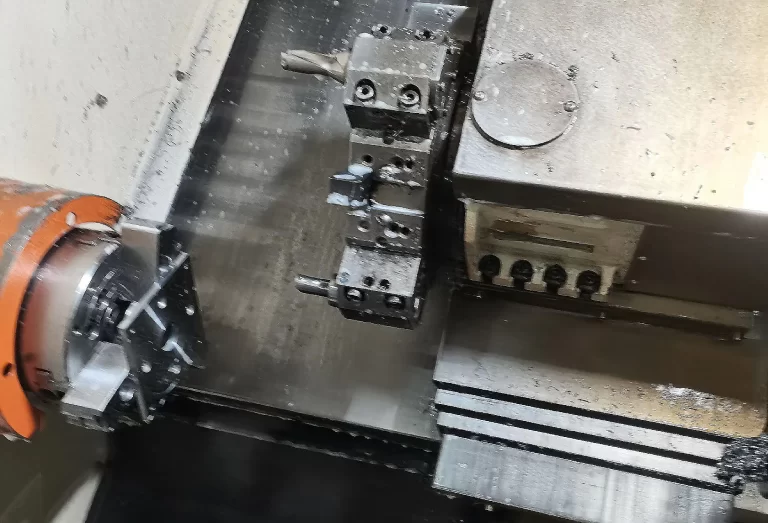

As the automotive industry transitions toward lightweighting and intelligent manufacturing, the application share of thin-walled shell components continues to rise.
Their machining quality directly determines the vehicle’s power transmission efficiency and driving safety.
Compared to conventional mechanical parts, the machining of automotive thin-walled shell components exhibits fundamental differences.
(1) Structural aspects.
Integrating multiple cavities, complex curved surfaces, and thin-walled structures (wall thickness 3 mm–5 mm) requires balancing load-bearing strength with weight reduction demands.
(2) Material aspects.
Primarily composed of aluminum alloys and high-strength steels, their high plasticity and hardness exacerbate risks of machining deformation and vibration.
(3) Production.
Million-unit batch production demands dimensional consistency within ≤0.003 mm—far exceeding typical part tolerance ranges.
(4) Safety.
Machining defects directly cause assembly clearance anomalies and reduced fatigue strength, creating safety hazards with near-zero tolerance for error.
Traditional CNC machining relies on standardized process solutions, struggling to address these specialized demands.
This leads to issues like excessive deformation, frequent vibration excitation, and low yield rates.
This paper focuses on the characteristics of automotive part machining, delves into the coupling mechanism between deformation and vibration, and constructs customized control and suppression strategies.
It ensures the feasibility of technical measures and highlights the specialized technical value for the automotive industry.
Addressing the integrated structure of automotive thin-walled shell components—characterized by multiple hole systems, complex freeform surfaces, and minimal wall thickness—this method departs from conventional generic programming strategies used for ordinary parts.
Instead, it adopts a “stress homogenization”–driven path design logic.
Engineers plan the toolpaths according to the distribution and redistribution of mechanical stress throughout the component.
Structural analysis of the part’s 3D model using UG/NX software extracts constraints such as crankshaft bore coaxiality (≤0.008 mm) and surface roughness (≤0.8 μm), establishing a programming strategy based on “benchmark-first, layered symmetry, and simultaneous hole system machining.”
Engineers divided the total cutting volume into 8 to 10 layers according to the material properties.
They controlled the depth of cut for each layer between 0.3 mm and 0.5 mm.
They adopted a “symmetrical cutting path from inside to outside” to prevent deformation caused by unilateral stress concentration.
For hole system machining, a three-stage programming approach of “rough boring, semi-finish boring, with tool radius compensation (0.002 mm) and length compensation parameters embedded.
CAM software cutting simulations predict stress distribution, enabling preemptive adjustment of tool paths at corners.
This preemptively controls deformation risks within design thresholds, ensuring the programming scheme fully meets the machining demands of complex automotive part structures.
Engineers developed a dedicated “deformation minimization” parameter library based on the material characteristics of aluminum alloy AlSi10Mg and high-strength steel 40Cr, which are widely used in automotive thin-walled shell structures.
This approach replaces the conventional universal parameter system typically applied to ordinary parts.
Engineers adopt a “high-speed, low-load” cutting strategy to address the high plasticity of aluminum alloys.
They set milling speeds between 2,200 r/min and 2,500 r/min and control feed rates within 0.12–0.15 mm/r.
They use PCD tools to minimize adhesion and deformation.
To machine high-strength steel with high hardness, engineers implement a “medium-speed, high-precision” strategy.
They set cutting speeds between 800 r/min and 1,000 r/min and control feed rates within 0.08–0.10 mm/r.
They apply TiAlN-coated carbide tools to enhance wear resistance.
At the same time, engineers define parameter gradient sections according to the distribution of thin-walled areas in the part.
They apply these gradient adjustments at deformation-prone locations such as corners and hole patterns.
In these regions, they reduce feed rates in 20% increments.
By precisely matching machining parameters to material properties and structural design, engineers control deformation at its cutting source and ensure dimensional variation remains within ≤0.003 mm during batch production.
Engineers designed a customized clamping system featuring “multi-point support + elastic clamping” to address the low rigidity of automotive thin-walled shells.
They replaced conventional rigid part-holding methods with this adaptive solution.
Based on part geometry, they strategically placed 6 to 8 elastic support points in critical regions such as thin-walled skirts and end faces.
They precisely controlled the support force within 500–800 N and used pressure sensors to provide real-time feedback on clamping force data.
This approach prevented plastic deformation caused by over-constraint.
Engineers also employed a combined vacuum suction and elastic jaw clamping method.
They set the suction force between 800 N and 1000 N. This configuration ensured clamping stability while minimizing clamping-induced stress.
For aluminum alloy components, engineers performed a 0.01 mm pre-stretching treatment before machining to offset potential plastic deformation during cutting.
By deeply adapting the clamping system to the structural configuration and material properties of automotive thin-walled components, engineers systematically optimized fixture–part interaction.
They aligned the support layout, constraint strategy, and preload control with the stiffness distribution of the workpiece.
As a result, they significantly reduced clamping-induced stress concentration and elastic distortion.
For automotive high-speed batch machining applications, engineers implement specialized vibration-reduction upgrades for tooling systems.
They replace generic tool configurations used for ordinary parts with solutions tailored to high-speed thin-walled machining conditions.
They select vibration-damping tool holders with built-in dampers.
These holders incorporate damping materials that absorb cutting vibration energy and reduce vibration amplitude from 0.025 mm to below 0.01 mm.
Engineers customize tool geometry parameters according to part structure.
For milling operations, they design cutters with a 15° large rake angle and a 6-flute configuration to reduce cutting force per flute.
They set the cutting edge radius between 0.2 mm and 0.3 mm to prevent vibration excitation caused by tool adhesion.
For hole-pattern machining, engineers choose solid carbide vibration-damping drills.
They optimize the drill helix angle to 30° to reduce torque fluctuations during cutting.
By precisely matching tool material and structural design with automotive part machining conditions, engineers suppress vibration transmission at its source and ensure system stability during high-speed cutting operations with spindle speeds exceeding 2,000 r/min.
Based on the modal analysis results of the automotive thin-walled shell–tool system, we optimized the machine tool operating parameters and established a collaborative control strategy that integrates speed-based vibration avoidance with adaptive feed regulation.
Through modal testing, we identified the system’s natural frequency range as 200–250 Hz.
To prevent resonance, we set the milling speed to 2,200 r/min, corresponding to a spindle excitation frequency of 36.7 Hz, which remains well separated from the identified natural frequency band.
This adjustment reduced the vibration amplitude by approximately 40%.
In regions with abrupt cutting-force variations, such as part corners and hole-entry zones, we implemented a segmented feed-rate control strategy.
Specifically, we reduced the feed gradient from 0.15 mm/r to 0.08 mm/r, thereby minimizing vibration induced by sudden cutting-force fluctuations.
We further enhanced spindle stiffness by increasing the spindle bearing preload to 1,200 N, which improved the dynamic stability and vibration resistance of the machining system.
Dynamic adaptation of machine parameters to machining conditions effectively suppressed cumulative vibration amplification during batch production, ensuring process stability.
We developed an online vibration control system that integrates sensing, analysis, and compensation to meet the continuous machining demands of automotive mass production.
High-frequency accelerometers installed on the machine tool spindle and fixture operate at a sampling frequency of 1,000 Hz to capture vibration signals in real time.
An embedded algorithm within the CNC system analyzes vibration amplitude and frequency.
We set the vibration amplitude threshold at 0.015 mm.
When the detected value exceeds this threshold, the system automatically activates the compensation mechanism by reducing the feed rate by 20% or adjusting the spindle speed by ±100 r/min.
At the same time, the system records abnormal data for subsequent process optimization.
By integrating cutting-force monitoring data, we establish a correlation model between vibration and cutting parameters to enable predictive parameter adjustment.
Through closed-loop control that combines online monitoring with real-time compensation, we maintain vibration stably within the prescribed threshold range.
This prevents vibration-induced surface vibration marks defects and enhances part surface quality.
The machining characteristics of automotive thin-walled shell components fundamentally differ from those of conventional mechanical parts.
Their unique requirements—integrated structures, lightweight design, mass production, and high safety relevance—dictate that deformation control and vibration suppression must transcend generic technical frameworks to establish customized solutions.
This paper integrates a deformation control system encompassing “programming, parameters, and clamping” with a vibration suppression strategy involving “tools, machine tools, and monitoring” to form a comprehensive technical solution.
All measures are implemented through specific parameters, structural designs, and operational steps, ensuring direct applicability in production practice.
Implementation of this solution achieves deformation ≤0.005 mm, reduces vibration amplitude by 45%, and elevates machining yield to 99.9%, effectively resolving core challenges in automotive thin-walled shell processing.
Looking ahead, the deep integration of CNC technology with artificial intelligence and digital twins will enable the development of predictive “deformation-vibration” models.
This will facilitate adaptive optimization during machining processes, providing stronger technical support for high-quality development in the automotive manufacturing industry.
It will propel the machining of automotive thin-walled components toward higher precision and greater efficiency.
With the rapid development of the modern manufacturing industry, the…
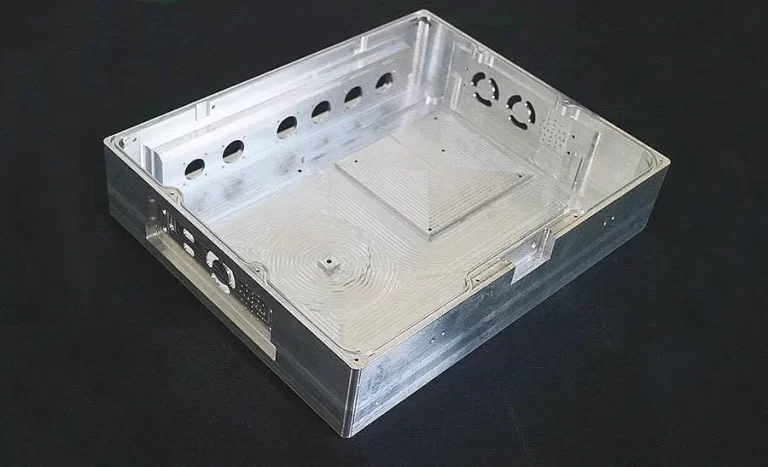
Easy to deform thin-walled parts processing, has been the processing…
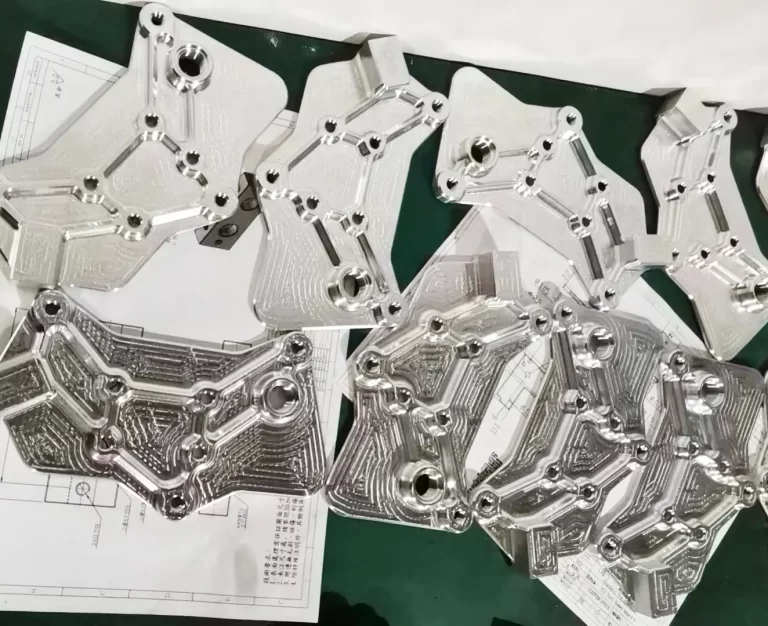
Now we attach importance to the design of intelligent agricultural…