How to efficiently machine shaped parts on CNC mill-turn machines?
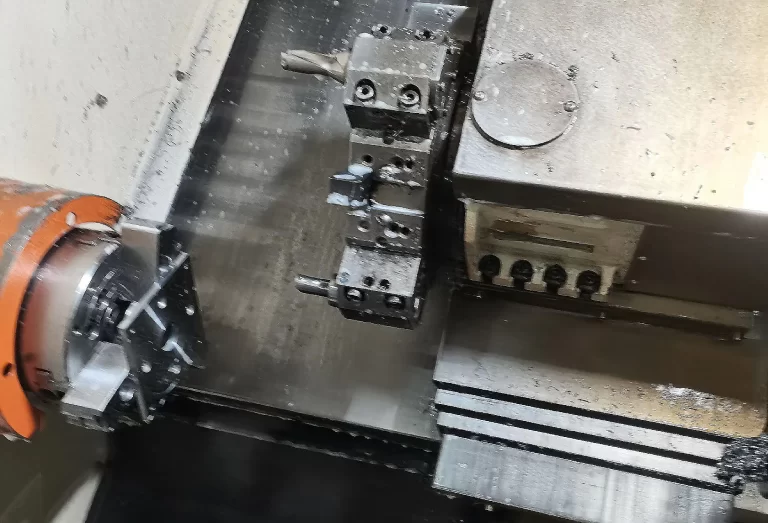


Several common taper shank standards used on machine tools (such as CNC machine tools and machining centers). The taper shank is the part that connects cutting tools (such as tool holders and milling cutter shanks) to the machine tool spindle.
There are three main common standards:
The term “JT taper shank” typically refers to taper shanks manufactured in accordance with the DIN 69871 standard, with the tapered portion conforming to the Morse taper or the 7:24 ISO taper.
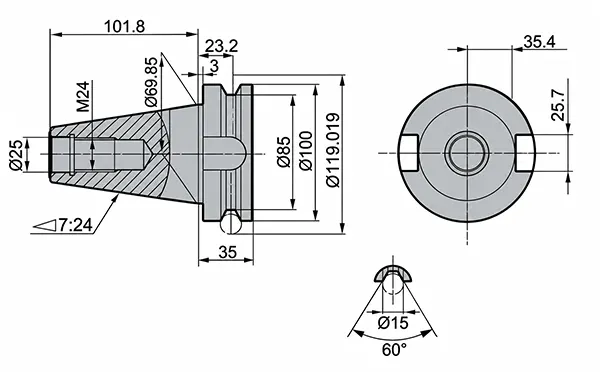
Main Dimensions:
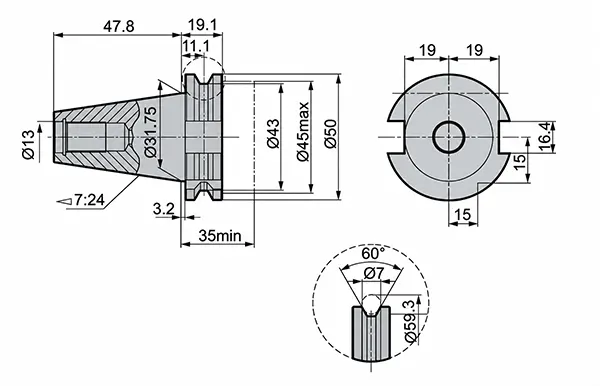
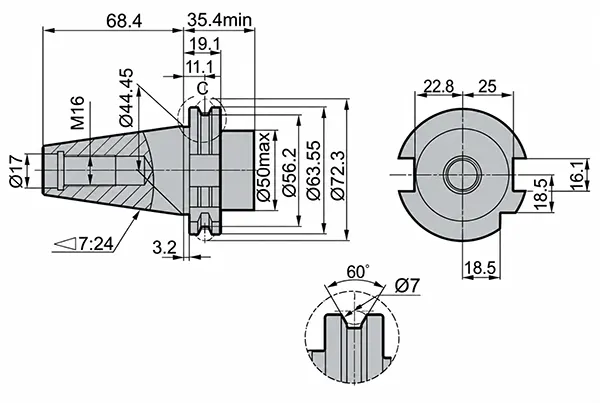
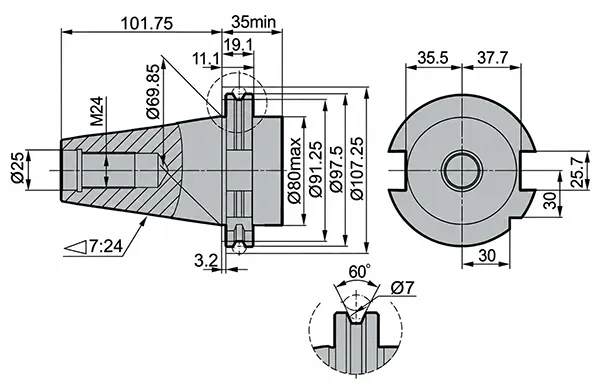
The dimensional annotations in the figure are very detailed, including the diameter, length, and thread specifications (such as M16, M20, M24, etc.) of the taper shank, as well as the dimensions of key areas, to ensure a precise fit with the machine tool spindle.
The BT taper shank is defined in the Japanese Industrial Standard JIS B6339 (formerly MAS403).
It also has a 7:24 taper ratio, but its taper angle is slightly larger than that of the JT taper shank, and it features a special design in the flange section.
It is commonly used in machine tools manufactured in Japan or influenced by Japanese technology.
Three sizes:
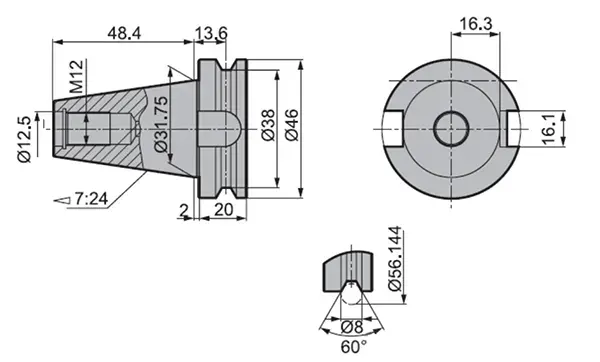
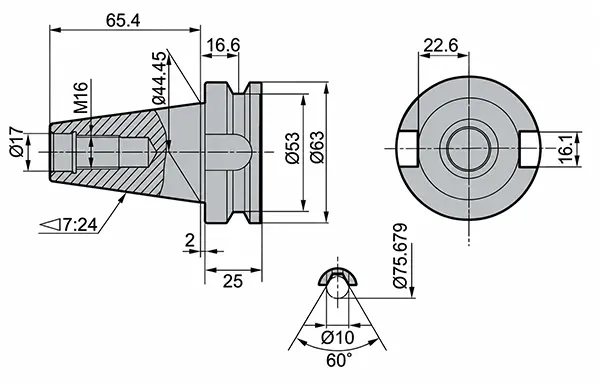
HSK (Hohlschaftkegel, German for “hollow short taper”) is a type of hollow short taper shank characterized by a 1:10 taper ratio.
It makes contact with the machine tool spindle via both the taper surface and the end face, providing higher rigidity and repeatable positioning accuracy, making it particularly suitable for high-speed machining.
Type A Standard:
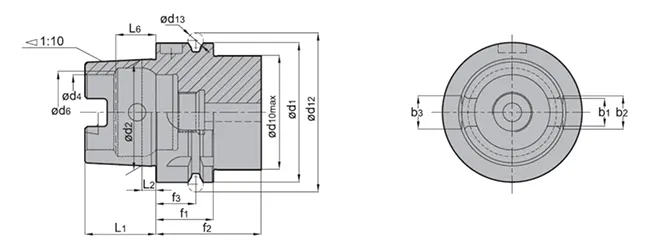
| Model | b1 | b2 | b3 | d1 | d2 | d4 | d6 | d10 | d12 | d13 | f1 | f2 | f3 | L1 | L2 | L6 |
|---|---|---|---|---|---|---|---|---|---|---|---|---|---|---|---|---|
| HSK32 | 7.05 | 7 | 9 | 32 | 24 | 17 | 19 | 26 | 37 | 4 | 20 | 35 | 16 | 16 | 3.2 | 8.92 |
| HSK40 | 8.05 | 9 | 11 | 40 | 30 | 21 | 23 | 34 | 45 | 4 | 20 | 35 | 16 | 20 | 4 | 11.42 |
| HSK50 | 10.54 | 12 | 14 | 50 | 38 | 26 | 29 | 42 | 59.3 | 7 | 26 | 42 | 18 | 25 | 5 | 14.13 |
| HSK63 | 12.54 | 16 | 18 | 63 | 48 | 34 | 37 | 53 | 72.3 | 7 | 26 | 42 | 18 | 32 | 6.3 | 18.13 |
| HSK100 | 20.02 | 20 | 22 | 100 | 75 | 53 | 58 | 88 | 109.75 | 7 | 29 | 45 | 20 | 50 | 10 | 28.56 |
Unlike JT and BT, the dimensional information for HSK is presented in tabular form, including various dimensional parameters (such as b1, b2, d1, d2, etc.) for different specifications, as well as the locations of each dimension in the schematic.
JT, BT, and HSK represent three widely used taper shank standards for connecting cutting tools and tool holders to machine tool spindles.
Although all three are designed to provide accurate and rigid tool positioning, their structural designs and dimensional characteristics differ significantly.
JT taper shanks are commonly associated with DIN 69871 and use a 7:24 taper system, with JT30, JT40, and JT50 being typical sizes.
BT taper shanks, defined by MAS403BT and JIS B6339, also use a 7:24 taper but feature a distinctive flange design that provides reliable positioning and clamping.
HSK uses a hollow short taper with a 1:10 taper ratio and combines taper-surface contact with end-face contact, providing high rigidity and excellent repeatability, particularly for high-speed machining.
Selecting the appropriate taper shank depends on the machine spindle, tool-holder system, machining speed, rigidity requirements, and dimensional compatibility.
Understanding the differences among JT, BT, and HSK standards helps manufacturers and machinists select compatible tooling and achieve stable, accurate, and efficient CNC machining performance.