
Quick Answers






CNC Machining Cost: What Affects Pricing and How to Reduce It
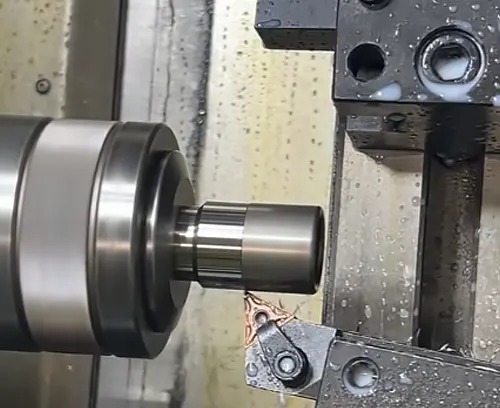
In CNC machining, the real cost driver is machining time—not the price of the material itself. Research consistently shows that early design choices dictate roughly 80–85% of a part’s final cost (Boothroyd, Dewhurst & Knight, 2010).
As a result, DFM is critical for both prototyping and production. Supplier price variations usually stem from design complexity rather than differences in capabilities or machinery.
How CNC Machining Is Priced: A Unified Cost Model
-
Primary Cost Components
- Machining time: cycle time, cutting speed, and tool engagement account for the largest share.
- Setup and programming: setup is a fixed cost, most significant at low volumes.
- Material cost and waste: important for specialized alloys, but generally secondary.
- Tooling, fixturing, and inspection burden: both recurring and one-off costs.
- Post-processing and finishing: extra steps that can add significantly to the total.
-
Why Time Dominates Cost
Feature complexity lengthens cutting time. Tool changes, repositioning, and multi-axis operations also increase costs.
Hidden labor for deburring, inspection, and rework can accumulate quickly with intricate designs.
Core DFM Principle: Reduce Machining Time First
Simpler geometry almost always beats cheaper materials for cost reduction. Inefficiencies multiply at scale, and even the fastest machines cannot fully compensate for a poor design.
Geometry-Driven Cost Reduction Guidelines (Highest ROI)
-
Internal Corners and Radii
Sharp interior corners are expensive or impossible to machine efficiently. It’s best to use an internal radius of at least one-third of the cavity depth.
Consistent radii simplify toolpaths and reduce machining time. Relief features—like corner fillets—can also help.
-
Pocket Depth and Feature Aspect Ratio
A depth-to-tool-diameter ratio of 2–3× is ideal, with 4× as a practical maximum. Deep pockets quickly escalate cost and may require EDM or other secondary operations.
-
Thin Walls and Slender Features
Thin walls tend to deflect, vibrate, and chatter—driving up costs and scrap rates. For metals, a minimum wall thickness of 0.8 mm is recommended; for plastics, 1.5 mm.
Extremely thin features may indicate the need for a different process altogether.
-
High Aspect Ratio and Unsupported Features
A 4:1 height-to-width ratio is a practical upper limit. Structural bracing or support features can improve stability and reduce machining costs.
Hole, Thread, and Fastener Design for Cost Control
-
Hole Design
Favoring standard drill sizes streamlines setup and reduces tool changes.
Keeping hole depths to four times the diameter or less is recommended. Through-holes are often less expensive than blind holes.
-
Thread Optimization
Effective thread depth should not exceed three times the diameter—extra depth adds cost but not strength.
Avoid small or uncommon thread sizes to minimize tooling and setup changes.
| Material | Machinability Index* | Cost Impact | Notes |
|---|---|---|---|
| Aluminum 6061 | 100 | Low | Excellent for prototyping and volume |
| Brass | 150 | Low | Very easy to machine |
| Mild Steel | 70 | Moderate | Widely used, general-purpose |
| Stainless 304 | 45 | High | Slow machining, high tool wear |
| Delrin (POM) | 90 | Low-Moderate | May warp in thin sections |
| Acrylic | 35 | High | Prone to melting, slow feeds |
Tolerances, GD&T, and Inspection Cost
-
Over-Tolerancing as a Hidden Cost Driver
Defaulting to unnecessarily tight tolerances can significantly inflate CNC machining costs.
Every increment tighter than standard tolerances increases both machining and inspection time.
For most features, standard tolerances (±0.1 mm or ±0.005″) suffice unless there is a functional requirement for higher precision.
Moving below ±0.01 mm typically triggers precision machining rates and may require specialized equipment (Protolabs, 2024).
-
Datum Strategy and Measurement Efficiency
A well-planned datum structure simplifies both production and inspection. Using a single functional datum system minimizes setup changes and streamlines measurement.
Poor datum selection, such as non-functional or redundant datums, can force additional setups and increase CMM or manual inspection time, thereby raising costs and the risk of errors.
-
Designing for Measurability
Manufacturable designs are not always easily measurable.
Features that are difficult to access or measure may require advanced inspection methods like coordinate measuring machines (CMM), scanning, or even 100% inspection—each of which adds cost.
Aligning tolerances and geometry with what can be measured efficiently will help avoid these hidden expenses.
Machine Setup Strategy and Axis Selection
Setup count can have a larger impact on cost than raw machine speed. Each additional setup (repositioning the part) not only increases labor but can also introduce alignment errors.
- 3-axis vs. 5-axis machining: While 5-axis machines offer greater flexibility and can reduce part flips and setups, they come at a higher hourly rate. For complex geometries, this trade-off often favors 5-axis machining, especially at higher volumes.
- Single-setup vs. multi-face machining: Designs that can be completed in a single setup are less expensive and more consistent. Multi-face machining increases both cost and risk of tolerance stack-up.
- Splitting parts: Sometimes, dividing a complex part into simpler components can reduce total cost, especially if it avoids additional setups or specialty fixturing.
- Fixturing complexity and repeatability: Custom fixtures increase setup cost but can dramatically improve repeatability, especially for higher-volume runs. The balance depends on geometry, volume, and required precision.
Material Selection Through a Cost Lens
-
Machinability vs. Raw Material Price
Choosing a material with high machinability often reduces total cost more than selecting a cheaper raw material.
For example, aluminum and brass machine much faster and with lower tool wear than stainless steel or titanium.
This is reflected in machinability indices (see table below).
| Material | Machinability Index* | Typical Hourly Cost Impact |
|---|---|---|
| Aluminum 6061 | 100 | Low |
| Brass | 150 | Low |
| Mild Steel | 70 | Moderate |
| Stainless 304 | 45 | High |
Relative to free-machining steel = 100 (Machinery’s Handbook, 31st Ed.)
-
Volume-Dependent Material Decisions
At low volumes, material cost can be a significant portion of the total. As volume increases, machining time becomes dominant.
Sometimes, a higher-cost material with better machinability is more economical at scale. Prototyping and production runs may use different materials for this reason.
-
Plastics vs. Metals in CNC Machining
Plastics can present unique challenges. They are prone to thermal expansion, warping, and have lower stiffness, which can lead to higher scrap rates or slower machining speeds.
In some cases, plastics may actually increase costs compared to metals, especially for tight-tolerance or deep features (Xometry, 2023).
Surface Finish and Post-Processing Decisions
Multiple finishes on a single part increase cost due to additional handling, masking, and setup. Prioritize functional requirements over cosmetic ones.
For many engineering applications, an “as-machined” finish is optimal, balancing cost and performance.
Each secondary process—such as bead blasting, anodizing, or powder coating—adds not only processing time but also risk of dimensional change or damage during handling.
Stock Selection and Material Utilization
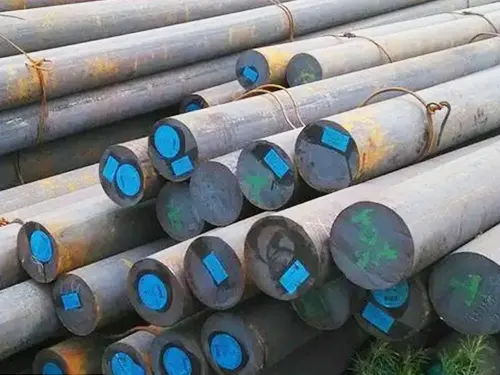
Using oversized blanks leads to higher material cost and wasted machining time.
Whenever possible, design parts to use standard stock dimensions.
Allowances for finishing and accuracy should be included but kept minimal (typically +1 mm or less on machined surfaces) to reduce waste and cost.
Efficient nesting and optimal use of raw material can further drive down per-part expenses (Protolabs, 2024).
Volume, Scaling, and Economies of Scale
Setup cost is the primary driver of unit price in low-volume CNC machining.
Each new job requires programming, fixturing, and first-article inspections—costs that are spread across all parts in the order.
Ordering even a small batch (for example, 5 parts instead of 1) can reduce unit cost by 15–30%, as setup and programming time is amortized (Xometry, 2023).
CNC machining is most cost-effective from prototype quantities up to mid-volume runs (hundreds to a few thousand parts).
For higher quantities, automation, palletization, or dedicated tooling may be justified to further reduce per-part cost and increase throughput.
When Design and Manufacturing Process Are Mismatched
Problems arise when designs optimized for casting or additive manufacturing are forced into CNC machining.
Features like deep undercuts, thin walls, or complex internal geometries can be prohibitively expensive or outright unmachinable.
Similarly, prototype designs that seem feasible for one-off production may become cost-prohibitive or unreliable at scale.
Recognizing when to switch to a more suitable process—such as casting, molding, or additive manufacturing—is critical for both cost control and product feasibility.
Early Supplier Involvement (ESI) as a Cost Strategy
Involving manufacturing partners early in the design process is one of the most effective cost-reduction strategies.
Late-stage DFM fixes are often expensive, requiring redesign and revalidation.
Manufacturers can spot pitfalls—like over-tolerancing, poor datum selection, or unmachinable features—that designers may overlook.
Incorporating feedback from process planners and machinists helps refine the design before quoting, reducing both cost and lead time.
A Cost-Oriented Design Mindset
Engineers play the most significant role in determining part cost.
Transitioning from a CAD-focused approach to manufacturing-aware design means considering real-world constraints and costs from the outset.
Before sending out for quotes, ask whether all features are functionally necessary, if tolerances can be relaxed, and if the design is optimized for the intended manufacturing process and volume.
Practical Pre-Quote DFM Checklist
- Are all features functionally necessary?
- Can tolerances be relaxed safely?
- Can setups be reduced?
- Is the material appropriate for volume and geometry?
- Is the design scalable beyond prototype quantities?
Conclusion: DFM as a Strategic Advantage
Cost reduction should be viewed as a design outcome rather than a negotiation tactic. Manufacturable designs enable predictable pricing, faster lead times, and higher yields.
DFM is not just about saving money—it’s about accelerating innovation, reducing risk, and enabling scalable production.