

Quick Answers




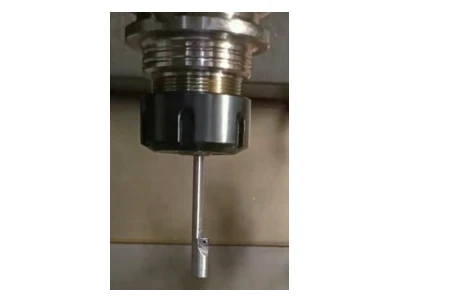

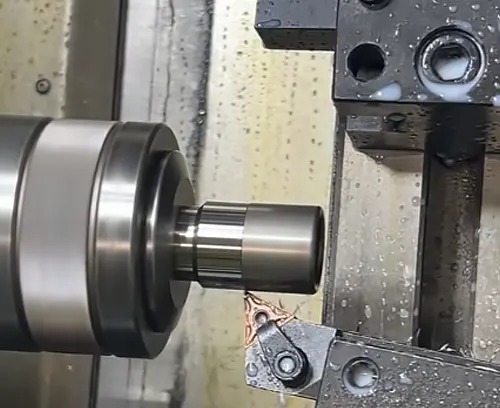

How to Calculate Feed Rate for CNC Turning?
When it comes to CNC turning, calculating the feed rate is crucial for achieving optimal results.
Feed rate refers to the speed at which the cutting tool moves along the workpiece during the turning process.
Determining the right feed rate will not only improve machining efficiency but also prevent tool wear and damage.
In this article, we will delve into the factors that affect feed rate and provide a comprehensive guide on how to calculate it accurately.
Understanding Feed Rate
Before we dive into the calculation methods, it’s essential to understand the concept of feed rate in CNC turning.
Feed rate is the distance the cutting tool moves along the workpiece in one minute.
It is typically measured in inches per minute (IPM) or millimeters per minute (mm/min).
The feed rate has a direct impact on the material removal rate, surface finish, and tool life.
Therefore, it is vital to adjust the feed rate based on the material being machined, cutting tool type, and other machining parameters.
Factors Affecting Feed Rate
Several factors influence the optimal feed rate for CNC turning:
- Material: Different materials have varying hardness and machinability, which affects the feed rate.
Harder materials require lower feed rates to prevent tool wear and achieve better surface finish.
- Cutting Tool: The type of cutting tool, its geometry, and coating play a significant role in determining the feed rate.
Carbide inserts can withstand higher feed rates compared to high-speed steel tools.
- Cutting Speed: The cutting speed, measured in surface feet per minute (SFPM) or meters per minute (m/min), influences the feed rate.
Higher cutting speeds usually allow for higher feed rates.
- Depth of Cut: The depth of cut, or the thickness of material removed in one pass, affects the feed rate.
Deeper cuts may require lower feed rates to ensure stability and prevent tool deflection.
Calculating Feed Rate
There are several methods to calculate the feed rate for CNC turning, including the RPM method and the chip load method.
Let’s explore these methods in detail:
RPM Method
The RPM method calculates the feed rate based on the spindle speed (RPM), number of cutting edges, and chip load per tooth.
The formula for the RPM method is as follows:
Feed Rate (IPM) = RPM x Number of Cutting Edges x Chip Load
For example, if the spindle speed is 1000 RPM, the cutting tool has two edges, and the chip load per tooth is 0.005 inches, the feed rate would be:
Feed Rate = 1000 RPM x 2 edges x 0.005 inches = 10 IPM
Chip Load Method
The chip load method calculates the feed rate based on the desired chip thickness and the number of cutting edges.
The formula for the chip load method is as follows:
Feed Rate (IPM) = Chip Thickness x Number of Cutting Edges x Number of Revolutions
For example, if the desired chip thickness is 0.010 inches, the cutting tool has two edges, and the spindle completes 500 revolutions in one minute, the feed rate would be:
Feed Rate = 0.010 inches x 2 edges x 500 RPM = 10 IPM
Optimizing Feed Rate
When calculating the feed rate for CNC turning, it is essential to consider the trade-off between material removal rate, surface finish, and tool life.
A feed rate that is too high can result in poor surface finish, tool wear, and even tool breakage.
On the other hand, a feed rate that is too low can lead to inefficient machining and reduced productivity.
It is recommended to start with conservative feed rates and gradually increase them while monitoring the machining process.
Pay attention to the cutting sound, chip formation, and tool temperature to ensure that the feed rate is optimized for the specific machining operation.
Additionally, consider using a cutting fluid or lubricant to enhance chip evacuation and reduce friction, thereby enabling higher feed rates.
Conclusion
Calculating the feed rate for CNC turning is a critical aspect of the machining process that directly impacts part quality, tool life, and machining efficiency.
By understanding the factors that influence feed rate and using the appropriate calculation methods, engineers can optimize the feed rate to achieve superior machining results.
Remember to consider the material properties, cutting tool characteristics, and other machining parameters when determining the feed rate.
With proper feed rate calculation and optimization, CNC turning operations can be performed with precision and consistency.