

Quick Answers




Can a CNC milling machine control an indexer for multi-axis machining?
When it comes to manufacturing complex parts with intricate designs, precision and efficiency are key.
One practical approach to producing intricate geometries is through multi-axis machining, which expands the cutting capabilities of CNC equipment.
This article examines the feasibility of controlling an indexer with a CNC milling machine to achieve multi-axis machining, as well as its broader implications for the manufacturing sector.
Understanding CNC Milling Machines and Indexers
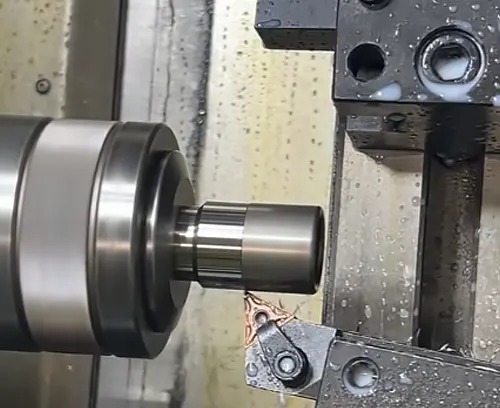
CNC milling machines are automated milling machines that use rotary cutters to remove material from a workpiece.
These machines are capable of cutting in multiple directions and angles, making them ideal for complex machining tasks.
Indexers, on the other hand, are devices that are used to rotate a workpiece about a specific axis, allowing for more intricate cuts to be made on the part.
When used together, a CNC milling machine can control an indexer to perform multi-axis machining, enabling the manufacture of even more complex parts with precision and accuracy.
This process involves programming the machine to move the cutting tool in multiple directions and angles while the indexer rotates the workpiece, resulting in intricate and precise cuts.
Benefits of Using an Indexer with a CNC Milling Machine
There are several benefits to using an indexer with a CNC milling machine for multi-axis machining.
One of the main advantages is the ability to produce more complex parts with greater precision.
By using an indexer, manufacturers can create intricate shapes and cuts that would not be possible with a standard CNC milling machine.
Another benefit of using an indexer is the ability to reduce setup time and improve efficiency.
By automating the rotation of the workpiece, manufacturers can minimize the time it takes to set up and adjust the part for machining, resulting in faster production times and lower costs.
Additionally, using an indexer with a CNC milling machine allows for greater flexibility in machining different types of parts.
Manufacturers can easily switch between different workpieces and cutting tools, enabling them to produce a variety of parts with minimal downtime.
Challenges of Using an Indexer with a CNC Milling Machine
While using an indexer with a CNC milling machine offers numerous benefits, it also presents some challenges to consider.
One of the main challenges is the complexity of programming the machine for multi-axis machining.
This process requires a high level of skill and expertise, as well as specialized software to ensure that the cuts are made with precision.
Another challenge is the cost of implementing an indexer into a CNC milling machine.
Indexers can be expensive to purchase and install, and may require additional training for operators to use them effectively.
However, the long-term benefits of increased efficiency and precision may outweigh the initial costs.
Conclusion
Overall, utilizing an indexer with a CNC milling machine for multi-axis machining provides numerous benefits for manufacturers seeking to produce complex parts with precision and efficiency.
While there are challenges to overcome, the result is a more flexible and versatile machining process that can help companies stay competitive in the ever-evolving manufacturing industry.