
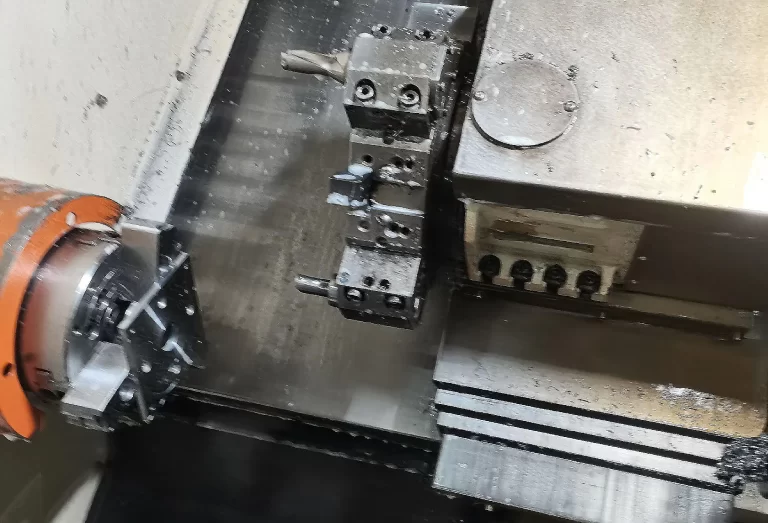
How to efficiently machine shaped parts on CNC mill-turn machines?

The automotive supply chain tolerates very little margin for error. Each aluminum component entering a vehicle assembly line carries functional, safety, and regulatory weight simultaneously.
For procurement engineers and sourcing managers evaluating overseas manufacturing partners, identifying a High Quality Aluminum CNC Machining Supplier In China involves far more than comparing price lists.
It demands a structured evaluation framework — one that systematically filters out suppliers whose capabilities appear adequate on paper but collapse under real production conditions.
A single batch of out-of-tolerance aluminum parts does not simply generate scrap.
It triggers line stoppages, customer complaints, and, in serious cases, recall investigations.
The financial exposure from a quality failure at the production stage often dwarfs the original order value many times over.
That reality shifts the supplier selection question from “who offers competitive pricing” to “which supplier eliminates the greatest number of downstream risk categories.”
Four criteria consistently define the boundary between a transactional machining vendor and a genuine automotive manufacturing partner: material traceability, dimensional tolerance stability, quality system execution, and delivery scalability.
Each criterion targets a specific failure mode. Together, they form a sequential risk filter that supports defensible sourcing decisions — the kind that hold up when production volumes escalate and delivery windows tighten.
Material selection in automotive aluminum machining carries consequences that extend well beyond alloy chemistry.
The distinction between 6061-T6 and 6061-T651, for instance, is not simply a designation difference. It reflects fundamentally different residual stress profiles that affect dimensional stability after machining.
A supplier that cannot distinguish between temper conditions at intake — or that fails to document lot-specific mill certificates — introduces variability before a single cut occurs.
Robust traceability means maintaining a documented chain of custody from raw billet to finished component.
DONGGUAN CHENGYANG HARDWARE CO.,LTD operates incoming material inspection as a mandatory first production stage, verifying alloy grade and material condition before parts enter any machining sequence.
Supporting over 100 verified metal grades — including aluminum alloys spanning the 2000, 5000, 6000, and 7000 series — the company maintains material records that confirm specification compliance at any point in the production timeline.
For automotive buyers operating under regulatory audit requirements, this level of documentation functions as baseline infrastructure, not an optional service.
First-article approval gives procurement teams a single data point. Batch-level consistency gives them a supply chain.
Many suppliers demonstrate strong performance on initial samples, only to drift outside tolerance windows as volume increases and production pressure builds.
That gap — between prototype precision and production repeatability — defines one of the most common and costliest failure points in international automotive sourcing.
Sustained tolerance stability requires the right machine infrastructure and process discipline simultaneously.
C-YCNC (DONGGUAN CHENGYANG HARDWARE CO.,LTD) operates 3-axis, 4-axis, and 5-axis CNC milling centers alongside CNC lathes and mill-turn compound machines, accommodating part dimensions up to 2000mm x 1500mm x 800mm.
Five-axis configurations reduce re-clamping steps, which directly limits datum shift and positional error accumulation across complex geometries. Standard dimensional tolerances reach +/- 0.01mm, with tighter tolerances achievable on critical features.
Surface finish is quantified using calibrated surface roughness testers rather than visual assessment, ensuring that sealing faces, bearing seats, and coating interfaces meet functional specifications consistently — not just on reference samples.
ISO certification documents the existence of a quality management system. It does not, by itself, confirm that the system performs reliably under sustained production pressure.
Procurement teams that treat certification as a binary qualifier risk approving suppliers whose documented procedures and operational reality diverge once high-volume orders begin flowing.
Effective quality execution distributes inspection throughout the production sequence rather than concentrating it at the final stage.
C-YCNC structures its quality workflow across three defined checkpoints: incoming material inspection, in-process dimensional verification, and final inspection before dispatch.
Each stage deploys calibrated equipment — including coordinate measuring machines, digital micrometers, hardness testers, high-performance 2D imaging systems, and laser marking for part-level identification.
This multi-point architecture catches dimensional drift early, before nonconformances propagate through a full batch.
For automotive components where defect escape rates carry direct liability implications, process-embedded inspection delivers measurably stronger quality assurance than end-of-line screening alone.
Aluminum automotive components rarely ship in an as-machined condition.
Anodizing, powder coating, electroplating, passivation, and black oxide treatments all introduce dimensional change, adhesion variables, and thermal exposure that interact directly with machined tolerances.
A supplier that maintains tight tolerances through the machining stage but routes surface finishing through an unqualified subcontractor has broken the quality chain at one of its most vulnerable points.
DONGGUAN CHENGYANG HARDWARE CO.,LTD maintains in-house surface treatment capability across more than eleven distinct processes.
These include anodizing for corrosion and wear resistance, electroplating for functional surface protection, powder coating for durable polymer finishes, passivation for stainless steel corrosion control, and black oxide for reflectivity management on steel components.
Keeping these processes within the same facility and quality management framework means dimensional records from machining carry directly into finishing — with no inter-vendor handoff where specifications can drift or accountability can fragment.
For automotive parts with tight post-finish dimensional requirements, that integration carries real operational value.
Automotive assembly lines run on just-in-time logic. A two-day delivery shortfall at a Tier 1 supplier does not stay contained — it propagates upstream and downstream simultaneously.
Delivery reliability, therefore, deserves the same rigorous evaluation as dimensional precision, not a secondary consideration reviewed after technical qualification.
Several practical indicators separate capable prototype suppliers from viable production partners.
No-minimum-order-quantity flexibility signals scheduling agility; suppliers that enforce rigid MOQ thresholds typically lack the setup efficiency needed to absorb demand fluctuations without penalty.
Lead time consistency on repeat orders — not just initial samples — reveals whether capacity planning aligns with customer commitments.
C-YCNC supports on-demand manufacturing with no minimum order requirements, and standard machining orders ship as fast as three days.
That same production infrastructure scales directly into batch and volume delivery without process re-qualification, reducing the timeline friction that frequently delays automotive production ramp-up schedules.
The expansion of electric vehicle platforms continues to accelerate aluminum content across automotive structures.
Battery enclosures, motor housings, suspension brackets, and thermal management assemblies all require machined aluminum at volumes and tolerances that quickly expose supplier capability gaps.
Against that backdrop, the cost of an underqualified sourcing decision compounds with every production cycle.
Each criterion outlined here targets a distinct downstream failure category. Together, they shift supplier evaluation from subjective impression to verifiable performance evidence.
Manufacturers that clear all four thresholds — traceability, tolerance stability, quality execution, and delivery reliability — earn consideration not merely as a vendor, but as a structural component of a defensible and scalable automotive supply chain.
For detailed capability information on precision aluminum CNC machining services, visit https://www.c-ycnc.com/.
With the rapid development of the modern manufacturing industry, the…
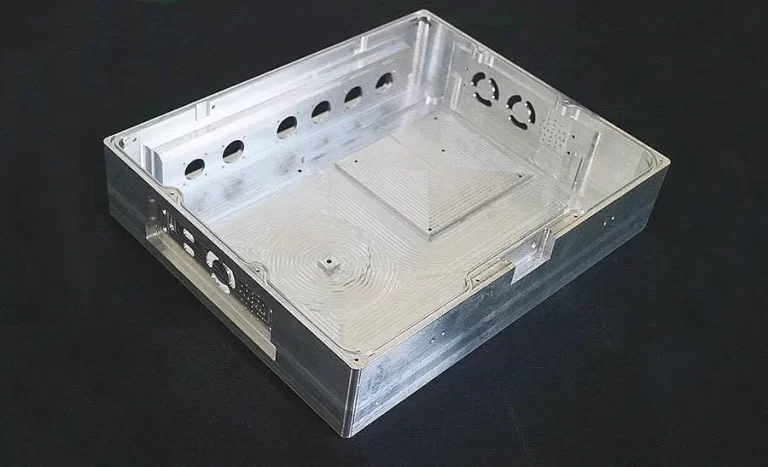
Easy to deform thin-walled parts processing, has been the processing…
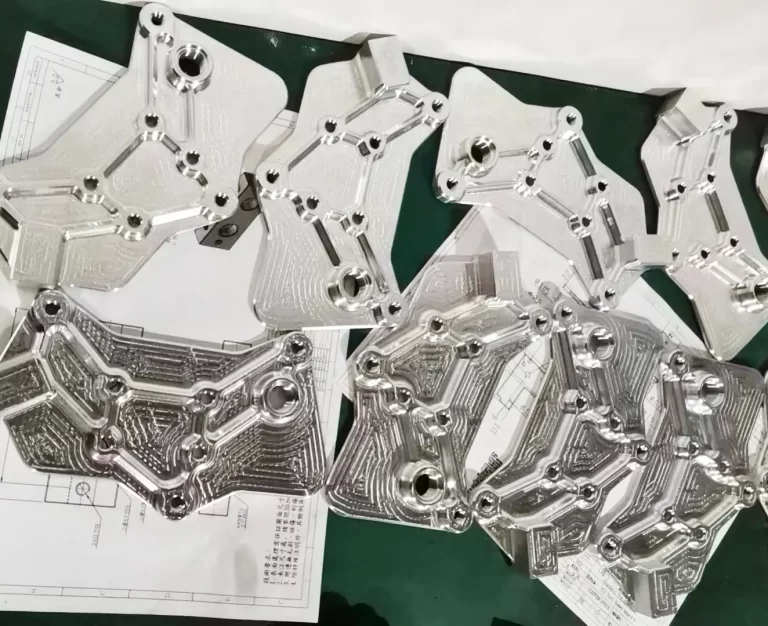
Now we attach importance to the design of intelligent agricultural…