Titanium Alloy Pickling: Process, Hydrogen Embrittlement & Green Alternatives



The influence of the surface roughness of a part on its use performance is multifaceted.
Therefore, in the selection of surface roughness parameters, should be able to fully and reasonably reflect the real situation of the surface micro-geometry.
For most surfaces, evaluators generally use only the height characteristics of the evaluation parameters to reflect the measured surface roughness characteristics.
Users should select surface roughness parameters from the highly characterized parameters Ra, Rz, and Ry.
The Ra evaluation parameter objectively reflects the surface micro-geometric features.
The measuring instrument, called a profilometer, uses a relatively simple method.
It allows continuous measurement and offers high measurement efficiency.
The evaluation parameter Rz only considers a few points—specifically, 5 peaks and 5 valleys.
Therefore, it does not reflect the surface’s micro-geometric features as comprehensively as Ra.
At the same time, if the peaks and valleys are different, the Rz value is also different, so the measurement results are subject to the subjective influence of the measurer.
However, optical instruments easily measure the Rz value and simplify its calculation, so operators use this method more frequently. They call it the light-cutting method.
The parameter Ry provides a less complete reflection of the surface micro-geometry characteristics.
But because the Ry value is very easy to measure, but also to make up for Ra, Rz can not measure the shortage of very small areas.
Therefore, users can use the Ry parameter alone or together with Ra or Rz.
This helps control the depth of microscopic unevenness valleys and, in turn, surface microscopic cracking.
Especially for surfaces that require fatigue strength, deep cracks on the surface can easily cause fatigue damage.
This happens under the action of alternating loads.
In this case, it is appropriate to use the parameter Ry or at the same time choose Ry and Ra or Rz and Ry.
In addition, when the measured surface is very small, evaluators avoid using Ra or Rz and commonly use the parameter Ry instead.
Engineers use four main methods to measure surface roughness: comparing roughness samples, using a light-cutting microscope, using an interference microscope, and using a motorized profilometer.
This section mainly introduces the common errors that occur during surface roughness measurement using the above methods and highlights the issues that require attention.
Operators compare the measured surface with a roughness sample labeled with a specific height parameter to determine the surface’s roughness.
Inspectors judge the comparison with the naked eye or by feeling with their hands. To improve accuracy, they also use a magnifying glass and comparison microscope.
When comparing, ensure that you use a sample plate whose material, shape, and processing methods closely match the surface being measured to improve judgment accuracy.
When there is a large batch of parts, inspectors pick verified samples from the finished products and use them as reference blocks to check if the roughness meets standards.
This measurement method is simple and easy to implement, making it suitable for workshop use and commonly applied in evaluating medium and rougher surfaces.
But the accuracy and reliability of its judgment depends on the experience of the inspector, and can not read the exact value.
The light-cutting microscope measurement method is a method of measuring surface roughness using the light-cutting principle.
Measuring instrument with light-cutting microscope, there are JSG type and 9J type.
Operators use this method to measure the outer surfaces of metals shaped by turning, milling, and similar processes.
They also use it to observe tiny unevenness on surfaces such as wood, paper, plastic, and plating layers.
For roughness on large workpieces and internal surfaces, operators can use the impression method to create a surface model, then measure it with the light-cutting microscope.
Operators mainly use the light-cutting microscope to measure the height parameter Rz.
When needed, they measure the contour by plotting points with coordinate methods or use the instrument’s camera to capture the contour on film for an approximate Ra assessment.
The light-cutting method works by emitting light from the source through a slit to form a light beam. The beam projects onto the surface being measured at a 45° angle.
Because of the surface’s unevenness, the light band appears uneven, revealing the surface’s microscopic features.
Because the tested surface is uneven, it forms a bright band that reflects the actual contour shape.
By placing a microscope along the reflection direction of the light band, you can see a magnified view of the actual contour through the eyepiece.
The instrument has many types of mirrors for measurement.
To quickly observe a clear image, first compare the workpiece with a V-grade roughness sample plate to estimate its approximate Rz value.
Then select an objective lens, generally opting for a larger one.”
Place the workpiece on the worktable and adjust its surface texture direction to be perpendicular to the slit.
Use coarse and fine focus adjustments until you observe a clear actual contour in the eyepiece field of view.
Enlarge the bright band, then use the reading scale to measure the distances (N values) from each peak to the bottom of the valley.
Note: the micrometer eyepiece reading scale depends on the graduation value and the magnification of the interchangeable objective lens.
Calculate the average of the five peak-to-valley distances, then find the average height of microscopic unevenness at 10 points within the sampling length.
This value corresponds to Rz.
The formula is:
Rz=M(N1+N2+N3+N4+N5)/5
where M represents how many micrometers each scale division corresponds to, and N1, N2, N3, N4, N5 represent the distances from the tops of the five peaks to the bottom of the valleys, as shown in Figure 1.
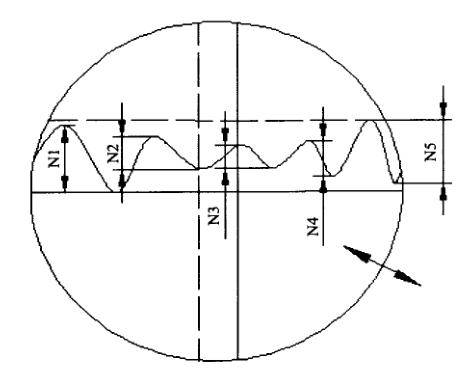
Technicians mainly use the light-cutting microscope to determine the height parameter Rz, typically measuring within the range of Rz 0.8–80 μm.
During measurement, operators should carefully observe a clear, magnified contour of the light bands in the eyepiece; otherwise, errors may occur.
The interference microscopy measurement method uses the principle of light wave interference to measure surface roughness.
Technicians use the 6JA thousand interference microscope to measure tiny surface unevenness by using light wave wavelengths, achieving high precision.
If the measured surface is ideal, the microscope’s field of view shows a set of equidistant straight interference fringes.
If the measured surface has microscopic unevenness, the microscope displays a set of curved interference fringes, as shown in Figure 2.
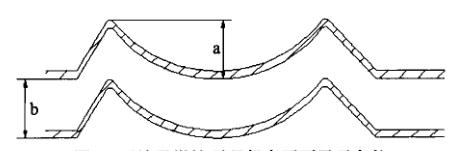 Fig. 2 Interferometric microscopy showing streaks under an ideal surface
However, it takes a long time to adjust the fringes of the interference microscope, making the measurement the most challenging.
To adjust the streak quickly, first complete all preparations.
Then adjust the instrument to produce a clear bowed image in the eyepiece’s field of view, indicating that the surface is rough.
Next, turn the handle on the instrument and make fine adjustments until the image is as clear as possible.
Note: The light wave should be perpendicular to the direction of the texture. The formula for Rz is:
Rz=a/b×λ2
where λ is the wavelength of the light wave (in μm), a is the amount of bending of the interference fringes, and b is the distance between two neighboring fringes, as shown in Figure 2. Accurate measurement of aa and b is essential.
Technicians mainly use the interference method to measure the surface roughness parameters Ry and Rz. Since surfaces that are too rough cannot form interference fringes, this method typically measures within the range of Rz 0.05–0.08 μm.
Technicians also call the electric contour meter sensing method the needle tracing method, or simply the contour method.
Technicians use the BCI-2 type electric contour meter, which offers convenience and accuracy.
It not only reads the Ra value but also automatically records the actual shape of the amplified work surface onto coordinate paper for data processing.
The instrument’s stylus contacts the measured surface and moves along it at a certain speed.
Because the surface has tiny honeycomb valleys, the stylus slides while simultaneously moving up and down vertically following the contour.
The stylus movement directly reflects the measured surface contour.
The sensor changes the stylus’s small movements into electrical signals.
The system calculates and amplifies these signals to show the Ra value directly on the indicator.
The electric contour meter has very high sensitivity. Zeroing the instrument takes time.
First, adjust the pointer slightly to the right, then tighten the bolt when the pointer aligns exactly at zero.
In addition, start slowly when triggering the handle, and be decisive at the moment of connection.
Note: This method can not measure the material softer surface, easy to scratch;
In addition, the stylus radius limits the measurement.
If the surface is too rough, it can damage the stylus.
If the surface is very smooth, the small concave valleys make it difficult for the stylus tip to reach the bottom, so it cannot accurately measure the true contour.
Therefore, measurements are generally done within the Ra range of 0.01–5 μm. Recently, a new roughness measurement instrument—the TR100 pocket surface roughness meter—has been developed.
This intelligent device is specifically designed to measure processed surfaces.
Its measurement parameters for Ra, Rz, the measurement range of Ra: 0.05-10um, Rz:0.1-50um.
The instrument is more convenient and faster to use due to optimized circuit and sensor structure designs.
It integrates the electrical box, drive, and display components, achieving a high degree of integration.
Operators can arbitrarily select Ra or Rz measurement parameters.
The device can measure outer circles, planes, and cones.
It can also measure surfaces larger than 80 mm × 30 mm in length and width, effectively assessing surface roughness.
Width greater than 80x30mm groove. Measurement should be noted: it can not be used for particularly rough and smooth surfaces.
There are many methods to measure surface roughness values, each focusing on different aspects.
In specific applications, users should select the most suitable method based on their actual needs to meet various requirements.