
How to efficiently machine shaped parts on CNC mill-turn machines?
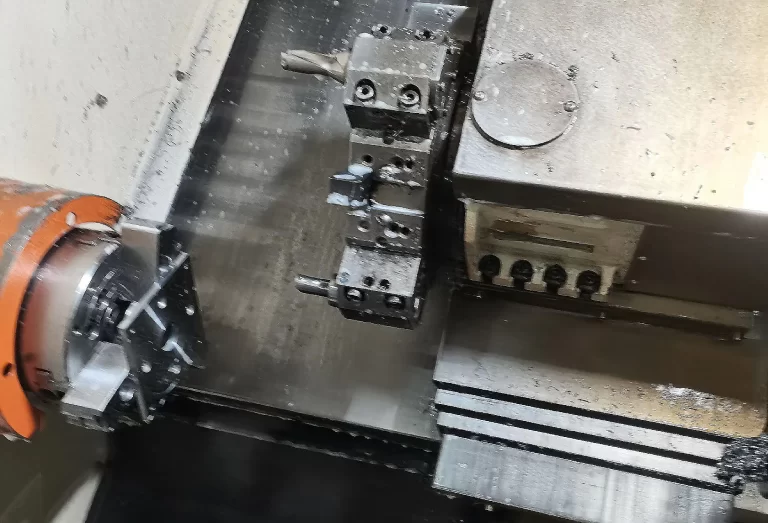

The development of high-end manufacturing is progressing rapidly.
CNC lathes are core equipment used for precision machining.
Their machining accuracy directly affects both product quality and production costs.
Currently, precision issues are becoming increasingly prominent.
These issues are caused by factors such as geometric errors, thermal deformation, defects in the dynamic response of servo systems, and tool wear.
They hinder the manufacture of highly reliable parts.
To address these issues, this paper focuses on Shenyang Machine Tool’s HTC series of CNC lathes as the research subject.
It systematically analyzes the influence mechanisms of four key factors:
Based on this, the study proposes a hierarchical control strategy.
This strategy achieves improved accuracy through four approaches: spatial error compensation, thermodynamic control, servo parameter optimization, and coordinated tool management.
This study aims to establish a multidimensional error coordination control system to provide a systematic solution for high-precision machining.
The machining accuracy of a CNC lathe is a comprehensive reflection of the coordinated performance of its various components.
Taking the HTC series of CNC lathes as an example, their basic structure primarily consists of the machine body, the CNC system, the servo system, and auxiliary systems.
The machine tool mainframe comprises components such as the bed, spindle, guideways, and saddle, providing physical support and structural rigidity.
Its performance and manufacturing/assembly errors form the foundation of geometric accuracy.
These factors directly determine the geometric and positional accuracy of the workpiece’s machined surfaces.
The CNC system, as the control core, is responsible for parsing program instructions and performing motion trajectory interpolation calculations.
Its algorithmic accuracy, interpolation stability, and hardware performance collectively determine the accuracy of motion commands.
The servo system, comprising the drive motor, transmission mechanism, and position detection device, converts CNC commands into mechanical motion.
It possesses closed-loop control capability, meaning it performs real-time error compensation based on the commanded position and actual feedback.
This directly determines the positional accuracy, dynamic response, and interference resistance of the motion axes, and is key to maintaining the precision of the tool path.
The auxiliary system includes devices such as cooling and lubrication systems.
These devices provide environmental support for the machining process.
They are crucial for maintaining the dimensional stability of the workpiece.
Understanding the functions of each component is essential.
It is also important to understand the mechanisms by which they affect precision.
This knowledge forms the foundation for identifying and analyzing the specific factors that influence machining accuracy.
The CNC lathe establishes machining accuracy during the dynamic execution of the machining program, which follows the CNC program.
The CNC system receives the program and, through decoding and interpolation calculations, generates displacement commands for each axis.
Algorithmic errors or computational delays in this stage can affect the precision of these commands.
First, the displacement commands are sent to the servo system, where the servo drive unit drives the motor, which in turn moves the slide via the transmission mechanism.
During this process, position sensing elements detect the actual position in real time and provide feedback.
The servo drive unit compares the commanded position with the actual position, calculates the tracking error, and adjusts the motor output to achieve position tracking control.
This closed-loop control process is central to achieving positional accuracy.
However, feedback delays, parameter mismatches, transmission backlash, and elastic deformation can all introduce errors at this stage.
Under positional control, the spindle system drives the workpiece to rotate, while the feed system drives the cutting tool to perform cutting operations.
During the cutting phase, cutting forces and friction forces induce elastic deformation in structural components and the workpiece.
Cutting heat and frictional heat cause non-uniform thermal deformation. These factors also lead to continuous tool wear.
The deformation, thermal deformation, and tool wear effects caused by these forces are the primary sources of continuous error introduced during the machining process.
Therefore, the machining accuracy of a CNC lathe depends on an ideal command sequence.
The actual physical system executes this sequence while containing inherent errors and time-varying disturbances.
Geometric errors originate from manufacturing and assembly tolerances of the machine tool’s basic components, such as the bed, guideways, and spindle unit.
They also arise from deformations resulting from long-term service.
The motion chain transmits these errors step by step to the machining end.
Test data from the HTC series of CNC lathes indicates that the X/Z-axis guideway straightness error is ±3 μm/m.
This error results in a workpiece generatrix straightness deviation of ≥30 μm/m when machining a 1,000 mm long shaft.
The cumulative pitch error of the ball screw (±5 μm/1000 mm) results in a 25% reduction in repeatability.
Such errors possess distinct spatial vector characteristics.
Their cumulative effects significantly impact the dimensional and geometric accuracy of the workpiece, such as a concentricity deviation of a stepped shaft of ≤0.02 mm.
These effects exhibit nonlinear growth as the machining stroke increases.
The transmission of geometric errors exhibits a kinematic chain characteristic.
Taking the HTC40 lathe as an example, the saddle’s perpendicularity error relative to the spindle axis (0.015 mm/300 mm) transmits directly to the workpiece’s rotational center.
This results in a flatness error of 0.018 mm when turning a Φ100 mm end face.
The spindle’s radial runout error directly affects the workpiece’s roundness.
When the spindle radial runout is 5 μm, it interacts with the cutting force; when precision-turning high-precision bearing rings made of 45 steel, the roundness error can reach 8 μm.
Cutting heat and frictional heat create a transient temperature field inside the machine tool, causing non-uniform thermal expansion of critical components.
During continuous spindle operation for 4 hours, the measured temperature rise reached 15°C.
This resulted in an axial thermal expansion of 11 μm at the spindle head.
When an 8°C temperature gradient occurs between the bed and the guideway area, structural constraints cause a vertical bending deformation rate of approximately 10 μm/m.
This deformation directly compromises the machine tool’s geometric accuracy.
When turning a 500 mm long shaft, the cumulative tool path deviation at the workpiece’s tail end reaches 5 μm.
This results in a taper deviation of 0.010 mm over the entire length.
Time-varying and spatial characteristics jointly undermine the machine tool’s initial accuracy.
When precision-turning a slender shaft with a diameter of 50 mm and a length of 500 mm, the workpiece itself can undergo thermal bending deformation.
This deformation can reach 0.12 mm, making it the dominant source of error.
The lag in thermal deformation further exacerbates the loss of precision control.
Experiments show that within 2 hours after the machine tool is shut down, residual thermal deformation caused by the release of thermal inertia still maintains 40% of the peak deformation.
During continuous machining of QT300 workpieces, the material’s low thermal conductivity extended the thermal equilibrium time to 6 hours.
During this period, thermal deformation caused tool path deviation, cumulatively inducing a workpiece diameter deviation of 0.010 mm.
Ambient temperature fluctuations of ±2 °C over 8 hours induce localized deformation.
As a result, measured workpiece diameters exhibit periodic fluctuations of ±0.024 mm.
This poses a serious challenge to maintaining consistency in mass production.
Defects in the dynamic response of the servo system, combined with mechanical resonance, contribute to contour errors.
When the overshoot of the step response increases significantly (e.g., >15%), it leads to a significant increase in dynamic contour errors during arc interpolation.
For example, when turning an R20 mm ball nose, this can cause surface shape errors (such as local indentations) on the order of 0.01 mm.
In multi-axis simultaneous machining, if there are significant differences in the open-loop gains of each axis, speed synchronization errors will occur.
For example, in the turning and milling of impellers, such errors can cause blade profile deviations of up to 0.05 mm.
In addition, improper tuning of PID parameters, especially the integral gain, can exacerbate the system’s tracking error.
When the integral gain is too high, the servo motor is prone to “creep” at low speeds.
These dynamic response defects are essentially a combined manifestation of mismatches between the control system bandwidth, mechanical transmission stiffness, and load inertia.
Low-frequency mechanical resonance in the servo system can significantly amplify contour errors.
When the mechanical resonance frequency of the servo system is low, for example, below 50 Hz, and structural damping is insufficient, the dynamic excitation from cutting forces may trigger structural resonance.
This leads to high-frequency oscillations in the tool path and severely affects surface quality.
For example, when precision turning a 45 steel stepped shaft, periodic vibration marks can appear on the workpiece surface.
This occurs if the excitation frequency generated by the spindle speed—such as 1200 r/min, which corresponds to a fundamental frequency of 20 Hz—couples with a certain resonance frequency of the system.
Deviations in tool geometric parameters, combined with the progressive wear process, result in a time-varying deterioration of precision.
The manufacturing tolerance of the tool tip radius, typically ±0.1 mm, causes a variation of ±2.5 μm in the theoretical residual height.
This results in a corresponding variation of ±2.5 μm in the theoretical residual height of the finished surface, which in turn affects the surface roughness Ra.
When the rake face wear VB reaches 0.2 mm, the cutting force increases by approximately 30%, causing the workpiece roundness error to expand from about 5 μm to about 8 μm.
When the principal rake angle is greater than 95°, the radial cutting force can increase by about 25%.
This exacerbates the deformation of thin-walled parts due to tool deflection, causing the diameter deviation to increase by about 0.01 mm.
This time-dependent effect results in a dimensional variation range of approximately 0.015 mm after continuous machining of 20 GCr15 bearing rings.
The nonlinear characteristics of tool wear significantly affect dimensional stability.
Experiments show that when machining 40Cr material with carbide tools, the variation in diameter for a single workpiece is approximately 0.3 μm during the initial wear stage, when VB < 0.1 mm.
This value can surge to 1.2 μm during the severe wear stage, when VB > 0.15 mm.
Furthermore, the cyclic formation and shedding of the built-up edge lead to sudden changes in cutting force, triggering a step-like drift in the workpiece diameter.
When turning thin-walled stainless steel cylinders, the instantaneous depth of cut caused by chip-clod detachment can reach 0.008 mm, severely compromising dimensional consistency.
Establish a spatial error model based on multi-body system theory, and implement coordinated control of mechanical compensation and CNC compensation for coordinated control.
To address the issue of clearance in guideway fits, engineers control the clearance within 0.03 mm by adjusting the preload of the shims.
This effectively suppresses motion instability and positioning drift caused by the clearance.
To address the fundamental accuracy of the guideways, a laser interferometer is used to measure straightness errors.
Combined with the CNC system’s compensation algorithm, the system corrects the measured error of ±3 μm/m, ultimately controlling the guideway straightness error within ±1.5 μm/m.
For CNC compensation, a pitch error compensation table with a resolution of 1 μm is used to correct the cumulative error of the ball screw (±5 μm/1000 mm).
After compensation, the positioning error over a 1000 mm stroke is ≤±3 μm.
Structural optimization employs a slant-bed cylindrical design with reinforced gusset plate distribution, increasing the bed’s bending stiffness by 18%.
An online error detection system based on a laser interferometer has been developed, automatically updating compensation parameters every 8 hours.
During mass production of automotive steering knuckles, coaxiality error is consistently maintained within 0.01 mm.
The spindle system uses ultra-precision angular contact ball bearings.
Combined with a radial error compensation algorithm, this reduces radial runout to 2 μm and increases the roundness acceptance rate of bearing spacers to 99.3%.
Establish a three-tier thermal management control system covering “components, structures, and the environment.”
At the component level, switching the spindle bearing lubrication from grease to oil-air lubrication, with an oil mist flow rate of 0.3 L/min, enhances heat dissipation efficiency.
This results in a 12% reduction in bearing temperature rise and decreases the axial thermal expansion of the spindle head from 11 μm to 5 μm.
At the structural level, engineers integrated a constant-temperature cooling circuit (20 ± 0.5 °C) into the guideways.
By using closed-loop PID control to regulate coolant flow with an accuracy of ±0.1 L/min, the system reduced the temperature gradient between the bed and guideway areas from 8 °C/m to ≤2 °C/m.
This significantly suppresses thermal bending deformation.
At the environmental level, the workshop’s air conditioning system maintains environmental temperature fluctuations within ±1 °C over 24 hours, blocking external thermal disturbances.
Under the combined effect of these three measures, the system reduced the diameter dimension fluctuation range of a QT300 workpiece from 0.010 mm to 0.003 mm during continuous 8-hour turning.
Concurrently, the system employs thermal error prediction and compensation technology.
Engineers deploy six PT100 temperature sensors at critical thermal points, such as the front spindle bearing, ball screw nut, and bed guideway mating surfaces.
These sensors collect temperature data in real time.
Based on experimental calibration of the machine tool’s thermal characteristics, the heat transfer coefficient is determined.
A finite-element thermal-structural coupling model is then established to dynamically predict the thermal drift at the tool tip.
An embedded compensation module was developed to convert the predicted drift into real-time position offset commands for the CNC system.
When precision-turning a slender shaft 500 mm long with an aspect ratio of 16:1, the diameter taper deviation was reduced from 0.010 mm to 0.004 mm.
Further development of an intelligent spindle temperature control system dynamically adjusts the coolant flow rate based on the speed-temperature rise mapping relationship.
Under operating conditions at 2,500 rpm, the spindle temperature rise was reduced by 18%.
Thermal equilibrium time was shortened from 60 minutes to 39 minutes, a 35% reduction.
By reducing the temperature gradient during thermal transient processes, this system significantly improved precision stability during the initial stages of machining.
To address the mismatch between control system bandwidth and mechanical transmission stiffness, a three-stage collaborative optimization strategy is implemented.
The stages are: parameter matching optimization, active resonance suppression, and multi-axis coordinated control.
First, by finely tuning the servo loop gains, the difference in open-loop gains between the X and Z-axis position loops is strictly controlled within ±2%.
This significantly improves multi-axis speed synchronization and reduces contour error during the machining of complex impeller blades from ≥0.05 mm to ≤0.03 mm.
Simultaneously, the introduction of 85% speed feedforward control reduced the contour following error during the turning of parabolic surfaces from 10 μm to 5 μm.
This meets the 0.01 mm contour tolerance requirement.
Furthermore, by optimizing PID parameters (reducing the integral gain under low-speed conditions), the “crawling” phenomenon was eliminated, ensuring smooth feed motion;
Secondly, an active damping control algorithm was developed to monitor motor current dynamics in real time.
It identifies resonance frequency points and adaptively adjusts the parameters of the digital notch filter.
When turning thin-walled titanium alloy parts, the variation in workpiece wall thickness was reduced from ±0.015 mm to ±0.006 mm, essentially eliminating periodic surface ripples.
At the same time, Cross-Coupled Control (CCC) technology was introduced to compensate in real time for the X/Z-axis instantaneous speed mismatch errors.
This improved the contour accuracy of complex non-circular profiles, such as cams, by approximately 30%.
This coordinated control, working in conjunction with spatial error compensation and thermal deformation compensation, ultimately enhances machining accuracy.
Establish a three-pronged management and control mechanism comprising “geometric accuracy assurance—wear monitoring—cutting parameter control”:
First, limit the tolerance of the tool tip radius for precision turning to ≤±0.01 mm, significantly reducing fluctuations in residual surface height;
Real-time monitoring of wear status is conducted using acoustic emission sensing technology.
Automatic tool changes are triggered when VB ≥ 0.15 mm to prevent sudden drops in precision during severe wear phases.
For example, in the machining of 40Cr material, diameter variation stabilized from 1.2 μm per piece back to initial levels.
The combination of cutting parameters is simultaneously optimized—for example, feed rate f ≤ 0.1 mm/r, cutting speed vc = 220 m/min, and cutting depth ap = 0.2 mm.
This compresses cutting force fluctuations to ±5%, thereby reducing the diameter dimensional tolerance from 0.01 mm to 0.002 mm during batch machining of 20CrMnTi shaft parts.
Digital twin technology is integrated to predict tool life, achieving a prediction error of less than 8% when machining GH4169.
This allows dynamic adjustment of tool change strategies, increasing utilization by 25%.
By applying nano-composite coated tools (TiAlN+MoS) in conjunction with 8 MPa high-pressure internal cooling technology, the need for instantaneous tool relief caused by built-up edge during precision turning of stainless steel is completely eliminated, reducing the dimensional fluctuation range by 60%.
This comprehensive control, combined with geometric error compensation and thermal management, forms a synergistic precision assurance system.
This paper systematically analyzes four key factors affecting the machining accuracy of CNC lathes.
These factors include the spatial propagation characteristics of geometric errors.
They also include the behavior patterns of thermal deformation.
Dynamic response errors in the servo system are another factor.
Finally, the time-varying degradation effects of tool performance are considered.
Targeted hierarchical control strategies were proposed.
The application of spatial error modeling and real-time compensation technology significantly suppressed geometric errors.
As a result, the positioning error over a 1000 mm stroke was kept within ±3 μm.
The impact of thermal deformation was effectively reduced by establishing a thermodynamic control system and implementing thermal error prediction and compensation.
This limited the diameter fluctuation of the QT300 workpiece to ≤ 0.003 mm.
Optimizing servo control parameters and developing active damping algorithms improved dynamic response accuracy (impeller profile error ≤ 0.03 mm);
Establishing a collaborative control mechanism for geometry, wear, and parameters has enabled effective management of tool wear (diameter dispersion of shaft-type parts ≤ 0.002 mm).
The results demonstrate that the strategy proposed in this paper significantly improves the stability and consistency of machining accuracy.
Through multidimensional error协同control, this study provides a practical technical pathway for the manufacturing of high-reliability parts.
It holds significant engineering and practical value for enhancing the core competitiveness of high-end CNC equipment and promoting the localization of precision manufacturing technologies.
With the rapid development of the modern manufacturing industry, the…
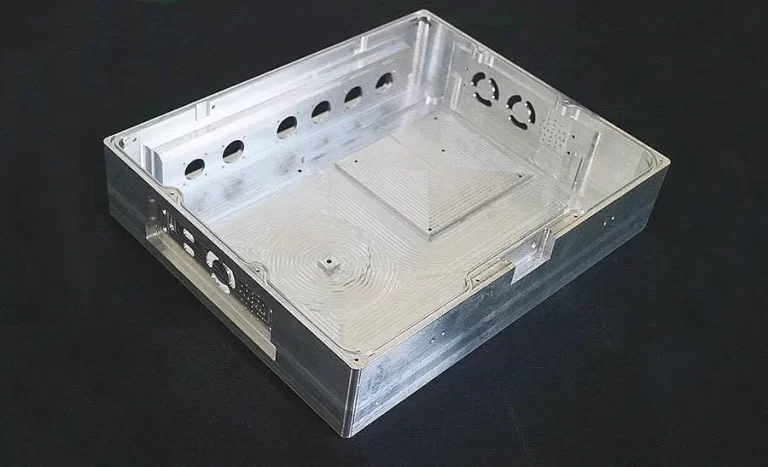
Easy to deform thin-walled parts processing, has been the processing…
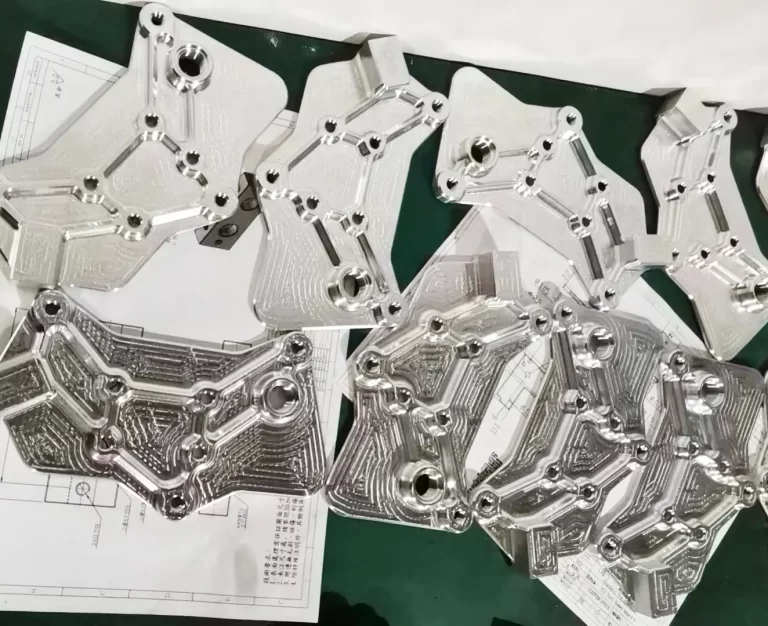
Now we attach importance to the design of intelligent agricultural…