

Quick Answers






how CNC lathe machine works?
- June 19, 2025
- Jason Chang
- 8:15 am
CNC (Computer Numerical Control) lathe machines are a vital component of the manufacturing industry, enabling the precise and efficient production of various components.
Key Components of a CNC Lathe Machine
Before we dive into how a CNC lathe machine works, let’s first understand the key components that make up this sophisticated piece of equipment:
- Bed: The base of the machine that provides support and alignment for the other components.
- Headstock: Houses the spindle and motor, which rotate the workpiece.
- Tailstock: Supports the other end of the workpiece, providing stability during machining.
- Carriage: Moves along the length of the bed and contains the cutting tool.
- Chuck: Holds the workpiece in place during machining.
- Control Panel: Where the operator inputs the machining program and monitors the progress of the operation.
How a CNC Lathe Machine Works
Now that we have an understanding of the key components, let’s delve into how a CNC lathe machine operates:
1. Program Input
The first step in using a CNC lathe machine is to input the machining program into the control panel.
This program contains the instructions for the machine to follow, including the cutting speeds, depths, and tool paths. The program can be created manually using G-code or CAM software.
2. Workpiece Mounting
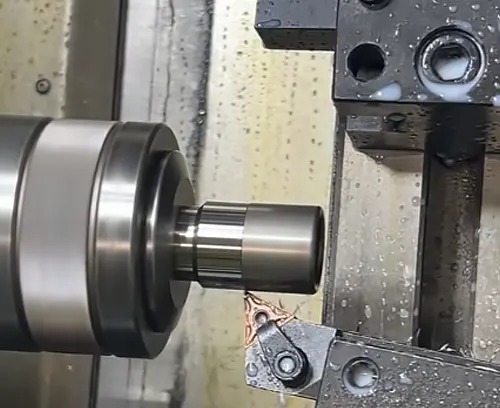
Once the program is set, the operator mounts the workpiece onto the chuck securely. The chuck rotates the workpiece, allowing the cutting tool to remove material and shape the component to the desired specifications.
3. Tool Selection
Next, the operator selects the appropriate cutting tool for the machining operation. The choice of tool will depend on the material of the workpiece, the desired finish, and the complexity of the part being machined.
4. Machining Operation
With the program set, the workpiece mounted, and the tool selected, the machining operation can begin.
The CNC lathe machine uses the instructions from the program to move the carriage along the bed and position the cutting tool precisely to remove material from the workpiece.
5. Monitoring and Adjustments
During the machining operation, the operator monitors the process’s progress through the control panel. They can make adjustments to the cutting speeds, feeds, and tool paths as needed to ensure the quality and accuracy of the finished part.
Conclusion
CNC lathe machines play a crucial role in the manufacturing industry, enabling the precise and efficient production of components.
By understanding the key components and the workings of a CNC lathe machine, engineers with a manufacturing background can optimize their machining processes and achieve superior results.