
How to efficiently machine shaped parts on CNC mill-turn machines?
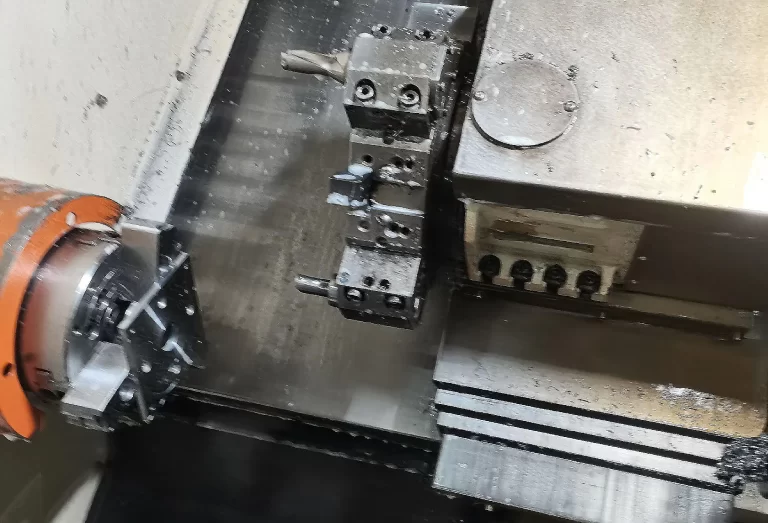

New metal materials encompass a wide range of types, including high-performance alloys and nanometal materials.
Notable examples include titanium alloys and nickel-based alloys.
These new metal materials not only possess high strength but also exhibit high-temperature stability and excellent corrosion resistance.
They are widely used in current industrial production, demonstrate outstanding mechanical properties, and possess high chemical stability, making them suitable for use in extremely harsh operating environments.
Take titanium alloys, for example. With their strong resistance to high pressure and high temperatures, they are used in the design and production of aircraft engines.
Currently, forming and machining technologies for titanium have reached a high level of maturity, and many high-end industrial equipment systems rely heavily on titanium materials.
Modern forming and processing technologies for new metal materials perform exceptionally well and are fundamentally different from traditional processing techniques.
As is well known, representative techniques in traditional forming and machining operations include forging, casting, and cutting.
These techniques are now quite mature and stable, and technical personnel have become highly proficient in their application.
However, if traditional processing methods are still used to handle new metal materials, they may prove inadequate, and the technical limitations exposed may be difficult to resolve in the short term.
Overall, this results in low forming and machining efficiency, insufficient machining accuracy, and even significant waste of metal materials, which in turn increases production costs—making the approach counterproductive.
Take laser processing technology as an example. This technology is widely used in modern metal processing methods; it primarily utilizes a high-energy laser beam to directly irradiate the material surface, causing the material to melt or even vaporize, reaching its ignition point instantly.
This forming and machining technology offers high speed, precise cutting, and exceptional accuracy, and it holds significant advantages, particularly when processing new types of metal materials.
For instance, in the current processing of titanium, factories often face challenges such as high material hardness and difficulty in handling.
The adoption of laser cutting technology can effectively resolve this issue, ensuring a smooth titanium cutting surface and eliminating the need for secondary forming and machining steps.
Another example is electrical discharge machining (EDM), which utilizes the principle of inter-electrode discharge—a common phenomenon in physics.
The electro-erosion generated by this discharge effectively removes excess material.
This method excels in processing complex geometries or difficult-to-machine metals, and it handles certain new metal materials with ease.
By combining ultrasonic vibration with EDM, an impact effect is created between the new metal materials, ultimately achieving a polishing effect and producing a smooth surface finish on the new metal materials.
Currently, there is a wide variety of modern forming and processing technologies available for new metal materials.
These technologies are primarily applied based on the geometric characteristics of the materials and the dimensions of the components.
Typical examples include casting, stamping, forging, powder metallurgy, and extrusion.
These technologies are applied in distinct manufacturing scenarios and offer varying technical advantages.
For example, both stamping and extrusion technologies utilize dies and extrusion forces to induce plastic deformation in metal sheets and bars, thereby producing components with the required dimensions.
With the emergence and rapid development of new metal materials, traditional forming and processing methods are no longer sufficient to meet production demands.
Consequently, the adoption of new metal materials that are resistant to high temperatures and pressures, and possess high strength and toughness, has become an inevitable trend.
At the same time, forming and processing technologies have undergone significant upgrades, featuring a wide range of innovative advancements.
For example, LMD (Laser Melting Deposition) technology is highly targeted, enabling the rapid forming and repair of certain high-performance alloys, and it is highly effective in the melting and deposition of alloy powders.
In actual forming and machining production processes, it is quite common to fully melt the alloy powder with a laser beam and then deposit it onto the substrate.
This method can alter the complex structural forms of certain new metal materials, improve dimensional accuracy, and meet the requirements for production technology optimization.
For instance, some enterprises currently employ this forming and processing technology in their precision casting processes.
Particularly when handling components with complex structures, rapid prototyping significantly reduces the heavy workload associated with subsequent machining.
During the forming and processing operations, technicians also utilize computer numerical simulation technology tailored for new metallic materials.
This primarily involves comprehensive simulation and optimization of the metal forming process to maximize the overall stability and precision of the new metallic materials.
Additionally, certain forming processes with specific functions are currently in high demand, as they are specifically designed for new metal materials.
For instance, electromagnetic forming technology enables effective adjustment and control of the microstructure of new metal materials under moldless forming conditions.
This process satisfies the material’s plastic deformation requirements and allows for targeted regulation of the microstructure, ultimately producing new metal components with unique performance characteristics.
In summary, current forming technologies for new metal materials prioritize high precision and high efficiency, while also aiming to reduce processing costs during the improvement of product quality.
Many industrial manufacturers are now adopting advanced CNC systems and servo drive technologies, which significantly enhance the positioning accuracy and repeatability of new metal materials during the forming process.
Currently, some enterprises utilize high-precision servo motors in conjunction with precision transmission mechanisms to achieve rapid positioning of metal materials during forming, precisely control various material parameters, and optimize the entire production process.
Combined with system testing and numerical simulation analysis, optimal forming process parameters for new metal materials can be determined—such as optimal temperature, speed, and pressure parameters—ensuring significant improvements in material flow and filling efficiency.
Objectively speaking, manufacturing enterprises today make full use of sensors and detection technologies to dynamically monitor changes in material parameters during the forming process in real time, such as fluctuations in temperature and pressure.
To this end, companies establish comprehensive material quality control systems to specifically monitor the forming process, identify and address any anomalies, and make timely adjustments.
For instance, in the production of automotive components, real-time monitoring and adjustment are primarily used to control changes in molding parameters, ensuring that component dimensional accuracy and surface quality meet technical requirements.
This is highly beneficial for significantly improving the overall safety and reliability of automotive components and extending their service life.
Modern forming and processing technologies encompass a wide range of applications and are used with a relatively large variety of new metal materials.
This article discusses a case study of modern forming and processing technologies for titanium materials at Western Titanium Co., Ltd.
Titanium materials resemble steel in appearance, sharing a silvery-gray luster, and are resistant to corrosion by acidic and alkaline aqueous solutions.
Furthermore, the total volume of titanium metal is significantly higher than that of lead, copper, and zinc combined, exceeding 17 times the total volume of these three metals.
Given its inherent properties, titanium exhibits excellent plasticity as a new type of metal material, making it a high-quality metal for processing and suitable for use in forming and manufacturing operations.
For example, titanium alloys are currently used to manufacture high-pressure vessels, medical surgical instruments, aerospace equipment, and artificial bones, among other applications, demonstrating a remarkably broad scope of use.
In particular, due to its high melting point and hardness, titanium is also a commonly used structural material in chemical manufacturing enterprises.
However, traditional forming and processing technologies exhibit low nonlinear conversion rates when processing titanium materials, resulting in relatively low overall control precision.
Currently, titanium metal processing is primarily based on dynamic control, which has led to the development of a completely new system of forming and manufacturing technologies, as discussed in detail below.
The titanium alloy materials used by the company are not only high in density but also high in hardness, resulting in strong resistance to impact and tensile deformation.
Given the properties of titanium alloys as allotropic variants, the company finds it reasonable to adopt forming and processing technologies based on dynamic control.
First, simulations of the material’s pressure field and velocity field are conducted to ensure the formation of clusters during the forming process, while simultaneously analyzing material separation effects and the flow patterns of the upper and lower cycles.
Second, a MATLAB-programmed computer system is used to analyze operating conditions, ensuring the precision of the dynamic control process.
Assuming that the volumetric flow rate of the titanium alloy changes during processing, a technical workflow for titanium forming control is established.
By analyzing unstable frequencies and rotational speed variations, the precision of material forming control is comprehensively enhanced, ensuring favorable improvements in material performance metrics.
Conducting material property analysis effectively improves the control of forming optimization for titanium processing materials.
To this end, the company has carried out simulation experiments on titanium alloy materials.
During the experimental process, the number of processing mesh elements was primarily controlled and adjusted to ensure it remained at 17,000.
Subsequently, a material performance test model was established in conjunction with the use of a clarification tank and cross-sectional processing, and forming and machining tests were conducted.
During the analysis of the machining control accuracy of titanium alloy materials, a set of simulation curves was also established to effectively improve the forming and machining efficiency of titanium alloy materials and optimize material control accuracy.
Through this process, the company’s production costs for titanium alloy forming and machining were reduced, while the superior machining efficiency and performance of the titanium alloy materials were effectively demonstrated.
In the innovative application of modern forming and machining technologies for new metal materials, significant technical challenges have emerged.
For example, titanium alloys possess high toughness, high strength, and high-temperature sensitivity.
During cutting and high-temperature processing, these materials cause severe tool wear, significantly reducing overall machining efficiency.
Additionally, these new metal materials exhibit relatively poor chemical stability, which can negatively impact the forming and machining production process.
For instance, oxidation reactions significantly affect cutting tools, thereby increasing the difficulty of forming and machining.
Currently, companies are considering the use of ultrasonic vibration in conjunction with machining processes to assist in the production process.
This effectively reduces cutting forces, which helps minimize tool wear and significantly improves production efficiency while allowing for dynamic adjustment of forming parameters.
In the application of forming and processing technologies for new metal materials, improving forming accuracy and processing efficiency remains a top priority.
However, given the unique characteristics and complex performance profiles of these materials, there are numerous bottlenecks hindering progress in these areas.
In this paper, we argue that it is essential to first consider the complexity and unique properties of these new metal materials, and to analyze the control and optimization of process parameters primarily in the context of the material forming process.
Of course, optimizing control methods is no simple task.
Beyond considering complex parameters such as temperature, speed, and pressure, it is also necessary to analyze certain complex nonlinear issues to identify the optimal solutions for the forming and machining of new metal materials.
This involves analyzing the microstructural phase transformation processes that occur during forming, as these transformations significantly influence the material’s formability, machinability, and precision.
The proposed response strategies are comprehensive and warrant in-depth research.
As companies adopt new types of metal materials, the application of forming and machining technologies faces multifaceted challenges.
It is not only necessary to optimize the forming and machining processes but also to constantly explore technological innovations to ensure the development of precise processing methods and forming technologies that effectively meet the production requirements of these new materials.
Currently, there is a wide variety of new metal materials on the market, and the types of forming and machining technologies used for them are equally diverse, such as the ultrasonic vibration cutting technology, laser-assisted cutting technology, and direct cutting technology mentioned earlier.
These technologies can directly reduce tool wear, identify hidden production and machining challenges during the forming process, and resolve them.
For instance, extensive use of new metal materials in modern mold design combines with simulation technology and forming process design methods.
This approach significantly reduces scrap rate in forming and lowers production costs.
Among these technologies, researchers conduct targeted studies on the fundamental performance parameters of new metallic materials.
These efforts establish a well-developed technical application system.
This system is capable of optimizing the production and processing of new metallic materials, minimizing equipment wear during production, and reducing the impact of external factors caused by such wear.
Analysis of the production accuracy and stability of forming and machining equipment is also crucial.
Currently, enterprises are adopting various high-level, high-precision control systems that not only maintain consistent machining accuracy but also ensure effective quality control.
Common tools and equipment, such as online measurement systems and statistical analysis tools for production precision, demonstrate excellent performance.
These tools gain widespread adoption across the industry.
Currently, industrial manufacturers widely use new types of metal materials; however, forming and processing techniques for these new materials require updating.
It is imperative to replace traditional processes with modern forming and processing technologies, as the latter can meet the current production requirements for high-precision, high-quality, and high-speed material forming and processing.
Through process optimization and continuous technological innovation, enterprises overcome various technical challenges specific to the forming and processing of new metal materials one by one.
This has truly enabled enterprises to focus on future manufacturing technologies, embarking on a path toward intelligent, large-scale, and automated production, and has brought boundless prospects for their sustainable and healthy development in the future.
With the rapid development of the modern manufacturing industry, the…
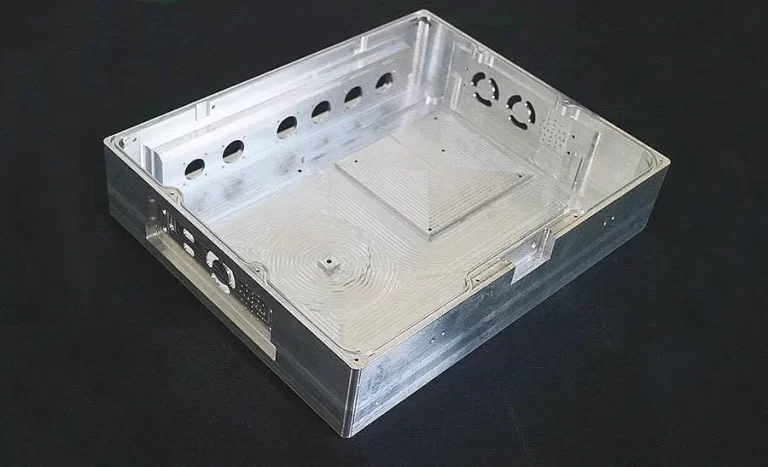
Easy to deform thin-walled parts processing, has been the processing…
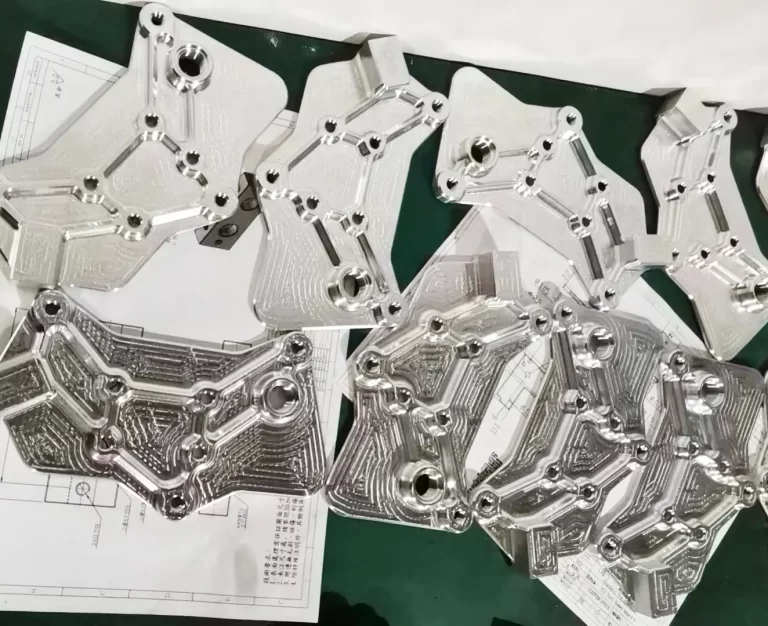
Now we attach importance to the design of intelligent agricultural…