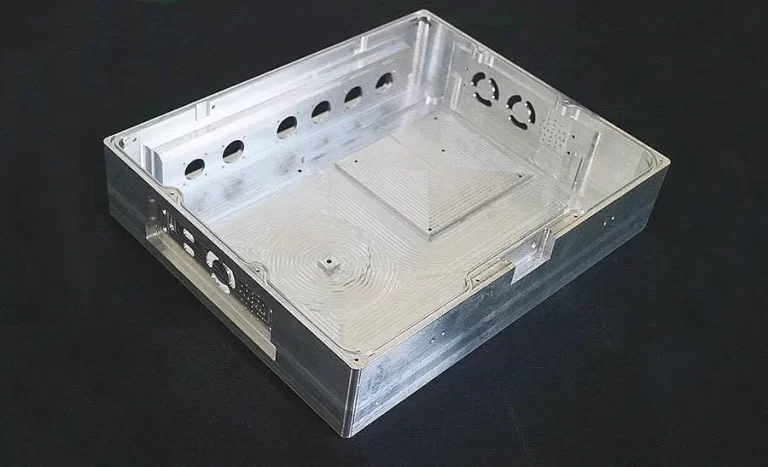
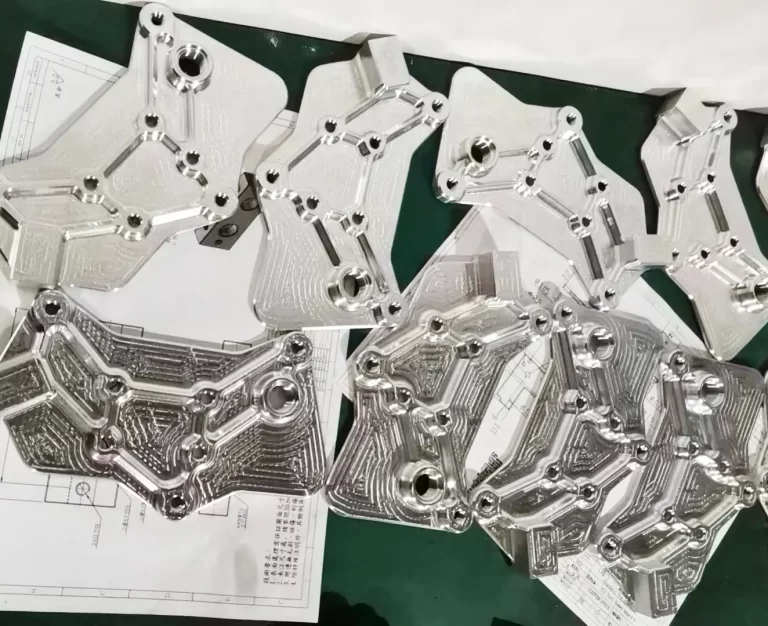
How to efficiently machine shaped parts on CNC mill-turn machines?
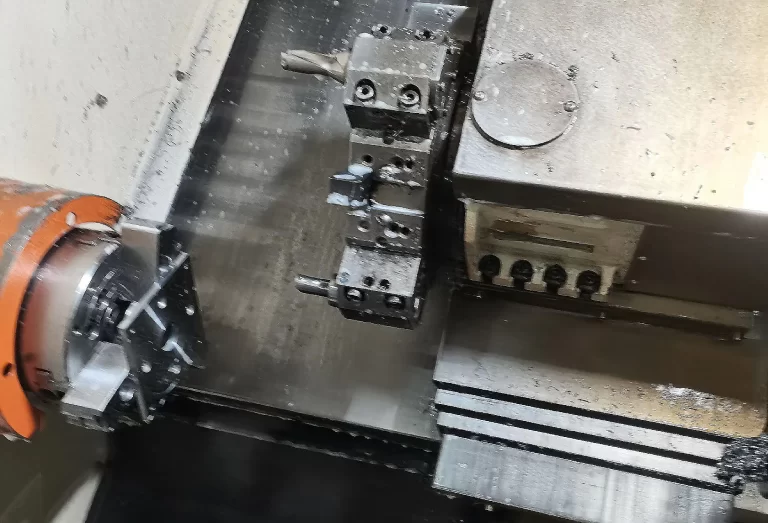


Manufacturers use this type of precision CNC equipment primarily for drilling, tapping, and light milling operations on small and medium-sized components.
Its high efficiency and accuracy make it a common choice in industries such as consumer electronics, automotive precision hardware, and related manufacturing sectors.
Based on technical research and parameter comparison, this paper systematically elaborates the operating modes and operation mechanisms of CNC drill tap centers.
Evaluating machining efficiency, precision, cost, and adaptability to different working conditions helps identify the technical advantages and limitations of each technology.
This analysis defines the most suitable application scenarios and provides manufacturing enterprises with practical guidance for equipment selection and process optimization, enabling the precise allocation of production resources.
Against the trend of refined and high-efficiency intelligent manufacturing, the demand for high-precision hole pattern and thread machining of small and medium-sized precision parts keeps rising.
Traditional drill presses and tapping machines suffer from scattered working procedures, insufficient precision and low automation, while general machining centers feature high procurement costs and poor cost performance for small workpiece processing.
As a subdivision category of lightweight vertical machining centers with structural and parameter designs optimized for high-speed drilling and tapping processes, CNC drill tap centers fill this market gap.
At present, many enterprises fail to fully understand their operating mechanisms and accurately judge their pros and cons during equipment selection.
Through industry visits and technical comparison, this research systematically analyzes the core characteristics of CNC drill tap centers to offer scientific basis for machinery selection by manufacturers.
A CNC drill tap center consists of six core components: lightweight high-rigidity machine bed, high-speed motor spindle, servo three-axis drive system, automatic tool magazine, CNC system and tooling fixtures.
Its operation mechanism is as follows: the CNC system imports pre-compiled machining programs to drive servo motors for precise X/Y/Z three-axis linkage.
Combined with spindle rotation and axial feed, integrated processes including drilling, tapping, reaming and light milling are completed under full digital control.
Human-induced errors are eliminated to the maximum extent, guaranteeing machining precision and efficiency.
This is the mainstream operation mode of the equipment, suitable for mass production of standardized parts.
After workpiece clamping, program import and tool setting calibration, the machine enables unattended continuous production with automatic tool switching and procedure circulation.
Stable machining tact significantly boosts mass production efficiency and cuts labor costs.
For low-volume, high-precision customized parts, operators can adjust machining parameters and tool compensation in real time to conduct step-by-step processing of precision holes and high-tolerance threads.
It balances process flexibility and dimensional accuracy, applicable to product R&D sampling and small-batch precision manufacturing.
Supported by the automatic tool change system, procedures such as drilling, tapping, chamfering and surface milling are finished in one clamping.
Positioning errors caused by repeated workpiece clamping are avoided, procedure circulation time is shortened, and the overall dimensional accuracy and production continuity of parts are improved.
Used for machine startup verification, tool replacement, tool setting and fault troubleshooting.
Manual control realizes parameter calibration and fixture positioning to prevent tool collision and position deviation during automatic operation, ensuring stable equipment performance.
The spindle speed normally ranges from 10,000 to 24,000 rpm, rapid feed speed is 48–60 m/min, axis positioning accuracy reaches ±0.005 mm, and repeat positioning accuracy is ±0.003 mm.
Equipped with a closed-loop servo system and ball screw drive, the machine achieves precise positioning under high-speed operation to meet the high-precision requirements of drilling and tapping processes.
Adopting high-response motor spindles and servo systems, spindle start-stop and axial feed speeds far outperform traditional machining equipment.
Automatic tool change only takes 1–3 seconds, and continuous multi-process processing requires no manual intervention.
The effective cutting utilization rate exceeds 75%, and machining efficiency is 3–5 times higher than conventional drilling and tapping machines, perfectly matching high-tact mass production.
With precision transmission and closed-loop control systems, positioning accuracy is guaranteed without human operation errors.
Hole position precision and thread dimensional tolerances are highly controllable, delivering smooth workpiece surface finish and low reject rates.
Mass-produced parts maintain consistent dimensional performance, complying with standards for precision component manufacturing.
Procurement costs are 40%–60% lower than general machining centers.
The machine features compact size, low energy consumption, greatly reduced floor space and power consumption.
Its simple structure contains few vulnerable parts, lowering daily maintenance difficulty and costs.
Operators only need moderate technical proficiency, making it ideal for small and medium-sized manufacturers to deploy in batches.
It can connect with CNC systems and production management platforms to support online program transmission and machining monitoring.
Matching automatic loading and unloading mechanisms enables rapid construction of flexible production lines.
By switching programs and fixtures, the machine accommodates multiple part varieties, supporting flexible production and intelligent manufacturing upgrading.
It processes various materials including aluminum alloy, copper alloy and engineering plastics, with adjustable parameters for different material machining demands.
Widely deployed in 3C electronics, automotive hardware, medical devices, communication components and other sectors, the equipment maintains high utilization rates.
Low spindle power and cutting torque limit the machine to light-duty processes only.
It cannot handle heavy cutting, deep hole machining, large cavity milling and other complex technologies.
Limited worktable travel and load capacity rule out large and heavy workpieces, resulting in far weaker machining compatibility compared with general machining centers.
Lightweight machine bed design for high-speed operation leads to weak overall rigidity.
When processing hard materials such as stainless steel and titanium alloy, cutting vibration and tool deflection easily occur, damaging machining precision and tool service life.
Stability is poor for large-diameter and deep-hole tapping.
Mid-to-low-end domestic models satisfy basic machining demands, yet high-speed spindles, precision guide rails, CNC systems and other core components of high-end high-precision machines still rely on imports.
This pushes up procurement costs, prolongs after-sales maintenance cycles and slows response, disrupting continuous production efficiency.
Heat generated by high-speed spindle operation, ambient temperature fluctuations and inadequate coolant cooling all trigger minor thermal deformation of the machine, impairing machining precision.
Strict requirements apply to workshop foundation and dust control;
Harsh environments accelerate equipment wear and reduce positioning accuracy and service life.
High-speed machining demands dedicated high-precision, wear-resistant cutting tools.
Ordinary cutters cannot withstand high rotational speeds and suffer from rapid wear or breakage, leading to higher procurement and consumption costs than traditional machining equipment.
The CNC drill tap center is specialized equipment for light drilling and tapping of small and medium-sized precision parts.
Its core strengths of high speed, high precision, high efficiency and low cost align with mass production demands of precision hardware industries.
However, structural design constraints create drawbacks including narrow machining range and insufficient cutting rigidity, restricting its application exclusively to light-duty processing of small and medium-sized workpieces.
Enterprises shall select equipment based on product characteristics:
Prioritize CNC drill tap centers for mass production of small and medium-sized precision parts dominated by drilling and tapping processes;
Adopt general machining centers for large workpieces, complex cavities and heavy cutting scenarios;
Small and medium-sized manufacturers may choose mid-range domestic models, while high-precision processing projects can select imported machines as needed.
Supporting dedicated cutting tools and automatic tooling fixtures are recommended to maximize machine performance.
CNC drill tap centers hold irreplaceable application value in light precision machining, with continuously rising market demand.
Future optimization priorities include improving cutting rigidity, expanding machining scope and accelerating localization of core components.
Enterprises shall accurately grasp equipment characteristics to realize precise matching between machinery and production requirements, boosting overall production benefits and market competitiveness.