How to efficiently machine shaped parts on CNC mill-turn machines?


Have you ever wondered how those shiny, perfectly fitted metal parts in the cell phones you use every day, the cars you drive, and the planes you fly on are actually made?
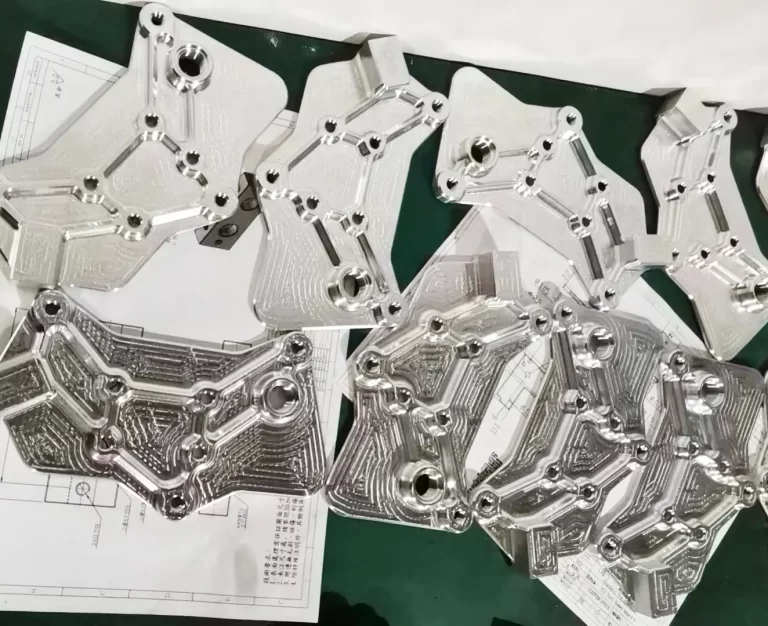
Many parts have unusual shapes—some feature winding, curved surfaces, while a dense network of tiny holes covers others.
If we relied on traditional methods—manually sawing, filing, and drilling—it would not only be exhausting, but the resulting parts might also turn out crooked.
Not to mention the challenge of producing hundreds or even thousands of identical parts.
What Is CNC: The “Magic” of Computer-Driven Machining
That’s when you need a little “magic” to handle them.
The name of this magic is CNC. The full Chinese name for CNC is “Computer Numerical Control.”
You can think of it as an extremely obedient robot.
As long as you draw a 3D blueprint on the computer and program a set of “instructions” it can understand, it will pick up the cutting tool on its own and quietly “carve” a rough lump of iron, bit by bit, into the shape you want.
The entire process is like that of a master sculptor who never speaks—except that its chisel is a high-speed rotating carbide tool, and its eyes are sensors precise to a few tenths of a human hair.
To excel at this kind of precision work, you first need to get to know the “key players” involved.
What’s the difference between a CNC milling machine and a CNC machining center?
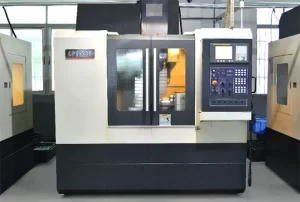
Within the vast family of CNC machines, the most common is the CNC milling machine, which people often refer to as a machining center.
This machine is a true all-rounder, and its signature skill is “rotary cutting.”
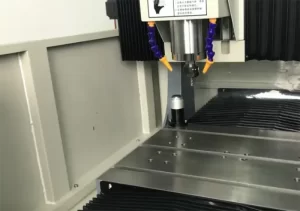
The cutting tool spins rapidly in place while the workpiece moves back and forth beneath it, shaving off excess metal like wood shavings.
Whether it’s flat surfaces, deep grooves, or complex curved surfaces, it can handle them all.
Depending on the number of axes it can control simultaneously, it’s classified as a three-axis, four-axis, or five-axis machine.
The more axes there are, the more intricate the angles it can machine.
Five-axis machining centers, in particular, allow the workpiece to rotate in multiple directions during a single setup, enabling the machining of all five sides at once.
They’re experts at manufacturing engine blades and medical bone scaffolds.
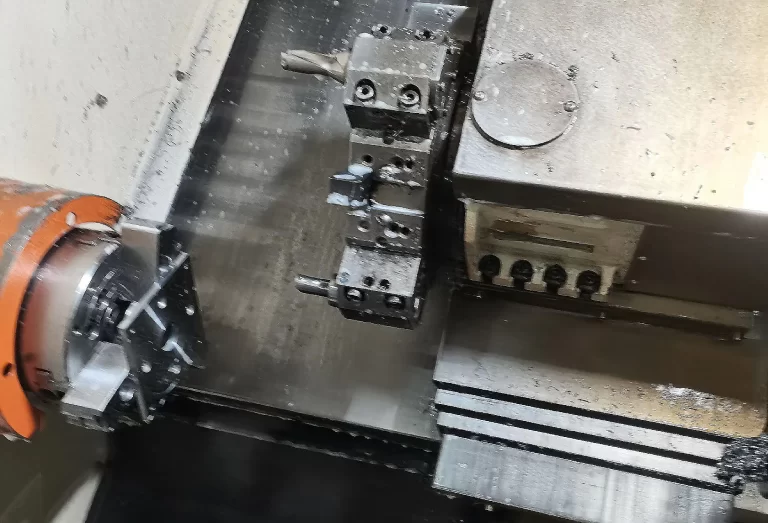
When dealing with long shafts or disc-shaped parts—such as engine drive shafts or wheel hubs, operators call in another expert: the CNC lathe.
Its operation is exactly the opposite of that of a milling machine.
The lathe causes the workpiece to spin rapidly like a gyroscope, and then a fixed cutting tool is brought against it to “peel” away material layer by layer.
Round parts machined this way have surfaces as smooth as a mirror, with diameter accuracy controlled to within about one-tenth the thickness of a human hair.
Of course, there are also machines designed specifically for special applications.
For example, CNC engraving and milling machines are used exclusively for making delicate small molds and engraving jewelry;
They operate with gentler force and at higher speeds.
Wire-cut EDM uses a molybdenum wire as thin as a strand of hair, which carries an electric current;
Much like cutting cheese, it relies on the high temperatures generated by electrical discharges to cut through conductive, hard materials, making it ideal for tackling rock-hard tungsten steel and die steel.
When it comes to cutting large quantities of steel plates, laser cutters and plasma cutters take center stage;
They use high-energy beams or high-temperature gas jets to instantly melt and blow away the metal.
Whether these machines look like large metal cabinets or Transformers, their operation relies on a fixed “three-step process” that serves as their core.
The first step is drafting. Engineers use CAD software on a computer to create a complete 3D model of the part.
This isn’t just about drawing; they also have to clearly mark which surfaces are critical for load-bearing and which areas can be made with lower precision.
The second step is programming. Once engineers finish the drawing, they cannot send it directly to the machine.
Operators must use CAM software to instruct the machine:
“Start cutting here; first use a roughing tool to quickly remove large chunks of scrap material, then use a finishing tool to slowly go over the area, and finally turn along this arc.”
The software translates these instructions into the machine’s native language—G-code—which is the only language it understands.
This long string of alphanumeric characters records every path the cutting tool takes and the speed at each step.
A skilled programmer can visualize metal shavings flying through the air just by looking at the G-code.
The third step is clamping and machining.
Workers securely fasten the raw material to the machine tool’s worktable, mount the appropriate milling cutter or turning tool, and gently tap it against the machine’s tool presetter to tell the machine, “The tool tip at this point is the zero point.”
Then they close the safety door, press the green start button, and leave the rest entirely to the machine.
First is consistency. In the past, the work relied on the craftsmanship of veteran technicians, and even their mood could affect the dimensions.
But CNC is different: as long as the program is correct, the tolerance between the first part produced today and the 1,000th part produced three months from now will not exceed one-fifth the width of a human hair.
This level of stability is the quality most highly valued in automobile and aircraft manufacturing.
Second is the ability to produce complex shapes. Some surfaces are simply impossible to machine with traditional equipment, but for a CNC machine, it’s merely a matter of following a few more complex curved paths.
Today, custom-made artificial joints and dental prosthetics in the medical field are all milled out bit by bit using five-axis CNC machines.
Third is labor savings. It’s common for a skilled worker to oversee two CNC machines simultaneously;
Once the program is set, the machines run day and night on their own.
This significantly reduces physical strain on workers and frees them from dirty, chaotic, and hazardous environments, allowing them to focus on more mentally demanding tasks such as programming and technical management.
Of course, each machine has its own quirks and strengths, so choosing the right equipment is more important than simply buying the most expensive one.
If you’re producing small aluminum parts on a long-term basis, purchasing a high-speed engraving and milling machine is far more cost-effective than forcing a large machining center to handle the job.
When cutting thick stainless steel plates, laser cutting offers far superior edge smoothness and efficiency compared to plasma cutting—but it also comes with significantly higher costs.
As veteran machinists often say, the process plan determines half the manufacturing cost—and that’s exactly why.
At this point, you might think that CNC technology is far removed from everyday life.
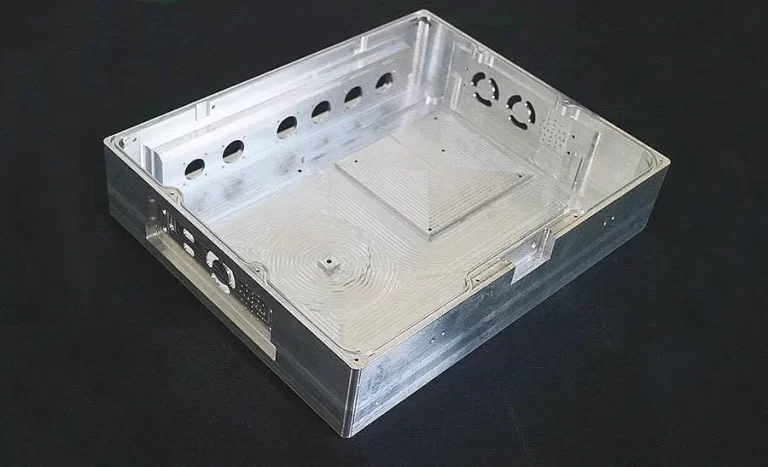
In fact, quite the opposite is true: A CNC milling machine produces the metal frame of the smartphone in your hand by hollowing out a solid block of aluminum.
A CNC lathe manufactures the heat sink base inside your household LED light bulb, producing one unit every few seconds.
Without CNC machine tools, the bodies and battery trays of today’s electric vehicles simply couldn’t be made to be both so lightweight and so sturdy.
However, mastering CNC isn’t without its barriers.
Even decent equipment costs hundreds of thousands, while large, imported five-axis machines can run into the millions.
On top of that, you have to hire engineers who know how to program the machines, and tool wear and tear also adds to the costs.
Striking a balance between “equipment investment” and “part output” has long been the most headache-inducing financial challenge for many small factory owners.
Now, more and more factories are introducing automated production lines, using robotic arms to load and unload CNC machines.
These lines can operate autonomously even at night with the lights off—this is what’s commonly referred to as a “lights-out factory.”
With machines handling all the repetitive and tedious tasks, workers are forced to adapt their roles—shifting from relying on physical labor to focusing on programming skills and process optimization.