cylogo2
C-YCNC

Blog

Machinable Material

Machinable Materials for Manufacturing Engineers

Introduction to Machinability Machinability is a fundamental property in manufacturing engineering, reflecting the ease with which a material can be machined to meet dimensional tolerances, surface finish specifications, and production efficiency targets. A material with good machinability allows for faster cutting speeds, reduced tool wear, lower energy consumption, and consistent

Blind Holes & Fasteners

Blind Holes & Fasteners Guide

Introduction In precision manufacturing and engineering design, the details of how components are joined or mounted are critical. One such feature that plays a significant role in these assemblies is the blind hole. What Is a Blind Hole? A blind hole is a hole that is drilled or machined into

reamer

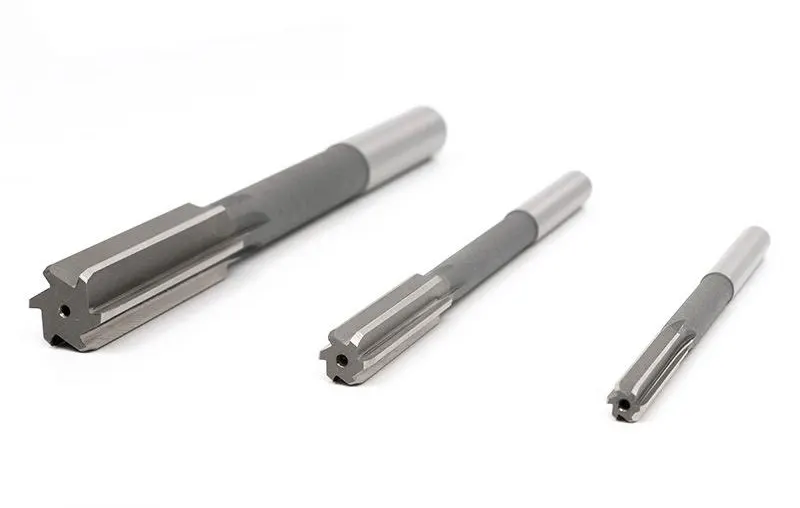
Reamers: Precision Tools for High-Accuracy Hole Finishing in Modern Manufacturing

In today’s precision-driven manufacturing landscape, where tolerances are tighter and component performance often hinges on microscopic variances, reamers play a crucial but sometimes underappreciated role. These multi-edge rotary cutting tools are engineered not to create holes, but to perfect them—delivering dimensional accuracy, fine surface finishes, and geometric precision that other

CNC machining alnumium

Comprehensive Comparison of Aluminum Alloys 6061 and 7075

Introduction Aluminum alloys are foundational materials in modern engineering, prized for their combination of low density, high strength-to-weight ratios, corrosion resistance, and versatile machinability. Among the myriad of available aluminum alloys, 6061 and 7075 are two of the most widely used in structural and mechanical applications. Choosing between these alloys

Featured image

CNC Milling of Counterbores in Internal Cavities

The CNC-integrated center frame is a key load-bearing part critical for safe high-speed rail operation. Counterbores in deep cavities (Fig. 1) need EDM, causing long cycles, poor finish, and clamping issues. CNC milling was adopted for counterbores to replace EDM, cut costs, and boost efficiency. Problem analysis and process test

Feature image 2

Dynamic Milling for Deep-Cavity Thin-Walled Parts

With the development of aerospace manufacturing technology,Aerospace product structures are becoming more complex, with rising accuracy requirements. To increase the effective load, the parts themselves are becoming lighter and lighter. Deep-cavity thin-walled parts are lightweight, mechanically strong, and evenly load-bearing, boosting their use. A deep-cavity thin-walled part requires high accuracy,

thin wall parts

Research on CNC machining fixtures for thin-walled parts

Thin-walled parts have structural characteristics that affect their machining. They are less rigid when machining on a CNC lathe. As a result, several issues arise, such as difficulty positioning the workpiece. The parts are also prone to deformation after machining. Additionally, it is challenging to ensure the surface roughness of the parts.

part machining

How to control the accuracy of automotive parts machining?

With the rapid progress of information and industrial technology, mechanized production technology has been effectively enhanced. This advancement, especially in automotive parts machining, has been widely used to promote a rapid increase in productivity. Automobile manufacturing enterprises need to improve the level of mechanization to reduce costs and improve efficiency.

Scroll to Top