
How to efficiently machine shaped parts on CNC mill-turn machines?
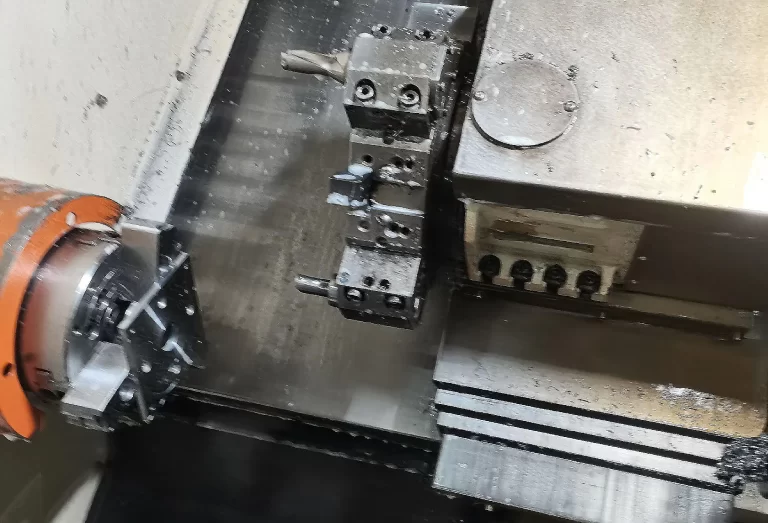

Manufacturing is a pillar industry of the national economy, and the level of industrial product manufacturing directly influences a country’s level of productive capacity.
Today, China’s manufacturing sector has developed into an independent, comprehensive industrial system covering a full range of sectors.
In the field of CNC machining, CNC machine tools—as the core equipment for high-precision machining—offer irreplaceable advantages in processes such as cutting and forming.
However, traditional manual operations and semi-automated production methods can no longer fully meet the demands for precise and efficient production.
Industrial robots, characterized by high flexibility and repeatability, can compensate for the shortcomings of CNC machine tools in auxiliary operations.
Collaborative machining between the two has become a key pathway to improving production efficiency and optimizing resource allocation.
At present, manufacturers deploy CNC machine tools and industrial robots for collaborative machining.
However, this mode encounters multiple practical hurdles.
Typical issues include multi-body motion coupling, data incompatibility among heterogeneous systems, as well as dynamic precision drift caused by changing operating conditions.
These problems hinder the widespread large-scale implementation of collaborative machining.
This paper targets the core challenges in collaborative machining.
It constructs a systematic technical framework and defines implementation approaches from hardware, software and system integration perspectives.
In addition, practical application cases confirm the technical feasibility.
This work provides a valuable reference for the engineering implementation of collaborative machining technology.
CNC machine tools and industrial robots are different types of automated equipment, and they exhibit significant differences in their dynamic characteristics and motion response mechanisms.
CNC machine tools focus on high-precision point-to-point control and trajectory machining, with motion speed and acceleration adjustments following fixed process curves;
Industrial robots, on the other hand, emphasize flexible operations involving the coordinated movement of multiple joints, and their motion processes involve nonlinear dynamic coupling effects.
During collaborative machining, the two systems must perform coordinated operations such as process handoffs and material transfer.
Any mismatch in motion rhythms can lead to issues such as material collisions and processing interruptions.
This motion coupling is not a simple superposition of movements but requires smooth transitions in velocity and acceleration at the dynamic level, while balancing machining efficiency and equipment load distribution.
The core challenge lies in eliminating collaborative errors caused by differences in the motion characteristics of the two systems.
CNC machine tools and industrial robots typically come from different manufacturers and use distinct control systems and communication protocols, creating inherent barriers to data interoperability.
CNC machine tools mainly execute instructions via G-code and M-code.
Their data formats focus on machining process parameters.
In contrast, industrial robots adopt joint spatial coordinate commands.
Motion control parameters form the core of their data systems.
The inconsistency in data semantics and the incompatibility of communication interfaces between the two prevent the real-time sharing of critical information such as machining status and equipment operating conditions.
Collaborative machining needs a unified data exchange standard.
This standard supports the bidirectional flow of information such as machining tasks, equipment status and process parameters.
Nevertheless, conventional point-to-point communication approaches cannot satisfy the real-time and scalability demands of multi-device collaboration.
Establishing an efficient and reliable channel for heterogeneous data exchange has thus become a core challenge in collaborative machining.
During collaborative machining, changes in environmental factors and equipment status can cause accuracy drift, which affects the quality of collaborative operations.
Fluctuations in workshop temperature can lead to thermal deformation in critical components such as the spindle of a CNC machine tool and robot joints, resulting in positioning errors;
Long-term equipment operation leads to component wear.
This changes the transmission accuracy of moving parts and weakens the synchronization of collaborative movements.
Moreover, dynamic variations in machining loads trigger equipment vibration, which further aggravates accuracy fluctuations.
The combined effect of these factors results in nonlinear accuracy drift, and the drift patterns are difficult to correct using traditional fixed compensation methods.
Dynamic operating conditions easily cause real-time accuracy variations in machining processes.
Therefore, it is critical to detect such accuracy changes promptly and stabilize collaborative accuracy via adaptive adjustments.
This issue has become a core challenge restricting the practical application of collaborative machining technology.
The core of collaborative operation planning is to achieve the scientific allocation and orderly coordination of machining tasks between CNC machine tools and industrial robots.
Based on machining process requirements, the overall task is broken down into core machining subtasks and auxiliary operation subtasks.
CNC machine tools perform core machining subtasks, focusing on key processes such as high-precision cutting and forming;
Industrial robots perform auxiliary operation subtasks such as material loading/unloading, tool and fixture replacement, and workpiece inspection and transfer.
Task decomposition relies on a well-defined optimization strategy.
A multi-objective optimization model should be built with full consideration of equipment performance parameters and process constraints.
This method balances equipment load, shortens production cycle time, and guarantees overall machining accuracy.
This study implements task prioritization and workflow sequencing.
It clearly defines the action sequences and working timing of each device.
This approach ensures seamless coordination between CNC machining and robot-assisted operations.
Meanwhile, it effectively prevents process delays and equipment motion conflicts.
Motion synchronization serves as the core foundation of collaborative machining technology.
It is essential to develop a dedicated adaptation mechanism.
This mechanism aims to resolve the differences in motion characteristics between CNC machine tools and industrial robots.
This study establishes a unified motion control coordinate system.
It converts the spatial joint motion of industrial robots into Cartesian spatial motion under the workpiece coordinate system of CNC machine tools.
This realizes consistent homogeneous mapping of the two different motion spaces.
This study adopts a real-time feedback-based closed-loop control architecture, which uses sensors to acquire key data including the spindle speed and feed rate of CNC machine tools, as well as the joint position and orientation of industrial robots.
Model predictive control algorithms are then used to anticipate motion deviations in advance and dynamically adjust the robot’s motion parameters.
High-speed machining scenarios adopt trajectory look-ahead planning technology.
This technology optimizes and smooths the motion path of industrial robots.
It keeps the robot motion synchronized with the machining rhythm of CNC machine tools.
Furthermore, it eliminates impact loads during motion startup and shutdown.
This approach greatly enhances the smoothness and synchronization accuracy of collaborative machining motions.
To resolve accuracy drift under dynamic operating conditions, this work builds an adaptive adjustment mechanism based on real-time sensing.
This study builds an accuracy drift prediction model by collecting machining environmental and operational data, including temperature, vibration, and cutting force, via a multi-source sensor network.
Machine learning algorithms are then used to analyze data correlations and predict trends in accuracy changes in advance.
To mitigate temperature-induced thermal deformation, this study applies a segmented compensation strategy to dynamically tune motion compensation parameters according to regional temperature distribution differences.
For systematic deviations resulting from equipment wear, online calibration technology is used to update the equipment’s motion model parameters in real time, thereby maintaining the stability of collaborative accuracy.
The system can respond to sudden fluctuations in machining load.
It automatically adjusts the feed rate of CNC machine tools and the motion posture of industrial robots.
This strategy maintains balanced load distribution across collaborative equipment.
It also avoids accuracy degradation and equipment failure resulting from overload conditions.
The core of the hardware level is to build a highly adaptable and reliable collaborative hardware platform that enables physical connection and signal exchange between CNC machine tools and industrial robots.
The selection of industrial robots must match the machining scale and operational requirements of the CNC machine tool.
Priority should be given to six-axis serial robots with a repeatability of ±0.01 mm and a payload capacity of 5 to 10 kg, equipped with quick-change devices to support rapid tooling changes.
Their mechanical interfaces adopt a standard modular design to ensure precise alignment with the CNC machine tool’s worktable.
Regarding sensor configuration, a distributed sensor network is employed.
Temperature and vibration sensors are installed on the CNC machine tool spindle and robot joints, with a sampling frequency of up to 1 kHz;
Laser displacement sensors and force-torque sensors are deployed in the collaborative work area to collect real-time data on relative position and contact force.
All sensors are connected via a real-time bus using Ethernet Control Automation Technology (EtherCAT), ensuring data transmission latency does not exceed 250 μs.
The mechanical protection system is equipped with dual electromagnetic interlocks and polycarbonate safety doors.
It provides a holding force of no less than 2,000 N and an impact resistance of 120 J.
The system complies with standard safety level specifications.
It also realizes effective physical isolation of internal hazardous areas.
The software level employs a layered architecture design to ensure the system’s stability, real-time performance, and scalability.
The underlying driver layer uses the VxWorks real-time operating system, with a response latency of less than 1 ms;
It is responsible for the direct control of hardware devices and the acquisition of status data, and supports driver adaptation for a variety of mainstream CNC machine tools and industrial robots.
The intermediate control layer is the core of collaborative machining, integrating functional modules such as motion synchronization control, data fusion processing, and adaptive adjustment.
The motion synchronization control module employs an improved model predictive control algorithm, combined with a Kalman filter algorithm to process sensor noise data, thereby achieving precise synchronization among heterogeneous devices;
The data fusion module integrates multi-source sensor data through a weighted fusion algorithm to enhance data reliability;
The adaptive adjustment module establishes a precision drift prediction model based on long-short-term memory (LSTM) neural networks to dynamically output compensation parameters.
The upper application layer uses WebGL (Web Graphics Library) to build a 3D visual interactive interface, supporting real-time monitoring of collaborative workflows, parameter configuration, and remote operation.
The interface layout follows ergonomic principles and can dynamically adjust functional permissions and display content based on the operator’s role.
System integration adopts a modular, loosely coupled design philosophy, enabling seamless integration of various subsystems through unified communication protocols and data standards.
In terms of vertical integration, communication channels between the device layer, control layer, and management layer are established based on the Open Platform Communications Unified Architecture (OPCUA) protocol.
The device layer is responsible for data acquisition from CNC machine tools, industrial robots, and sensors;
The control layer performs collaborative logical operations and issues control commands;
And the management layer handles production planning, scheduling, and data analysis, ensuring real-time data flow across all levels.
The system adopts the Message Queuing Telemetry Transport (MQTT) protocol for horizontal integration.
It facilitates communication among motion control, safety protection, data processing, and fault diagnosis modules.
Each module is deployed independently as a microservice, with autonomous data processing and fault isolation capabilities.
If a single module fails, the remaining modules can continue to operate normally, ensuring the overall availability of the system.
This study adopts multiple measures to improve the reliability of the integrated collaborative machining system.
The system uses a 2oo3 redundant architecture for critical control modules.
A unified mechanism for data storage and backup is established.
In addition, regular system self-inspection and fault troubleshooting are implemented.
These guarantees support the continuous and stable operation of the entire machining process.
This study verifies the effectiveness and practicality of the proposed CNC-robot collaborative machining technology.
A six-month field application test is carried out on the production line for automotive engine block machining.
The test environment comprised five CNC machine tools (including vertical machining centers, horizontal machining centers, and CNC lathes) and three industrial robots (loading/unloading robots, assembly robots, and inspection robots).
The workpiece was a four-cylinder engine block, and the machining process consisted of 28 machining operations, involving 12 material transfers and 3 in-process inspection tasks.
The testing procedure focuses on four core evaluation metrics.
These indicators include collaborative precision, production efficiency, equipment utilization, and system reliability.
The test results are further compared with those of the traditional machining model.
The traditional mode adopts independent CNC machine operation with manual auxiliary work.
The test results are presented in Table 1.
The proposed collaborative machining technology delivers significant improvements in all performance indicators compared with the traditional machining model.
It greatly enhances machining accuracy and overall equipment effectiveness (OEE).
Meanwhile, it reduces failure-related downtime and substantially cuts maintenance costs.
In addition, the technology maintains excellent accuracy stability under dynamic temperature conditions.
During testing, the dynamic adaptive capabilities of the collaborative machining technology were fully validated.
When the workshop ambient temperature fluctuated by ±5 °C, temperature sensors collected real-time data.
The system automatically adjusted the compensation parameters and controlled collaborative accuracy fluctuations within ±0.003 mm.
In response to vibrations caused by changes in machining load, the adaptive control module rapidly adjusted the robot’s motion posture and the CNC machine tool’s feed rate to ensure a smooth machining process.
In addition, the safety protection system successfully identified and addressed seven potential risks, with no incidents of personal injury or equipment damage, thereby validating the effectiveness of the end-to-end safety protection design.
| Item | Collaborative Positioning Accuracy (mm) | Processing Time per Part (s) | Overall Equipment Efficiency (%) | CNC Machine Effective Machining Time (%) | Average Monthly Downtime (h) | Average Monthly Equipment Maintenance Cost (10,000 CNY) | Accuracy Fluctuation Under Workshop Temperature Variations (mm) |
|---|---|---|---|---|---|---|---|
| Traditional Machining Method | ±0.05 | 45 | 72 | 65 | 5.20 | 1.200 | ±0.015 |
| Collaborative Machining Technology | ±0.02 | 32 | 91 | 96 | 1.25 | 0.816 | ±0.003 |
Table 1. Performance Comparison Between Collaborative Machining Technology and Traditional Machining Methods
This paper focuses on collaborative machining between CNC machine tools and industrial robots.
This study targets several core bottlenecks of collaborative machining.
These key challenges include motion coupling matching, heterogeneous data exchange, and dynamic accuracy maintenance.
To solve these problems, a systematic technical framework is constructed.
The framework covers task-decomposition-based collaborative planning, motion synchronization of heterogeneous equipment, and dynamic adaptive adjustment mechanisms.
We have also defined a technical implementation path across three dimensions:
Hardware adaptation, software optimization, and system integration.
Application validation verifies the performance of the proposed collaborative machining technology.
This technology can effectively boost machining accuracy and production efficiency.
It also reduces the risk of equipment failure.
Furthermore, it satisfies the flexible manufacturing requirements for complex component processing.
Future research will further explore the deep integration of digital twin technology and collaborative machining.
This integration aims to build an advanced collaborative platform.
The platform supports real-time mapping between virtual simulation models and physical processing entities.
Finally, it realizes accurate prediction and proactive control of the entire machining process.
Continuous technological innovation will further refine the collaborative machining system.
Practical validation will also strengthen its performance and provide more robust technical support for the intelligent transformation of the manufacturing industry.
With the rapid development of the modern manufacturing industry, the…
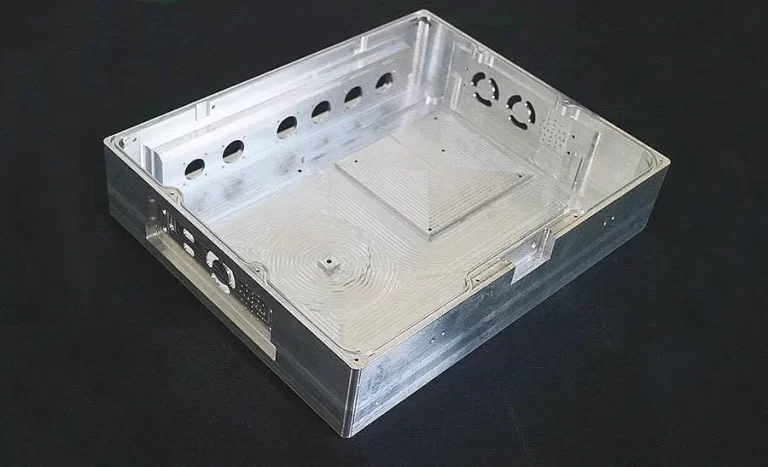
Easy to deform thin-walled parts processing, has been the processing…
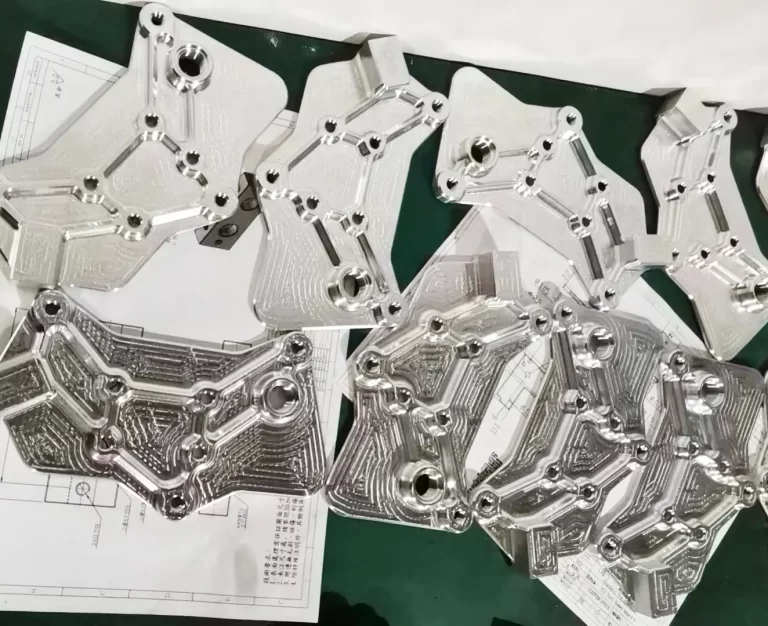
Now we attach importance to the design of intelligent agricultural…