Multi-Axis CNC Machining Technology for Complex Parts Manufacturing
With the continuous development of modern manufacturing, increasingly stringent demands are being placed on the precision, complexity, and production efficiency of components.
As competition in the automotive industry intensifies, vehicle manufacturers and parts suppliers are placing increasing emphasis on dimensional accuracy, surface quality, and batch consistency, making parts machining a critical factor in vehicle performance.
In the field of modern manufacturing, heat treatment is a key process for enhancing the strength, hardness, and other properties of metallic materials.
Thin-walled parts offer advantages such as low weight, compact structure, and high material utilization, and are widely used in fields such as aerospace, automotive manufacturing, and precision instrumentation.
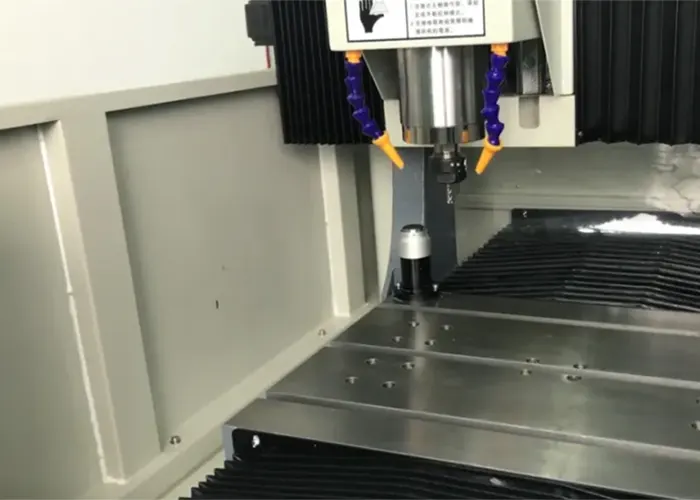
Due to the high cost of four-axis and five-axis machining centers, most mold manufacturers currently use three-axis machining centers.
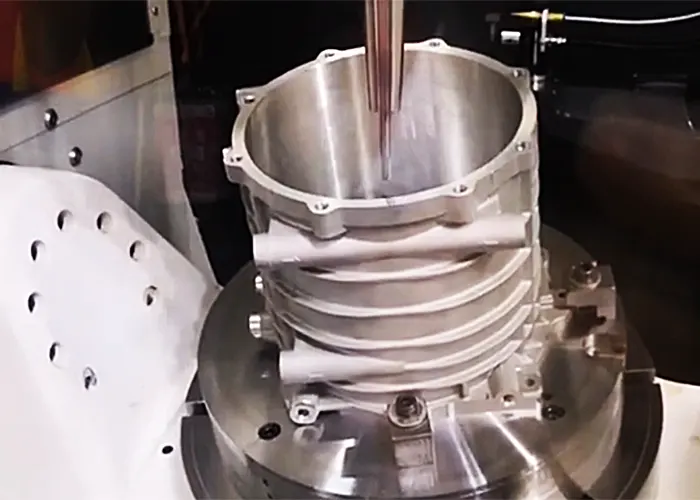
Thin-walled cylindrical shell components are widely used in high-tech manufacturing sectors such as aerospace due to their sealing properties, lightweight design, and high strength.
CNC machine tool technology is a cornerstone of the mechanical processing industry. Among the auxiliary equipment for CNC machine tools, cutting tools are consumables and instruments used to machine workpieces
Generally speaking, a center-pull gas turbine rotor consists of components such as the front hub, compressor disk, torque disk, turbine disk, mini-disk, rear hub, center-pull rod, and rod nut.
New metal materials encompass a wide range of types, including high-performance alloys and nanometal materials. Notable examples include titanium alloys and nickel-based alloys.
The development and production of the Ti6Al4V (TC4) titanium alloy began in the early 1960s. It is now widely used in the aerospace industry, such as in aircraft engine fans, compressor discs, and blades, as well as in various load-bearing structural components (such as beams, frames, joints, and fasteners).
Threaded connections are widely used in mechanical equipment, and their machining quality directly affects the safety, reliability, and service life of the equipment.